Monday, May 12, 2014

Mazda Hazumi Concept, 2014

Mazda Hazumi Concept, 2014, Automotives Review, Luxury Car, Auto Insurance, Car Picture Mazda Hazumi Concept, 2014, Automotives Review, Luxury Car, Auto Insurance, Car Picture
 Mazda Hazumi Concept, 2014, Automotives Review, Luxury Car, Auto Insurance, Car Picture Mazda Hazumi Concept, 2014, Automotives Review, Luxury Car, Auto Insurance, Car Picture
 Mazda Hazumi Concept, 2014, Automotives Review, Luxury Car, Auto Insurance, Car Picture Mazda Hazumi Concept, 2014, Automotives Review, Luxury Car, Auto Insurance, Car Picture
 Mazda Hazumi Concept, 2014

One look at Mazda's new generation models - the Mazda CX-5, Mazda6 and Mazda3 confirm that the KODO design is defined by a dynamic, living expression of motion. In the Mazda Hazumi the essence of KODO has been captured in a compact body without losing an ounce of impact. A newly developed 1.5-litre SKYACTIV-D clean diesel engine promises outstanding fuel economy without compromising powerful, linear performance. In addition to enhancing safety fundamentals such as driving position and field of view, Hazumi adopts Mazda's cutting-edge range of i-ACTIVSENSE safety features. Meanwhile, MZD Connect offers drivers the fun and convenience of smartphone connectivity in a format that is safe and appropriate for in-vehicle use. Refusing to bow to the conventions of the subcompact class and refusing to compromise in any of the four key areas of Mazda's vehicle engineering, the Mazda Hazumi points the way for Mazda's next-generation subcompact.

The concept's name is a good fit both for the look of the car and its target market. Hazumi is a Japanese word meaning to "bound" or "spring up" and was chosen to convey an image of a small but vigorous animal, bursting with energy. It also describes potential B-segment buyers: young, dynamic, vibrant and ambitious.

The Hazumi is yet another example of KODO's vast potential and how well it adapts to different vehicles of different sizes. "Whereas with longer models such as the SHINARI we use long and free lines of motion stretching from front to back to express KODO, with Hazumi we've created a form which suggests explosive motion," says Hazumi chief designer Ryo Yanagisawa. "It's like an animal poised to pounce.

Every muscle is held tense as it gathers energy for the chase. Despite being small, KODO gives the car a presence that can't be ignored, and a shape that has driving pleasure written all over it."

Exterior design
The KODO design seeks to capture the fleeting tension, beauty and power of living creatures in motion. By packing the powerful and dynamic movements of KODO into a compact five-door hatchback, Mazda has given the Hazumi distinctive exterior styling and an athletic physique made for the road. This is KODO in its most highly concentrated form yet.

Drawing the compact cabin as far to the rear as possible places the centre of gravity near the rear wheels. It creates a wedge shaped body starting from the low and pronounced nose and rising toward the rear to impart a strong sense of forward motion. The sharp, chiseled silhouette is a clear departure from mainstream subcompact design where "one-motion form" styles prevail. The short overhangs and powerful fenders that bulge over the imposingly large wheels underline the car's strong and athletic stance.

But it is not all about looks. As with all its new-generation products, Mazda has put a big focus on aerodynamics, optimising the airflow over the upper body and creating a turbulence-rectifying under-floor structure. Tuned specifically for the compactness of the car, these elements deliver superb aerodynamics.

Front
The headlamps and grille are positioned low to the ground as possible, giving the front face a sharp look reminiscent of a cheetah on the prowl. Yet the car somehow manages to be cute at the same time, ensuring onlookers will soon feel a sense of affection. The LED guiding rings add depth and solidity to the headlamps, evoking the strong-willed eyes of an untamed animal. Another KODO trademark, the aluminium signature wing, underscores the grille before cutting through the headlamps, imparting a deeply sculptured facial expression.

Side
With its short overhangs and pillars that look ready to pierce the centre of the front and rear tires, the Hazumi displays the athletic silhouette of a sports car when viewed from the side. A long line starts from the bonnet, crests over the front wheel and runs all the way to the rear, while an overlapping line peaks over the rear wheel, emulating a rhythm of flexing muscles and adding to the strong sense of forward motion. The surface textures of the body are rich with tension, accentuating the car's big-boned physique.

Rear
The firmly planted rear wheels support the high hipline and, together with the steeply inclined back window, create a strong sense of forward motion. The distinctive oblong rear combination lamps convey speed while possessing the piercing vitality of the headlamps.

Wheels
The aluminium wheels feature a dynamic design expressing a powerful force radiating from the centre of each wheel. The contrast between the radiant sheen produced by the aluminium milling process and the dark metallic paint give a taut, three-dimensional feel.

Interior design
The interior of the Hazumi imparts the same dynamic sense of speed as the SHINARI, MINAGI and TAKERI concept cars that preceded it, maintaining superb functionality as an interface between car and driver. The high-quality feel of the interior exceeds the standards of the segment, but also gives a light and youthful impression that befits a subcompact model.

Cabin layout
Speed is at the essence of the interior shapes, which spread out from above the instrument cluster to the door trim and centre console. The effect, similar to the exterior, is a dynamic sense of forward motion. The passenger space begins immediately with an instrument panel shaped like the wing of an airplane, creating a comfortable feeling of openness. The centre console is suspended like a bridge, enhancing the feeling of space and creating more room in the foot wells.

The instrument cluster is designed around the driver's centre axis. It features a single, centrally-positioned gauge with displays spreading like wings on either side. The layout of the centre display, Active Driving Display, and commander control, is based on Mazda's unique human machine interface (HMI) concept called the Heads-Up Cockpit. It is designed to help drivers deal with large amounts of information while keeping their eyes on the road ahead and maintaining a safe and stable body position.
Read More

Maserati Alfieri Concept, 2014

Maserati Alfieri Concept, 2014, Automotives Review, Luxury Car, Auto Insurance, Car Picture
 Maserati Alfieri Concept, 2014, Automotives Review, Luxury Car, Auto Insurance, Car Picture Maserati Alfieri Concept, 2014, Automotives Review, Luxury Car, Auto Insurance, Car Picture
 Maserati Alfieri Concept, 2014, Automotives Review, Luxury Car, Auto Insurance, Car Picture Maserati Alfieri Concept, 2014, Automotives Review, Luxury Car, Auto Insurance, Car Picture
 Maserati Alfieri Concept, 2014

Maserati unveiled the Alfieri, a 2+2 concept car to celebrate the brand's centenary at the 2014 Geneva Motor Show. The Alfieri is an exciting but realistic and 100% functional prototype that says much about the design DNA of future Maseratis; it could well be a door to the future of the Trident Marque.

The striking new concept bears the name of Alfieri, the most prominent of the Maserati brothers and the engineering genius who founded "Officine Alfieri Maserati" in Bologna a century ago. The Alfieri was created at the Maserati Centro Stile in Turin by a group of talented young designers, under the direction of Marco Tencone overseen by Lorenzo Ramaciotti.

The Design
The Alfieri is being unveiled at just the right time to re-establish Maserati's orientation in terms of design and production. If the new Quattroporte and Ghibli gave the impression that Maserati was becoming oriented towards sporty, premium four door saloons, the Alfieri concept is a reminder that the brand has a remarkable racing heritage and a unique tradition in exotic GT cars.

As with all concept cars, there is a strong desire to turn the Alfieri into reality. It was conceived, designed and created in an approach aimed at 100% realism.
The development process kicked off last summer When the designers were asked to start from a blank sheet to create a concept for Maserati's centenary. Among various proposals, the sketches that would lead to what is now the Alfieri emerged.

One of the most fascinating cars of all time, the Maserati A6 GCS-53 designed by Pininfarina in 1954, proved a valuable source of inspiration for the designers. Far more than a rare racing machine for gentlemen drivers, the A6 GCS-53 was a masterpiece of design. It was also the last car that, at that time, the Carrozzeria Pinin Farina designed on a Maserati model before making a comeback in the first decade of the 21st century with the Quattroporte and the GranTurismo.

The A6 GCS-53 was an iconic piece of automotive technology and simply breath-taking for its proportions and design features: a diminutive cabin positioned almost over the rear wheels, a seemingly endless bonnet and long, sinuous wings stretching nearly to the rear wheels.

The Alfieri is obviously much more than a futuristic interpretation of the A6 GCS-53. Maserati has a diversified design history that encourages designers to look forward rather than back: "We wanted the Alfieri to test future design paths", Ramaciotti explains. "The car is very aggressive yet subtle in style, forceful but understated."

The acronym A6 GCS stood for Alfieri 6 cylinder, Ghisa, Corsa, Sport, epithets that characterise its long bonnet and rear-set 2 seat cabin.

While the inverted A pillars of the A6 GCS-53 were not adopted in the new Alfieri, their optical effect has been recreated by a sculptured line that starts from the bonnet and fades to the upper part of the doors, making the windscreen look larger.

The long, low nose is a stylistic evolution from contemporary Maserati models. The grille is divided vertically into two concave sections that seem to float in the air. The led DRLs are connected by a clear decorative line with a stylistic element in the centre. The aggressive headlights incorporate bi-xenon-LED bulbs and are rendered distinctive by a characteristic brow. The same decorative element is repeated on the twin exhaust tail pipes.

The tail lights are three dimensional with red external elements and white elements in the centre. Their shape harmoniously follows the rear shoulder of the car and complements the air ducts underneath to create an impressive, racing style rear view.

The Alfieri's designers have developed a streamlined, uncluttered form where the only decorative elements - the restyled triple air ducts on the wheel arches - are finely integrated. This eye-catching silhouette almost entices you to caress it.

The wheels have been specially designed for the Alfieri concept. Forged from single aluminium elements, the 21" diameter rear and 20" front wheels feature integrated decorative spokes that are reminiscent of the classic spoke wheels of the 1950s.

Though form is the dominant element, colour and detail play a complementary role. A liquid metal colour called "Steel Flair" has been chosen for this Maserati 100th anniversary concept. This choice of finish gives the Alfieri's elegant shape a refined, technical and contemporary look, as if a metallic veil has been draped over a naked body.

The decorative spokes of the forged wheels, brake callipers, grille, iconic triple air ducts, rear diffuser and the provocative brow of the exhaust tail pipes are all finished in Maserati Blue. In the same blue is the Alfieri signature, replicated from an old official Maserati document and sculpted on the rear of the car, in the number plate recess. The front bumper spoiler and rear diffuser are in carbon fibre with aluminium inserts.

Minimalist interior
In the 2+2 seat cabin, the design team have created a study in simplicity and minimalism. The suspended dashboard is conceptually inspired by that of the Maserati 5000 GT. The dashboard boasts a clean, organic, two-tone design built around a central TFT screen.

The instrument panel has a classic layout with two binnacle dials with two smaller ones in between. The edge of each is embellished with a small "Officine Maserati" label.

Rather than analogue binnacle dials, the instrument panel features TFT displays inspired by modern photographic camera menus in the way they indicate km/h and engine rpm. Instead of a rotating indicator, the numbers themselves rotate around the clocks. Current speed and RPM are highlighted by a magnifying glass effect.

There is even a touch of racing spirit inside the Alfieri. The floor is finished in a material that imitates oxidised steel, a material commonly found on racing cars of the 1950s.

Luna white and dark Basalt blue are the dominant colours inside the airy Alfieri cockpit. Aniline leather with a natural look and feel covers the seats, dashboard and central console. Copper subtly highlights the main lines that characterise the car and brings a retro feeling to an otherwise futuristic environment.

The interior has a classic 2+2 layout with an open space luggage compartment. The rear seat backrests have a unique, elongated design. Well visible from the outside, they add a sense of speed to the interior. The rear seats tilt forwards through 90 degrees and also serve as luggage bulkheads.

The seat profile inserts, gearbox lever and oval clock on the central console are milled from single piece aluminium billets, hand finished and anodised in a natural copper colour. All other aluminium components, including the pedals, gearbox paddles and steering wheel spokes are also hand finished and anodised in a palladium colour.

The passenger seats, though inspired by the racing bucket seats of the '50s, look futuristic and have a modern structure with semi-integrated headrests and an arched profile that serves as main structural element.

The three-spoke steering wheel and the deep central crown form a three dimensional sculpture that seems to have been crafted in the workshop of an Italian artisan. Like the remainder of the Alfieri's interior, it too is 100% handmade.

The oval clock with red-blue back plate incorporates two sub-dials and is obviously inspired by a classic chronograph.
Read More

Thursday, May 8, 2014

Lotus Elise S Cup R, 2014

Lotus Elise S Cup R, 2014, Automotives Review, Luxury Car, Auto Insurance, Car Picture Lotus Elise S Cup R, 2014, Automotives Review, Luxury Car, Auto Insurance, Car Picture
 Lotus Elise S Cup R, 2014, Automotives Review, Luxury Car, Auto Insurance, Car Picture Lotus Elise S Cup R, 2014, Automotives Review, Luxury Car, Auto Insurance, Car Picture
 Lotus Elise S Cup R, 2014

The success of the Exige V6 Cup and its hardcore sibling the Exige V6 Cup R, the Lotus Elise S is adorned with the Lotus Motorsport magic to present the track-only Lotus Elise S Cup R.

Evolving from the 1.6 litre Elise platform, this is the first time the supercharged Elise S' mid-mounted, transverse, 1.8 litre 2ZR-FE engine has been used in a Cup variant. Priced at £39,125 + VAT and boasting bespoke livery and aerodynamic body kit, the Elise S Cup R showcases the marriage of form and function perfectly so that performance is optimised yet retains its stylish and iconic aesthetic.

Performance is enhanced over the road-going Elise S thanks to a motorsport-specific engine control module (ECM) and a CFD proved aero pack comprising; front splitter, barge boards, winglets, rear diffuser, floor extensions and rear wing. Despite the extra body kit and race-ready additions, Lotus Motorsport manages to maintain the road car's light weight of just 924 kg. These modifications and the clever manipulation of air-flow to create extra downforce, combined with adjustable damper and springs, reduces lap times by 4 seconds on a 5 km lap over the standard Elise S.

The Lotus S Elise Cup R is eligible for entry to the production class in the 2014 Lotus Cup series which operates under the banners Lotus Cup UK, Lotus Cup Europe, Lotus Cup Italia, Lotus Cup USA, Lotus Cup Japan, Lotus Cup Thailand, Lotus Cup China and Lotus Ladies Cup. The Lotus Cup is open to all Lotus owners and their Elise, Exige, Evora, 340R and 2-Eleven. To make a statement on some of the best tracks in the world, the Elise S Cup R has a selection of bespoke colour and trim options courtesy of the Lotus Design team.
Read More

Lincoln MKC, 2015

Lincoln MKC, 2015, Automotives Review, Luxury Car, Auto Insurance, Car Picture Lincoln MKC, 2015, Automotives Review, Luxury Car, Auto Insurance, Car Picture
 Lincoln MKC, 2015, Automotives Review, Luxury Car, Auto Insurance, Car Picture Lincoln MKC, 2015, Automotives Review, Luxury Car, Auto Insurance, Car Picture
 Lincoln MKC, 2015, Automotives Review, Luxury Car, Auto Insurance, Car Picture Lincoln MKC, 2015, Automotives Review, Luxury Car, Auto Insurance, Car Picture
 Lincoln MKC, 2015

The Lincoln Motor Company's reinvention takes a major step forward with the unveiling of the all-new 2015 Lincoln MKC small premium utility vehicle.

The Lincoln MKC is a unique creation from the ground up with an assortment of first-in-class features. Its all-new 2.3-liter EcoBoost® engine offers excellent performance while its ingeniously implemented wraparound liftgate is an example of masterful customer convenience.

The luxurious interior embraces driver and passengers alike, and its new and innovative technology personalizes the MKC ownership experience. Lincoln MKC follows the MKZ sedan to become the second all-new Lincoln in as many years as the brand continues its reinvention.

Building the right vehicle at the right time
Lincoln MKC - first introduced as a concept vehicle at the 2013 North American International Auto Show in Detroit - represents a critical milestone in the company's plan to expand its lineup.

Arriving on the heels of the all-new and successful 2013 Lincoln MKZ sedan, MKC becomes the second new vehicle in the brand's plans to introduce four new luxury vehicles by 2016.

MKC gives Lincoln a compelling offering in the small premium utility vehicle segment, the fastest-growing part of the luxury market. The segment has grown by 25 percent since 2012 and by more than 200 percent since 2009. The segment growth is being driven by new luxury buyers who are coming into affluence, as well as by current luxury owners who are moving from larger vehicles to smaller ones as their life desires change.

With MKC, Lincoln continues its move toward targeting a younger, more diverse customer. The vehicle also positions Lincoln to resonate with drivers in desirable markets on the East and West coasts.

Designed to inspire inside and out
The Lincoln design team faced the dual challenge of creating a standout vehicle in a competitive field, while further refining the Lincoln design DNA that started with the 2013 MKZ. From its signature split-wing grille to its uniquely crafted, hands-free wraparound liftgate, the Lincoln DNA is evident.

"Our design team worked tirelessly to create a vehicle that attracts new customers to the brand while meeting the expectations of longtime Lincoln drivers," said Max Wolff, director, Lincoln Design. "The execution of the new liftgate is a prime example of how a premium design element can create a better customer experience."

Lincoln MKC presents a sleek, sculpted body that helps it stand out among peers. Its high beltline and low shoulders create a sturdy, athletic presence, while features such as soft exterior lighting, pedestal side-view mirrors and an available panoramic, all-glass Vista Roof® give the vehicle a luxurious, sophisticated personality.

The unique design also carries through to the interior, where craftsmanship and high-tech combine to offer a warm, luxurious environment. An architecturally unique instrument panel showcases Lincoln's signature push-button gear shifter, which provides an open, inviting interior space. Plush leathers with French stitching, and available Bridge of Weir leather and real wood trim accentuate MKC's elegance and grace.

To be more consistent with the Lincoln driving experience, an all-new Lincoln steering wheel debuts on Lincoln MKC and will be available on all future Lincoln vehicles. This highly tactile leather-wrapped wheel provides better feeling and control and puts the brand's new design DNA in the driver's hands.

The enhanced THX® II Certified Audio System, an industry-first featuring THX-distributed bass technology and 14 right-, center- and left-slot speaker assemblies, is available. The state-of-the-art audio system delivers a rich, immersive surround sound experience that reproduces music as it was mixed in the studio.

SYNC with MyLincoln Touch enables drivers to personalize MKC by using voice-activated commands or simple touch controls on the class-exclusive 8-inch touch screen. Knobs and buttons on the center console provide additional and easy access to control the air conditioning and sound system.

Lincoln luxury meets dynamic performance
When equipped with the all-new 2.3-liter EcoBoost engine, Lincoln MKC offers a projected 275 horsepower at 5,500 rpm and 300 lb.-ft. of torque at 3,000 rpm, according to preliminary test data. Class-exclusive Active Grille Shutters are designed to help improve Lincoln MKC fuel efficiency at highway speeds.

Lincoln MKC comes standard with a 2.0-liter EcoBoost four-cylinder turbocharged engine, projected to produce 240 horsepower at 5,500 rpm and 270 lb.-ft. of torque at 3,000 rpm, according to preliminary test data. This makes Lincoln MKC an all-EcoBoost vehicle.

Lincoln MKC comes standard with front-wheel drive and 18-inch wheels. Drivers can upgrade to Lincoln's Intelligent All-Wheel Drive and 19-inch wheels for enhanced cornering and handling and an even sportier look.

The Intelligent All-Wheel Drive system also includes Continuously Controlled Damping. Drivers can use Lincoln Drive Control to select from sport, comfort and normal drive modes to cater to their driving mood. CCD constantly monitors the road; the suspension reacts on average within 20 milliseconds, providing a smooth ride with enhanced handling.
Read More

Lexus CT 200h, 2014

Lexus CT 200h, 2014, Automotives Review, Luxury Car, Auto Insurance, Car Picture Lexus CT 200h, 2014, Automotives Review, Luxury Car, Auto Insurance, Car Picture
 Lexus CT 200h, 2014, Automotives Review, Luxury Car, Auto Insurance, Car Picture Lexus CT 200h, 2014, Automotives Review, Luxury Car, Auto Insurance, Car Picture
 Lexus CT 200h, 2014, Automotives Review, Luxury Car, Auto Insurance, Car Picture
 Lexus CT 200h, 2014

The new Lexus CT 200h compact luxury hatchback offers more sophisticated exterior styling, a more refined interior with upgraded equipment, enhanced driving comfort and a stronger differentiation of the F Sport version.

A key model for Lexus in Europe
The Lexus CT 200h plays a critical role for Lexus. Positioned in the C-premium segment, the largest and most competitive segment of the European market, it represents the entry point to the Lexus brand. Designed to appeal to younger customers, it also attracts 85% of buyers from other brands.

The Lexus CT 200h has a short history, but has quickly established itself as a core model in Lexus' European line-up. Since its launch in January 2011, the CT 200h has sold no less than 42,000 units throughout the continent, representing about 25% of total global sales for this model.

The CT 200h is the best-selling Lexus in several European countries, including France, UK, Italy, Spain, Norway and the Netherlands.
Significant resources have been invested on the development of the new CT 200h. More than 1,400 engineers and staff have been associated with this project, focusing on two main objectives:

Firstly, to reinforce the Progressive Luxury image of the Lexus CT 200h through a bolder design, in line with the new Lexus brand strategy.
Secondly, to enhance the driving experience, both through the improvement of the vehicle's drivability and the traditional Lexus values of comfort, refinement and high technology.

SOPHISTICATED EXTERIOR DESIGN
The exterior styling of the new Lexus CT 200h is more dynamic and sophisticated, and is designed to appeal to a younger target market.
The front introduces a further evolution of the Lexus 'spindle grille' design. The centre has been pushed forwards to create a powerful, more three-dimensional form which generates the highly aerodynamic shaping of the bonnet, lower bumper and front fenders.

The new grille features bottom corners spaced 100mm wider than on the current model, and a lowered spindle 'pinch point', reinforcing the CT 200h's low front profile and wide, sporting track.
Its spindle shape emphasised by a dark finish, the contrast between the upper chrome and lower metallic paint trim surrounds further emphasises the more sophisticated, three-dimensional structure of the new grille.

As with every Lexus, the grille is positioned lower than the headlamps to create the resolute look which hallmarks the brand. The headlamps themselves feature new, projector LED lamps with a new, high quality, smoked metallic finish.

Fog lamp housings at the lower bumper extremities have been detailed to match the dark finish of the spindle grille. They feature integral, aerodynamic slits which help smooth the flow of air around the front of the vehicle for improved high speed stability.

In profile, the new Lexus CT 200h may be identified by a choice of newly developed, 10-spoke, 16" and 17" alloys, and a new shark fin-style roof antenna.

To the rear, a new bumper design which is 20 mm lower at the extremities features a more horizontal structure. It incorporates distinctive, L-shaped reflector housings and a black lower centre section to emphasise the vehicle's low centre of gravity and broad rear stance.

REFINED INTERIOR DESIGN AND UPGRADED EQUIPMENT
The new Lexus CT 200h interior has been refined to offer greater comfort, enhanced levels of equipment and improved visual and tactile quality.

The driver now benefits from a new, 370 mm diameter steering wheel matching that of the IS model range.

The Optitron instrument binnacle is now available with an integral, 4.2" TFT (Thin Film Transistor) screen which may be linked to the multimedia system and controlled via steering wheel-mounted switches. The central meter surround has been accentuated with a bright metal finish.

The central TFT multimedia display screen is now of a thinner, fixed design. The Lexus Media Display and Lexus Premium Navigation systems feature added functions, improved operability, and enhanced hands-free and voice recognition control. The former features a new, centre console-mounted controller.

Added functions include twin port, multi-USB compatibility; a USB-stored photo display function; a mirror link function (LDA); album cover art display; and a cache radio function which records 20 minutes of a programme for replay if missed.

Fully described below, the Remote Touch Interface (RTI) features a more user-friendly push entry control switch, the Lexus Navigation System has been substantially upgraded, and the Lexus audio systems benefit from the adoption of the world's first bamboo loudspeaker technology.

Additional equipment upgrades include the availability of rear view and back guide monitors for the LDA system, as well as Intuitive parking Assist, a Tyre Pressure Warning system and a Traction Control 'Off' switch.

A new Light Control System features Welcome lighting, which illuminates selected exterior and interior lights for 15 seconds when the vehicle is unlocked; a Follow Me Home system which illuminates the headlamps and selected other lighting for between 30 and 120 seconds; and the automatic cut-off of interior lights 20 minutes after the ignition is switched off.

The centre console insert colours and combinations have been revised. A new door panel insert and upholstery design incorporates stitching for added visual quality. A choice of 5 trim finishes now includes Shimamoku wood. And a new, more sophisticated, metal film finish has been added to the centre console controls.
Read More

Thursday, May 1, 2014

Land Rover Discovery XXV Edition, 2014

Land Rover Discovery XXV Edition, 2014, Automotives Review, Luxury Car, Auto Insurance, Car Picture
 Land Rover Discovery XXV Edition, 2014, Automotives Review, Luxury Car, Auto Insurance, Car Picture Land Rover Discovery XXV Edition, 2014, Automotives Review, Luxury Car, Auto Insurance, Car Picture
 Land Rover Discovery XXV Edition, 2014, Automotives Review, Luxury Car, Auto Insurance, Car Picture Land Rover Discovery XXV Edition, 2014, Automotives Review, Luxury Car, Auto Insurance, Car Picture
 Land Rover Discovery XXV Edition, 2014

Land Rover has unveiled a new Discovery XXV Special Edition as a celebration of the 25th anniversary year of the original launch of its versatile family SUV.

First launched in Plymouth, UK in 1989, the Discovery revolutionised the 4X4 landscape. Its combination of contemporary design, spacious and user-friendly interiors, unflinching capability and extreme versatility made it an instant hit. With the release of each new generation, the Land Rover Discovery has cemented its position as the most capable, versatile SUV in the world.

The Discovery is as comfortable taking on everyday journeys as it is tackling the world's harshest terrain - as numerous intercontinental expeditions have proved. Over its 25 years it has been chosen as the explorer's choice to take on challenges and adventures; Sir Ranulph Fiennes used an original Discovery in his exhibition to discover the Lost City of Ubar, while the Discovery 3 was used on the record holding London-Cape Town drive in 2013. Discovery models have also been used in Land Rover's own famous G4 Challenge and Camel Trophy.

The XXV has been built to commemorate 25 years of Land Rover's iconic family SUV. The Special Edition vehicle comes in a choice of four exterior colours, has distinctive badging and a sophisticated and premium interior lined with Windsor leather.

Phil Popham, Group Marketing Director at Jaguar Land Rover, said "Since its inception the Land Rover Discovery has been pivotal to the success of the brand and has now become an iconic design in its own right. Discovery has led the way in terms of innovation, featuring technologies such as Terrain Response, which made off-roading much more accessible. The Discovery XXV Special Edition is the ultimate in sophisticated versatility and a fitting tribute to the legendary status of this iconic Land Rover."

Distinctive Exterior
This special-edition comes with a choice of four exterior colours - Causeway Grey, Santorini Black, Fuji White and - to mark the jubilee - Indus Silver. It also features Narvik Black grille surrounds and mirror caps, and Dark Atlas features on the grille and fender vents. Silver full-length roof rails, body-coloured handles and a stainless steel bumper accessory tread plate complement the exterior.

 Sophisticated Interior
The XXV Special Edition builds on the Discovery's luxurious HSE specification, to create a sophisticated and premium interior. Features such as the fascia, the instrument panel binnacle and door top rolls are generously lined with Windsor leather. There is a choice of three interior leather colourway options: ebony, cirrus or dual-tone ebony/cirrus. Additional luxurious highlights include twist pile carpet mats and a leather-wrapped wooden steering wheel, while subtle XXV embossing throughout adds to the high-quality British workmanship of the XXV Special Edition.
Read More

Lamborghini Veneno Roadster, 2014

Lamborghini Veneno Roadster, 2014, Automotives Review, Luxury Car, Auto Insurance, Car Picture Lamborghini Veneno Roadster, 2014, Automotives Review, Luxury Car, Auto Insurance, Car Picture
 Lamborghini Veneno Roadster, 2014, Automotives Review, Luxury Car, Auto Insurance, Car Picture
 Lamborghini Veneno Roadster, 2014, Automotives Review, Luxury Car, Auto Insurance, Car Picture Lamborghini Veneno Roadster, 2014, Automotives Review, Luxury Car, Auto Insurance, Car Picture
 Lamborghini Veneno Roadster, 2014, Automotives Review, Luxury Car, Auto Insurance, Car Picture Lamborghini Veneno Roadster, 2014, Automotives Review, Luxury Car, Auto Insurance, Car Picture
 Lamborghini Veneno Roadster, 2014

As a further highlight of its 50th anniversary year, Automobili Lamborghini is presenting one of the most exceptional super sports cars of all time. The Lamborghini Veneno Roadster is an open racing prototype with an extreme design and breathtaking performance. And it is one of the world's most exclusive automobiles - not more than nine units will be built during the course of 2014 and sold at a price of 3.3 million Euros (excl. tax).

The Lamborghini Veneno Roadster is extreme and guarantees an intense driving experience - because open means truly open. There is no roof, just a strong rollover bar for optimum safety. The design is focused on optimum aerodynamics and stability through fast corners - with handling akin to that of a racing prototype. Yet it is fully road legal.

With a maximum output of 552 kW / 750 hp, the Veneno Roadster accelerates from 0 to 100 km/h in just 2.9 seconds and top speed stands at 355 km/h. The Lamborghini Veneno Roadster is driven by a twelve-cylinder engine with a displacement of 6.5 liters and is equipped with the extremely fast-shifting ISR transmission with five modes, permanent all-wheel drive and a racing chassis with pushrod suspension and horizontal spring/damper units.

The Lamborghini Veneno Roadster brings the aerodynamic efficiency of a racing prototype to the road. Every detail of its form pursues a clear function - exceptional dynamics, optimum downforce with minimal drag and perfect cooling of the high-performance engine. Therfore the Veneno Roadster is unmistakably a Lamborghini; it sticks firmly to the consistent design philosophy of all the super sports cars from Sant'Agata Bolognese. That includes the extreme proportions, as well as the powerfully arrow-shaped front end and the interplay between razor-sharp lines and precise surfaces.

The entire design of the Lamborghini Veneno Roadster has been laid out for perfect airflow and downforce. The front end works as a large aerodynamic wing. The visual division of the rear fenders from the car body is a reference to the world of racing cars and optimizes the aerodynamic flow. The smooth underbody transitions into a substantial diffuser framing the four sizable exhaust pipes divided by a splitter. Large openings serve to ventilate the engine bay and direct airflow to the rear wing. The design of the adjustable rear wing is the product of motorsport experience and extensive aerodynamic simulation to ensure optimum airflow in the interaction of the rear wing with the rear diffuser.

The design of the exclusive alloy wheels is also determined by aerodynamic functionality - a carbon-fiber ring around the wheel rim works like a turbine to deliver additional cooling air to the carbon-ceramic brake discs. The intense paint color "Rosso Veneno" was developed exclusively for the Veneno Roadster, although each single customer will be able to individualize his own vehicle to suit his personal preferences.

The Veneno Roadster is further proof of Automobili Lamborghini's unique competence in CFRP-based lightweight design. A monocoque made from carbon-fiber reinforced polymer forms the basis of the Roadster. All exterior parts are made from CFRP. The Veneno Roadster meets all safety and registration requirements worldwide, and naturally also incorporates a full complement of safety systems from airbags through to the adapted ESP handling system.

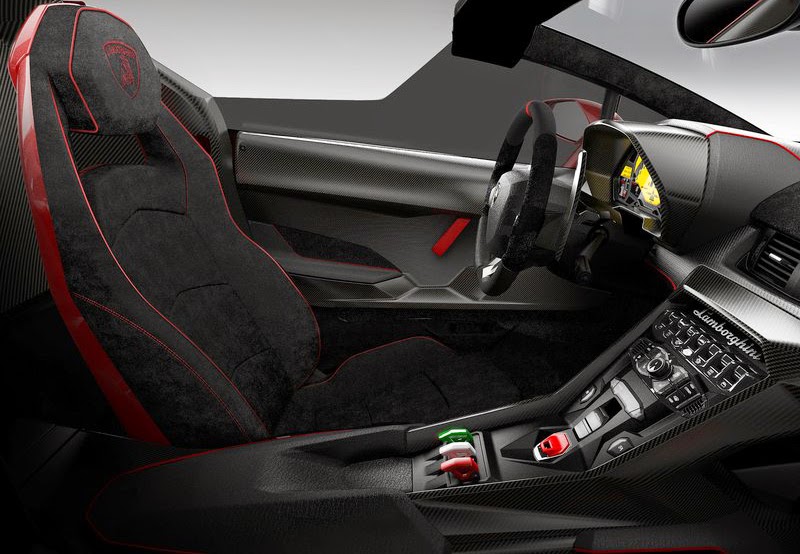
Carbon fiber dominates also the interior of the Veneno Roadster. The carbon fiber monocoque is visible inside the car around the central tunnel and the sills. The two lightweight bucket seats are made from Lamborghini's patented Forged Composite. The woven carbon-fiber CarbonSkin is used to clad the entire cockpit, part of the seats and the headliner. Like a hi-tech fabric, this extremely fine-looking carbon-fiber matting fits perfectly to any form and reduces the weight of the vehicle.
Read More

Monday, April 21, 2014

Koenigsegg One-1, 2014

Koenigsegg One-1, 2014, Automotives Review, Luxury Car, Auto Insurance, Car Picture Koenigsegg One-1, 2014, Automotives Review, Luxury Car, Auto Insurance, Car Picture
 Koenigsegg One-1, 2014, Automotives Review, Luxury Car, Auto Insurance, Car Picture Koenigsegg One-1, 2014, Automotives Review, Luxury Car, Auto Insurance, Car Picture
 Koenigsegg One-1, 2014, Automotives Review, Luxury Car, Auto Insurance, Car Picture
Koenigsegg One-1, 2014

Koenigsegg is creating six uniquely developed and designed production cars - the One:1 program. This is one of the most exclusive production car program ever envisaged.

The hp to kg curb weight ratio is an astonishing 1:1. This is the "dream" equation previously thought impossible. On top of this the One:1 is the first homologated production car in the world with one Megawatt of power, thereby making it the world´s first series produced Megacar. These are the reason for naming the car One:1.

The 2014 One:1 truly raises the bar of performance. The One:1 features new and unique solutions to enhance track perfomance without compromising top speed or everyday usability, with a stunning visual appearance to go with it.

Examples of features; unique track optimized aero winglets, extended venturi tunnels and side splitters, Le-Mans inspired active wing configuration and optimized active undertrim air management. Large air vents for improved cooling, roof air scoop to support the 1 Megawatt of power. 8250 RPM rev limit, complimented with Custom made Michelin Cup Tires, upgrade rear triplex suspension with carbon bevel springs and active shockabsorbers and ride hight, combined with upgraded revolutionary Koenigsegg Aircore carbon fiber wheels.

Koenigsegg was the first extreme car manufacturer to take steps toward green technology with the release of the biofuel CCXR in 2007. The One:1, a sibling of the highly competitive Agera R, follows in the footsteps of the CCXR as it also runs on E85 biofuel, Racefuel or normal Petrol.

In order to give the One:1 maximum flexibility when it comes to power delivery, Koenigsegg has implemented its patented variable turbo geometry technology in the One:1 Program. This technology gives improved response and more low end torque than otherwise possible. As an example the One:1 engine has over 1000 Nm of torque between 3000 to 7500 rpm.
Read More

Kia Ceed GT, 2014

Kia Ceed GT, 2014, Automotives Review, Luxury Car, Auto Insurance, Car Picture
 Kia Ceed GT, 2014, Automotives Review, Luxury Car, Auto Insurance, Car Picture Kia Ceed GT, 2014, Automotives Review, Luxury Car, Auto Insurance, Car Picture
 Kia Ceed GT, 2014, Automotives Review, Luxury Car, Auto Insurance, Car Picture Kia Ceed GT, 2014, Automotives Review, Luxury Car, Auto Insurance, Car Picture
 Kia Ceed GT, 2014

The all-new high-performance Kia pro_cee'd GT and cee'd GT are the brand's most performance-focused production cars ever. Both models feature a new turbocharged engine, unique exterior and interior design enhancements, and a suspension system that entertains the enthusiastic driver.

The two new GT models are powered by a new version of Kia's 1.6-litre GDI (gasoline direct injection) engine equipped with a twin-scroll turbocharger and strengthened internal components. Power and torque outputs are dramatically increased (compared with the non-turbo engine), with maximum power up 51% to 204 ps, and torque up 61% to 265 Nm.

Fitted with a six-speed manual gearbox as standard, the front-wheel drive GT models can accelerate from 0 to 100 km/h in 7.7 seconds and reach a top speed of 230 km/h. Thanks to maximum engine torque being developed from just 1,750 rpm, in-gear acceleration is highly responsive with 60-100 km/h in fourth gear in 5.4 seconds, 80-120 km/h in fifth gear in 7.3 seconds and 80-120 km/h in sixth gear in 8.8 seconds.

Distinctive design
Designed in Europe under the direction of President and Chief Design Officer, Peter Schreyer, both GT models feature new front grille and lamp clusters, deeper bumpers, jewel-like four-point LED daytime running lights, new fog lights, dual-exhaust pipes, larger 18-inch alloy wheels, eye-catching red brake calipers and a range of special paint finishes.

The GT models inside are equipped with Recaro sports seats, alloy pedals, bespoke surface materials and a seven-inch, racing-car inspired TFT instrument cluster to create an engaging, performance-oriented ambience for the driver and passengers. For the first time on a Kia, the instrument cluster can be customised by the driver with a choice of two layouts - 'analogue' mode, showing a traditional speedometer and trip information, and 'GT' mode, which shows the vehicle's speed in large, yellow figures and gauges displaying engine torque and turbo-boost.

Handling perfected on road and track
The GT powertrain and chassis were originally engineered in Korea and then developed during extensive road and track testing in Europe. With ride and handling fine-tuned for European roads, the test programme included 160,000 km on German autobahns at an average speed of 150 km/h.

The GT models also undertook 480 laps of the 21 km Nürburgring Nordschleife circuit for durability testing. The Kia pro_cee'd GT and cee'd GT share the same unique 7-Year, 150,000 km warranty as the rest of the Kia model line-up in and are the only performance vehicles in the world with such comprehensive cover for motorists.

Subsequent developments to the suspension system ensure that the high performance credentials of the GT models are matched by exceptional dynamic characteristics, while retaining the outstanding ride quality of the pro_cee'd and cee'd. This means both cars reward the enthusiastic driver while also being well suited for everyday driving.

Across both models, front damper stiffness has been increased by 30% in rebound and 10% in compression, while at the rear the increases are 50% in rebound and 200% in compression. Spring rates have also been stiffened by 10% at the front and rear, the rear anti-roll bar has increased in thickness from 18 mm to 19 mm, and the front suspension benefits from stiffer bushings. These changes allowed Kia engineers to reduce understeer and body roll in order to improve the cars' handling characteristics.

Subtle re-tuning of the ABS system, together with the fitting of wider 225/40 R18 Michelin tyres, also make the Kia pro_cee'd GT and cee'd GT the fastest stopping variants of the popular cee'd range, braking from 100-to-0 km/h in 36.4 metres.

The engine sound has also been addressed by Kia engineers, with intake and exhaust systems specifically tuned to give GT models a sportier engine and exhaust note. Under hard acceleration between 1,000 and 4,000 rpm, a sportier exhaust tone has been increased by 10dB over the base model, achieved by improving the flow of air through the main muffler and reducing the air intake path.
Read More