Friday, October 26, 2012

Fiat 500L, 2013


  •  Fiat 500L, 2013

Precisely five years after the presentation of the Fiat 500 and 55 years after the début of the historic 500, the Fiat 500L will debut - again in Turin - on 4 July 2012. It is the new chapter of the Italian icon that follows the Abarth and Cabrio versions.

The Fiat 500L combines the iconic nature of the 500 style with the functionality of Fiat's design. Expanded on the concept of 'space efficiency', the new model defies the conventional distinctions owing to its MPV passenger space, the feel of a small SUV on the road and levels of efficiency typical of a compact car. By following this novel recipe, the Fiat 500L combines characteristics peculiar to different classes to offer a concept of distinctive and versatile first car that is an alternative to the traditional saloons of the B and C segments.

After more than 800,000 cars have been sold in 110 countries worldwide, today the 500 has grown up to accommodate new experiences and needs once more. If the 500 is the super-compact car perfect for young people and the city, the Fiat 500L is the first car of the 500 family able to contain the small pleasures and life's greatest emotions all together: children, friends, journeys, music and community.

The Fiat 500L is totally new in the way it expresses its styling individuality, communicates with the outside world and opens its doors to a new on-board experience. The letter 'L' sums up the three dimensions enclosed in the new Fiat solution: Large, meant as functionality and space; Light, when 'lightness' means user-friendly technology and eco-friendliness; and Loft, a trend-setting environment where one can live life to the fullest.

The Fiat 500L can be ordered in Italy and on the major European markets starting from July 2012. The commercial launch is scheduled in Italy with an Open Day on the first weekend in October, to then progressively expand to all the other markets. Altogether, during 2013 the Fiat 500L will go on sale in more than 100 countries around the world, including the United States.

Large: efficient space
After 800,000 cars have been sold in 110 countries worldwide, today the 500 has grown up to accommodate new experiences and needs once more. If the 500 is the super-compact car perfect for young people and the city, the Fiat 500L is the first car of the 500 family able to contain the small pleasures and life's greatest emotions all together: children, friends, journeys, music and community.

There is a core topic in Fiat's history which links different moments and experiences, a route along which personalities moved by a profound sensitivity and ability to interpret the car's evolution have given their contribution. An ongoing commitment in defining products sharing a vast wealth of technical and design experiences, above all aimed at protecting that distinctive "inventive aptitude" recognised as one of the reasons for the success of Italian design worldwide, can be traced from Dante Giacosa to the new path Fiat Design has undertaken.

A succession of "records", genuine cornerstones of the Fiat brand's identity, clearly emerge from the 600 Multipla of 1956 - with respect to which the 500L project is placed in dialectical terms due to the recovery of several "archetypal" elements under the aegis of its multifunctional use and its particular morphological root - to the 500 of 1957, the 127 of 1972, the Panda of 1980, the Uno of 1983 and the Multipla of 1998 so we can understand the most radical and innovative car tuning.

The Fiat 500L is the result of a path along which Fiat designers had to tackle issues of technological feasibility, brand strategies and studies that set out to understand in advance what relationship we will have with the car in the future. An approach that attempts to go beyond the form-function connection to focus attention on the user and his needs.

500 Style: the icon of Italian style is growing
Besides being comfortable and functional, the Fiat 500L is cool. It expresses the taste of Italian style with a distinctive look and interprets Fiat's unique ability to conceive and design cars which are innovative in substance and in form. Substance turns into the concept of "space-efficiency" that distinguishes all of the most innovative Fiats in history.

Just as the 600 Multipla was the forerunner of the concept of compact people carrier, the 500L is the new Fiat interpretation of the Simply More philosophy applied to the Multispace concept. The Fiat 500L reformulates the category of compact cars for the modern family in an emotional vein by developing some of the 500's stylistic details in unprecedented forms.

The recognisable features of the Fiat 500L, marked by a body design that excludes edges and taut lines to favour "gentler" forms, refers to a "placid", non-aggressive object that conveys charm and foretells a more harmonious layout for the urban landscape and environment.

When looking at the new 500L, we realize that the iconic nature, namely the force and personality of the car's design, forms a real matrix of the entire project. Developed within the context of the new Fiat B segment platform, the Fiat 500L is an innovative car that addresses a more diversified and broader customer base and that aims at setting higher standards in terms of available on-board space and comfort. The result is a highly functional car able to "converse" with the user and offer quality to appreciate over the years.

One of the Fiat 500L's peculiarities pursued since the earliest packaging planning stages is greater interior volume, obtained by the meticulous compacting of the mechanical elements shared by designers and engineers alike. If the general lines of the vehicle's architecture follows the "cab forward" principles, from which reduction of the body and bonnet section up front is derived to the benefit of more available interior space - especially at the height of the waistline and roof - it is above all the "empathetic" vocation of the 500L's design that exalts the overall vehicle ergonomics. The Fiat 500L also boasts an extensive view of the outside and the greatest brightness of its category as it has the largest roof of its segment - 1.5 square metres of glass surface - and its windscreen pillars have been cleverly divided and tapered to offer clear advantages in terms of active and passive safety as well.

The Color & Material area of Fiat Group Automobiles specifically carried out a study aimed at classifying possible reference scenarios for the Fiat 500L, conducted to give appropriate formulations back to the sensorial experience. This research has allowed technologies and production processes such as to further increase the quality level and value of the physical, tactile and visual properties of the materials, single details and finishes to be applied, in addition to a wide range of body, roof and rim paintwork colour options.

Efficiency: the best ratio between external dimensions and interior space in its segment
According to the latest research, 4.1 metres is the average length of cars sold in Europe. It is a standard size that allows you to travel and easily move around in traffic. What is the length of the Fiat 500L? 4 metres and 15 centimetres.

However its real competitive advantage is that with only 7 cm more than a Fiat Punto, the Fiat 500L easily accommodates five passengers 2 meters tall with their five suitcases, without ever compromising passenger room. Suffice it to say that the Fiat 500L boasts the best passenger volume index in the segment: with front and rear volumes combined, passengers have a space of 3.17 cubic metres available.

The new model is leader in its category in terms of ratio between external dimensions - 415 cm long, 178 cm wide, 166 cm high and 261 wheelbase - and interior space understood both as passenger compartment and luggage compartment, which boasts a capacity of almost 400 litres, which means being able to transport up to five roller suitcases. With the Cargo Magic Space system, the load platform can also be adjusted on three levels separating fragile objects from heavy ones, clean objects from dirty ones, bulky objects from small ones. The load compartment is also filled with pockets and hooks in order to transport any object in total safety and tidiness.

Versatility: 1,500 possible configurations to meet all needs
The Fiat 500L is Large also in terms of functionality, as demonstrated by the 1,500 configurations of interior space combined with the 22 compartments of different sizes and the dashboard, suitably studied to group the instrument panel and main controls of the audio and IT devices into two distinct but adjacent zones. It is a totally liveable passenger compartment, as some interior dimensions sizes demonstrate: for example, the maximum width of the front part is 1456 mm (measured at the shoulders) while the height, from seat to roof, is 1034 mm (in the rear part the measurements are 1387 mm and 993 mm, respectively).

The numerous adjustments of the seats also contribute to top-level on board comfort. They can be adjusted on every axis using 8 different modes, starting from that of the driver that offers, as standard, a longitudinal configuration and reclining backrest while, on request, it can be electrically heated and adjusted both in height and at the lumbar level. The front passenger seat, on the other hand, can be fitted with a folding table backrest. In this latter case, you can have a handy support surface both for common objects, such as a handbag or a laptop, and for unusual items. When the rear seats are also folded down using the Fold&Tumble function, the customer can obtain a flat loading surface for the entire length of the passenger compartment (2.4 metres), in this way being able to make maximum use of the interior space.

The rear seat ensures the same versatility. It has a 60/40 split folding backrest that can be adjusted longitudinally and separately in 12 positions, with the third central head restraint and armrest offered as optional.

Light: altruistic technology
Using the car means being able to rely on its functional performance and find in it all the material and immaterial components which can make approaching it easier. The progressive acceleration of recent years has pushed technology to become a not-to-be-missed element, and more and more often it relies on the functions offered by all types of devices as a reassuring and inseparable element for our psycho-physical wellbeing.

So 'L' also stands for Light meant as that 'lightness' feeling that improves and simplifies the quality of life, that innovation that is not an end in itself, but always to man's benefit. Besides, Fiat has always been a byword for innovative cars that offer sophisticated technological solutions which are nonetheless straightforward to use and satisfy both the concrete needs of everyday mobility as well as the growing social awareness toward the environment and safety. But 'lightness' is also an easy and immediate relationship with the network connection, navigation and infotainment systems the Fiat 500L offers, which use simplified "human-friendly" interfaces.

In short, the Fiat 500L is a generous car in terms of both contents and technology, easy to use and to enjoy. A simplicity that conceals a complex engineering process requiring hours and hours of design, tests and adjustments.

A "light" engine range
Today the car must be "light" for the environment and also for the wallet of its driver. For several years increasing sensitivity on the part of consumers toward the environmental aspects has been noticed. A new consumer has thus been born, one more eco-friendly and also more mindful to costs. Respect for the environment is an increasingly important factor that this type of customer considers when purchasing a car. Economic accessibility has just as significantly become a requirement that cannot to be ignored, both at the time of purchase and during everyday use.

Reduced fuel consumption and emissions is therefore an essential requirement for the success of a car. For this reason, the Fiat 500L at launch will propose three engines distinguished by their lower polluting emissions and CO2 levels, corresponding to a real economic benefit for the customer in his everyday use of the car: two petrol - 105 HP 0.9 Turbo TwinAir and 95 HP 1.4 l 16V Fire) engines and one turbodiesel engine, the 85 HP 1.3 MultiJet 2. Each with different qualities, all exploited to the full in combination with the 5- or 6-speed manual gearboxes of the petrol and diesel engines, respectively. Last but not least, all Fiat 500L engines have been meticulously set up, which required over 10,000 hours of simulation on the benches, naturally in addition to the road tests.

Standing out amongst the engines is the brand new 105 HP TwinAir, the new generation of the multi-award-winning Fiat two-cylinder engine distinguished by a sparkling personality and low fuel consumption values thanks to its low displacement and inclusion of a high-efficiency turbocharger. In particular, the Fiat 500L TwinAir was upgraded to 105 HP with the exhaust manifold integrated in the head to better cool the exhaust gas under power and to guarantee that part of the heat of the burnt gas is recovered while the engine is warming up, which otherwise would be emitted into the atmosphere. In this way the thermal transient is reduced and increases the time in which the engine runs at optimum temperature and fuel consumption and CO2 emissions are reduced, which total 112 grams per kilometre.

Furthermore, starting next year the 500L will be even 'lighter' due to the cleanest fuel available today: methane. The Turbo TwinAir Natural Power engine will debut in 2013 on the model. It combines - in a single engine - the cost-effectiveness and eco-friendliness of the methane fuel system with the Turbo TwinAir technology that ensures excellent fuel consumption, emissions and performance values

The reduction in fuel consumption and emissions involves the design and set-up of the entire vehicle. As proven by the over 3000 hours of controls on the body and underbody carried out at the Fiat Group Automobiles wind tunnel in Orbassano (Turin), one of Europe's largest: the final result is a CX of 0.30.

New 0.9 Turbo TwinAir - 105 HP
The new 105 HP 0.9 Turbo is the maximum evolution of the TwinAir family of engines that combine the concept of downsizing (reduction of displacement and weight) with sophisticated engineering such as supercharging through a turbocharger, the exhaust manifold integration in the cylinder head and the brand-new MultiAir 2 intake valve control system. The second generation of MultiAir further optimises the engine's thermo-dynamic efficiency by modulating the amount of exhaust gases recirculated in the combustion chamber (internal EGR) thanks to a brand-new design of the intake cam profile.

The exhaust manifold in the cylinder head instead reduces the temperature of the exhaust gases (which are directly cooled by the engine cooling system). This has a positive impact on fuel consumption because the enrichments otherwise necessary to keep down the maximum temperatures of the combustion gases are reduced in order to preserve correct turbocharger operation.

The small petrol engine with 2-cylinder architecture combined with a 6-speed manual gearbox develops 105 HP at 5,500 rpm with a maximum torque of 145 Nm at just 2,000 rpm. The value of the specific power is considerable - a good 120 HP/litre - a value comparable to the sportier engines.

As on the previous Turbo TwinAir applications, ECO mode is also available for the new Fiat 500L: in this condition the maximum torque delivered is limited to 120 Nm and the power to 98 HP, allowing the power unit to function in the operating range which permits maximum efficiency and thus minimum emissions.

The TwinAir engine is a little gem also because of the good level of comfort it offers. The agreeable and characteristic timbre of the two-cylinder engine has been optimised using the balancing countershaft and dual mass flywheel that minimise vibrations and shaking. Particular attention was also paid to improving the soundproofing by studying containment solutions to reduce the levels of noise perceived in the passenger compartment and to improve the articulation index.

The Fiat 500L 105 HP 0.9 Turbo TwinAir is very brilliant in its performance (top speed of 180 km/h and it accelerates from 0 to 100 km/h in just 12.3 seconds) and it is at the top of its class in fuel consumption and emissions in the homologation combined cycle at the same time (4.8 litres/100 km and 112 g/km of CO2).

1.3 16V MultiJet 2 - 85 HP
A genuine reference on the low displacement diesel engine scene, the 1.3 16V MultiJet 2 engine of the new Fiat 500L has been refined to further improve its brilliant performance and low fuel consumption. The adoption of a small refined variable geometry turbocharger, which allows the engine to deliver a higher torque at low speeds, makes it possible to match a 5-speed manual gearbox with long ratios (downspeeding concept) that without penalizing performance significantly contributes to curbing fuel consumption.

The heart of the new Fiat 500L with 1.3 16V MultiJet 2 engine is without a doubt the third generation Common Rail injection system that uses innovative injectors able to control the amount of diesel injected into the combustion chamber with utmost precision with a particularly quick and flexible injection sequence thanks to the balanced hydraulic servo valve. With these injectors, now strategies focused on optimising the increasingly advanced combustion can be achieved, such as the Injection Rate Shaping (IRS) system which involves two consecutive injections so close together in time as to generate a continuous and modulated fuel supply into the cylinders. With this method the combustion process is improved, all to the benefit of quieter operation and particulate and nitrogen oxide (NOx) emissions.

The new Fiat 500L with 1.3 16V MultiJet 2 engine has also been fitted out with a number of measures aimed at reducing fuel consumption and emissions. These include the intelligent alternator that recovers energy during the release stage and stores it in the battery, optimisation of the engine cooling circuit with a new thermostat that reduces the warm-up time, the oil pump with variable displacement that adjusts the oil pressure in the most appropriate way, reducing the power absorbed by the pump. Naturally the Start&Stop system is a must, while engine and transmission use low viscosity lubricant oil to minimise friction.

The 1.3 16V MultiJet 2 engine of the new Fiat 500L develops 85 HP at 3,500 rpm with a maximum torque of 200 Nm at just 1,500 rpm. The maximum speed is 165 km/h, with acceleration from 0 to 100 km/h in just 14.9 seconds. The new Fiat 500L 1.3 16V MultiJet 2 consumes just 4.2 litres/100 km with 110 g/km of CO2 emissions in the homologation combined cycle.

1.4 16V Fire - 95 HP
Solid and reliable, the 1.4 16V of the Fire family is the entry petrol engine of the new Fiat 500L. It delivers 95 HP at 6,000 rpm and reaches a maximum torque of 127 Nm at 4,500 rpm. Combined with a 6-speed manual gearbox, the engine has a 4-cylinder in-line configuration with a double overhead camshaft system that directly controls the valves.

Thanks to the entire intake system with optimised fluid dynamics, the engine is distinguished by a particularly high volumetric efficiency throughout its operating range which makes for outstanding performance levels and, at the same time, economical fuel consumption.

The new Fiat 500L equipped with the 1.4 16V Fire engine reaches a top speed of 170 km/h with an acceleration from 0 to 100 km/h in 12.8 seconds. Its fuel consumption in the homologation combined cycle is just 6.2 litres/100 km with CO2 emissions staying within 145 g/km.

UConnect: always connected in total safety
The Fiat 500L is the first car of the Fiat group to be fitted out with a multimedia device based on the new generation of UConnect, the new infotainment platform developed by Fiat Group Automobiles.

UConnect was designed with the aim of creating a multifunction system able to manage all of the main media content on the car, such as the radio, mobile phone, Media Player, iPod or smartphone and in the near future a navigation system. In this way the driver can simply, quickly and safely access them hands-free while keeping his eye on the road.

The new device is based on a 5" colour touchscreen, one of the largest of the segment, which lets the driver access all the main functions, from the analogue and digital radio (DAB) up to all the main multimedia resources (Media Player, iPod, iPhone, smartphone) that can be connected by USB port and AUX-IN connector.

The system also includes an advanced Bluetooth interface to access extra functions such as phone call management or reading received SMS text messages via text-to-speech technology, the innovative Audio Streaming system that reproduces music files and web radio stations directly from your smartphone in streaming via Bluetooth on the UConnect device.

The new radio is based on the Windows Embedded Automotive operating system and has an advance user interface with functions such as the previously mentioned text-to-speech, voice recognition (in 11 languages) and audio controls on the steering wheel so that the driver can access all of the main infotainment contents without taking his hands off the steering wheel.

The UConnect system also introduces the eco:Drive Live application for the first time on a car. Developed by Fiat Group, it helps the driver reduce fuel consumption and CO2 emissions by monitoring his driving style in real time and giving tips so his driving is even more eco-friendly.

The system will soon introduce new functions such as the built-in navigation system developed in collaboration with TomTom. Moreover, the system will let the customer use a large number of apps on the on-board system via integration with his smartphone starting in 2013. In this way he can always be in touch with his friends on Facebook and Twitter or be updated on traffic, news and weather in real time.

The UConnect radio is designed to permit new software functions to be implemented and updates to be installed during the entire life cycle of the vehicle so that the system is always up to date and ready for future evolutions.

eco:Drive LIVE, the evolution of a Fiat invention

Light also is the simplicity of use of the on-board technology of the new car. An example?
The brand new eco:Drive LIVE, the latest development of the eco-friendly application developed by Fiat in 2009. eco:Drive LIVE analyses your driving style thanks to the data collected on the car and provides personalised suggestions in order to reduce up to 16% of fuel consumption and CO2 emissions. One peculiarity of eco:Drive LIVE is the possibility to receive feedback about your style of driving in real time, thus attaining immediate fuel consumption and emission improvements. It is also possible to save the data of every journey on a compatible USB memory stick and smartphone to analyse your driving style on a PC and receive tailored driving lessons.

The analysis of the actual driving data made possible by this software demonstrates that constant and correct use of eco:Drive leads to a savings of almost 3 tons of CO2, 1,200 litres of petrol and about Euro 2,000 during the life cycle of a car.

This is one more concrete example of Fiat's commitment to responsible and sustainable mobility, the same stance that has made it the brand which has recorded the lowest level of CO2emissions by vehicles sold in Europe in 2011, with an average measurement of 118.2 g/km (4.9 g/km less than the 2010 average) for the fifth year running.

TomTom GO LIVE for the 500L, for driving with total peace of mind
To drive in city traffic with total peace of mind, the new 500L comes with, on request, the TomTom GO LIVE navigation system with dedicated customisation with the picture of the Fiat 500L on the start screen and in the icon along the route, in addition to signalling Fiat network service points.

TomTom GO LIVE for the Fiat 500L offers a safe driving experience as it is built into the dashboard and provides the most precise traffic information updated in real time. The setup for this navigation system is located in the middle of the dashboard and allows the totally safe installation of the specific mounting, in addition to guaranteeing power to the navigation device without external wiring.

TomTom GO LIVE for the Fiat 500L has a 4.3" display with iPhone type capacitive touchscreen; pre-uploaded and detailed maps of 45 countries (Europe); and it offers the Live TomTom services that permit the customer to receive traffic information in real time through HD Traffic, information on fixed and mobile speed detection systems (including the portals of the tutor system in Italy, in agreement with the legal restrictions in Europe, in France for example), TomTom Local Search, weather forecasts, and Quick GPS fix.

HD Traffic is the most important service that lets you receive real time detailed information on traffic with updates every two minutes. With this information you can plan your route with instantaneous updates based on traffic conditions. Optimised routes cut down fuel consumption, CO2 emissions and travel time.

TomTom GO LIVE for the Fiat 500L can be purchased in all the following countries: France, Italy, Germany, the UK, Spain, Portugal, Belgium, Luxembourg, the Netherlands, Ireland, Austria and the Czech Republic. The LIVE services are offered free of charge for 1 year and include roaming and traffic information in the conditions previously mentioned.

Social connectivity functions developed exclusively for the Fiat 500L, such as Twitter, Trip Advisor and Expedia, are also available in a number of countries, including Italy, Germany, Spain, the United Kingdom and the Netherlands. These services are included in the LIVE package.

Easy in the city, quiet on the motorway
Technology makes life simple on the 500L. Clean, safe and fun driving while being enveloped in ultimate comfort is also simple. That is certainly the merit of the new wide architecture that will be shared by the upcoming generations of models and that on the Fiat 500L was calibrated to guarantee top of class performance and comfort. For example, the body has a high level of torsional rigidity - 111,700 daNm/rad - that contributes to optimum control of the geometry.

The new 500L is a car that lets you experience relaxing moments and travel comfortably, also because of the layout of its suspensions - MacPherson up front, torsion beam in the rear - that have been updated to ensure control and comfort at top levels. More specifically, the front suspension with MacPherson architecture has a new anti-roll bar with extraordinary rolling rigidity made with hollow technology that provides increased performance and at the same time reduced weight. The front crossmember is also designed with high rigidity to achieve greater acoustic comfort and to integrate a third load line to improve energy absorption capacity in the case of collision.

One of the new innovations is adoption of a "split" type of shock absorber mounting that transmits the loads to the body through two different routes and therefore get better filtering of the road vibrations, improved acoustics and better efficiency of the shock absorber.

Lastly, the rear suspension has a newly designed torsion axle architecture with a high level of rolling rigidity. This feature lets us save on the weight of an anti-roll bar. Hydraulic bushes were also adopted to improve the car's level of comfort. Last but not least, the rear suspension of the Fiat 500L was further lightened in weight by adopting single tube shock absorbers.

"Lightness" on the Fiat 500L is also weighed in quantity of silence. The need to turn the interior into a muffled sitting room stems from this. External noise does not seep in and the motion of the car as it travels along the road is barely perceptible. To achieve this result, lots of time was spent in the anechoic room and on the proving grounds in over 10,000 hours of tests to reach an articulation index of 72%, a level at the top of its class.

Technological and protective
To guarantee the protection of the passengers, the new 500L combines a body designed according to the most modern criteria with active and passive safety content that ensures its optimum performance, so much so as to be at the top of its category.

Specifically, the new car has a safety cell structure complete with double pillars in front designed in line with current U.S. regulations as far as crash tests and dimensional specifications of the materials used are concerned.

The safety performance was designed by the designers and experts of the Fiat Safety Centre after examining all possible types of impact: front and side impacts, roll-over, pile-up and impacts with pedestrians. Various speeds at which impact may occur were also taken into consideration as well as different types of obstacles and different types of occupants with greatly varying physical characteristics.

The new 500L's standard equipment includes front and window airbags - side airbags and knee bags are available on request - front headlights with DRL (Daytime Running Lights) function and fog lights with the self-adaptive cornering function. The model also comes standard with ABS with BAS (Brake Assist System) and the sophisticated ESC (Electronic Stability Control) that intervenes in conditions close to the limit, when the car's stability is at risk, and helps the driver control it.

The Fiat 500L ESC is equipped with several very useful functions:
  • ASR (Anti Slip Regulation) system, which optimises traction at any speed, with the help of the brakes and engine management, allowing the Fiat 500L to cope easily on low-grip road beds.
  • Hill Holder, the system that helps the driver starting off uphill by keeping the brake locked for about 2 seconds, in this way making starting off easier without requiring the driver to press the brake pedal or use the handbrake.
  • MSR (Motor Schleppmoment Regelung): when there is a brisk gear change in poor grip conditions, the MSR function intervenes, restoring engine torque and preventing the wheels from locking and slipping.
  • DST (Driving Steering Torque): the system improves both driving safety and handling performance. The active electronic steering carries out corrections automatically and also controls oversteer over surfaces with low grip in all driving conditions.
  • ERM (Electronic Rollover Mitigation) is the function which intervenes when a wheel leaves the road surface: in fact, whenever an extreme dynamic movement is detected, the ERM helps to restabilise the vehicle and returns control of the car to the driver.
Lastly, the brand-new "City Brake Control" system is worthy of a detailed look. Becoming available after the launch, the innovative device is capable of recognising obstacles in front of the car and of braking automatically when the driver fails to do so to avoid crashing into them. Depending on certain parameters (road surface conditions, dynamics and trajectory of the vehicle, position of the obstacles and condition of the tyres, etc.), the intervention of the LSCM system can avoid impact completely ("Collision Avoidance") or minimise the consequences of a possible impact ("Collision Mitigation").

The sophisticated device of the new 500L integrates three additional functions: Automatic Emergency Braking (AEB), Prefill and Brake Assist. The former, while respecting the driver's wishes and leaving full control of the car in his/her hands, is triggered by emergency braking after carefully assessing the position and speed of the obstacles, the speed of the vehicle (below 30 km/h), lateral acceleration, the steering angle and pressure on the accelerator pedal and its variation. The "Prefill" function instead prefills the braking system to provide a quicker response both when Automatic Emergency Braking intervenes and in the case the driver brakes. Brake Assist on the other hand recognises emergency situations and alters the brake pedal's response to achieve quicker braking in emergency situations.

In detail, the system works with a laser sensor installed in the windscreen, and it communicates with the ESC (Electronic Stability Control) system. Based on the same principle as those used in astronomy to measure distances between satellites, the laser sensor detects the presence of obstacles in front of the vehicle when certain alignment conditions be present: the overlapping of the car and obstacle must be more than 40% than the width of the vehicle, while the angle of impact must be less than 30° and the obstacle must have an adequate surface and reflecting properties.

The goal of the City Brake Control system is to guarantee maximum safety in all conditions of use, so in certain conditions (unfastened seat belts, icy road, reversing), different triggering logics are activated.
Read More

Jaguar XF Black Pack, 2011

 
  •  Jaguar XF Black Pack, 2011

The highly successful Jaguar XF sports saloon is now available with a dramatic new appearance pack for customers who want their Jaguar to make an even stronger visual impact.

The exclusive new Jaguar XF Black Pack brings an added sense of power and purpose to the sought-after XF range, and follows closely in the wheel tracks of a similar option on the XK sports car which has aroused huge interest since its launch earlier in 2010.

Featuring menacing dark-grey 20-inch Draco alloy wheels with diamond turned rims, a gloss black grille and gloss black window surrounds, the Jaguar XF Black Pack is available on XF Diesel S, the 5-litre naturally aspirated petrol and XFR models, with prices starting at £950.

The Black Pack gives the XF a highly distinctive, very modern and a slightly edgy appearance. Since the Black Pack and Speed Pack were launched on the XKR sports car at the 2010 Geneva Motor Show, almost half of XKR coupe buyers have selected one or both options - double our original estimate - and the expectation the Black Pack  generate just as much excitement amongst XF customers.

To provide added exclusivity and to maximise the visual impact, Jaguar XF Black Pack vehicles can only be specified with a special colour palette chosen by Jaguar designers, including Polaris White, Spectrum Blue, Ultimate Black, Stratus Grey, Lunar Grey and Liquid Silver, plus Kyanite Blue and Salsa Red which are colours unique to the XFR.

For an even more dramatic effect, the Black Pack can be combined with the XF Aerodynamic Pack which was launched on XF Diesel S earlier in 2010. The pack includes a re-profiled front bumper, striking black mesh inserts for the grille and lower air intakes and the muscular side sills from the XFR.

Extending the XF Success Story

The expanding choice of exciting personalisation options is generating even more interest in the XF range, which has now sold more than 100,000 units worldwide since its launch in 2008, as well as receiving more than 60 international awards.
Read More

Thursday, October 25, 2012

Renault Koleos, 2012


  •  Renault Koleos, 2012

A renewed version of Renault Koleos is to be released in late 2011. The chief changes concern the model's exterior styling and interior trim, plus appreciable CO2 and fuel consumption savings in the case of its diesel engines. The model reasserts its high-end status by building on the strengths that were widely acclaimed at the time of its launch in 2008, namely its remarkable comfort, versatility and modularity, as well as the speed with which owners are able to familiarise themselves with their new car.

Robust, more dynamic looks
The front end of Renault Koleos has been revised with a view to reasserting its forceful character. The air-intakes positioned either side of the Renault logo on the previous version have made way for an elegant chrome grille, while the dynamism of the model has been reinforced by new, slimmer headlights. The more modern door mirrors now incorporate LED indicators.

To view from the side  expresses the robustness associated with the world of 4x4 motoring thanks to cues such as high ground clearance, prominent wheel arches and new, modern, sporty wheels. The initial version's distinctive rear-end styling has been carried over, including the steeply-raked rear window which suggests forward movement and provides the model with a particularly original stance. New Renault Koleos will also be available in a new dynamic body colour: Cayenne Orange.

Careful attention has been paid to the quality and finish of the cabin. A selection of new upholsteries and trims have enhanced the original vehicle's elegance and refinement, while the dashboard and instrument lighting have evolved, too, with the introduction of a modern, more stylish speedometer housing and display.

CO2 emissions savings for a safe crossover which is at home on all types of road
Depending on market, new Renault Koleos can be ordered with the 150hp or 175hp version of the M9R diesel engine, or with the 170hp (TR25) petrol engine. All three deliver dynamic, high-quality performance under the bonnet of this crossover which measures 4.52m in length and 1.85m in width.

Work on the vehicle, engine and gearbox has produced appreciable CO2 emissions savings for the diesel versions of Koleos. The CO2 emissions of the 4x2 version powered by the dCi 150 engine are just 148g/km, which means it is no longer subject to the eco-surtax applicable in France. The emissions of the bigger dCi 175 engine have also been reduced to 166g/km.

The versatility of new Koleos means that it is as much in its element on city streets as it is on twisty country lanes. The Nissan-developed all-wheel drive transmission of the 4x4 version ensures genuine off-road ability, while the model's carefully-honed volumes, precise steering and stability ensure surefooted agile handling in and about town.

Meanwhile, Renault's expertise in the realm of active and passive safety saw the brand's crossover earn a five-star EuroNCAP crash test rating at the time of its launch thanks to features such as ESP, emergency brake assist, programmed structural deformation, six airbags and seat belt pretensioners.

Exemplary comfort and modularity, plus high-end technologies
New Renault Koleos boasts segment-leading cabin space and comfort, while the interior layout benefits from the extensive expertise of the MPV's pioneer. Everything has been thought through to make sure that all five occupants feel perfectly at ease, including segment-topping headroom and knee room in the front, and an excellent balance between elbow room and headroom for rear passengers.

Practical and modular. The interior of new Renault Koleos features stowage space of up to 70 litres. Access to the large boot (450dm3 VDA) is facilitated by the split-opening tailgate, the bottom section of which forms a robust bench when lowered. The 60/40-split rear bench seat is equipped with the Easy-Estate system, which means it can be folded in one quick movement to free up a flat floor and boot space of 1,380dm3 VDA. The panoramic opening roof makes the cabin even brighter and more enjoyable.

Technologies for enhanced comfort and safety. New Renault Koleos is available with a raft of useful, reassuring and user-friendly high-end features, including hands-free entry and ignition, an electronic parking brake, automatic headlight and windscreen wiper activation and a joystick-operated Carminat TomTom navigation system. The 4x4 versions of new Renault Koleos also incorporate Hill Start Assist and Hill Descent Control.

Use of the audio, navigation and dual-zone climate control systems is perfectly intuitive and their controls fall readily to hand. Meanwhile, careful attention has been paid to eliminating mechanical and road noise which means that occupants are able to fully appreciate the premium Bose® sound audio system which has been tailor-engineered to match the characteristics of the cabin.

Renault Koleos: an international calling and an image-building flagship for the brand
Renault Koleos is marketed in some 40 countries on five continents. It was the first vehicle to benefit from Alliance-wide input since it was designed by Renault, features Nissan technologies and is manufactured at the Renault Samsung Motors plant in Busan, South Korea. Thanks to this fruitful collaboration, it has emerged as a spearhead of the Renault range in several markets.

Renault's first crossover has carved out a place in what is a constantly expanding and fiercely competitive segment:
  •     An international calling. Thanks toKoleos, Renault enjoys a real place in this growing, image-enhancing segment, notably in China and Latin America. More than 70 percent of Koleos sales were outside of Europe in 2010.
  •     In Europe, where its strengths are readily recognised,Koleos has succeeded in defending its position. Indeed, sales have increased significantly over the first four months of 2011 with a 65 percent rise in Koleos registrations across Europe between January and April over the same period in 2010.
Read More

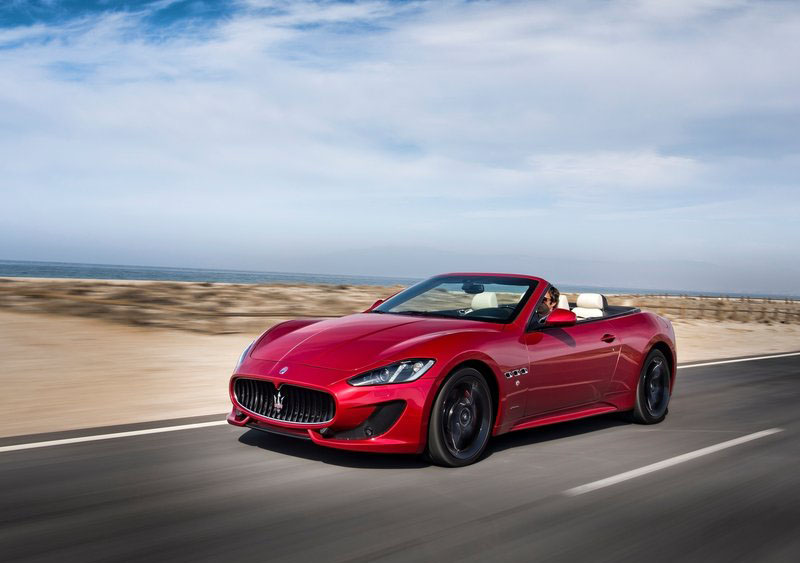
Maserati Gran Cabrio Sport, 2013


  •  Maserati Gran Cabrio Sport, 2013

The new Maserati Gran Cabrio Sport consolidates its presence on the convertible car market with completely revamped exteriors and a more powerful engine. The new front bumper, with redesigned profile to enhance aesthetics and functionality, new headlights, a new, even more powerful engine and an upgraded suspension system make the new Gran Cabrio Sport a point of reference in the convertible car market.

The Exterior
Already one of the most highly regarded in the world of sports cars, the Maserati Gran Cabrio Sport's bodywork has undergone a restyling which skilfully harmonises the characteristics of the Gran Turismo Sport.

One of the most evident new features of the Gran Cabrio Sport is the design for the front end with new light clusters. Though they maintain their external form, they now incorporate completely new technological characteristics, including LED Daytime Running Lights technology.

Interior
The steering wheel, with new design, is now more ergonomic and, in combination with the extended Trofeo-design paddles and light aluminium pedals, is better suited to sports driving thanks to a flattened rim and accentuated grip profile.

The new grey Eco Chrome materials for the interiors and the Poltrona Frau leather upholstery complete the existing characteristics, such as the steering wheel transmission paddles and the aluminium pedals.

Engine
The Maserati Gran Cabrio Sport, which comes with a modern V8 engine that has already become a classic, adopts the most recent innovations in the field of engineering to deliver greater power and torque.

Both the hardware and software of the engine have been improved significantly, improving its power by 10 HP and torque by 10 Nm, without adversely affecting consumption or emissions.

At 7,000 rpm, the Maserati Gran Cabrio Sport delivers 338 kW (460 HP) with a considerable torque of 520 Nm at 4,750 rpm.

Automatic transmission (MC Auto Shift)
The automatic six-speed ZF transmission with MC Auto Shift is perfectly capable of handling the exceptional performance of the powerful V8 and derives from the transmission of the Gran Turismo Sport. The automatic transmission is connected directly to the rear of the engine and transmits the torque to the same limited-slip differential through a two-piece articulated steel crankshaft.

The Maserati Gran Cabrio Sport with MC Auto Shift transmission can reach 100 km/h in just 5.0 seconds. Top speed is 285 km/h.

Chassis and suspension
The Maserati Gran Cabrio Sport was designed to combine peerless driving comfort for all occupants with optimum handling at high speeds.

Exceptional performance and road holding, as well as the handling of a great sports car, are qualities of the Gran Cabrio Sport that few other sports convertibles can boast.

The shock absorbers with Sport Skyhook system, the most recent development of the Maserati damping control system. The Sport Skyhook system constantly adjusts the Gran Cabrio Sport's shock absorbers, adapting them to the road conditions. With the aid of a new rear anti-roll bar which is 12% more rigid, the Sport Skyhook system allows the vertical rigidity of the Maserati Gran Cabrio Sport to be increased by 10% in Sport mode.
Read More

Wednesday, October 24, 2012

Mazda 6 Sedan, 2013


  •  Mazda 6 Sedan, 2013

The Mazda premieres the completely redesigned Mazda 6 at 2012 Moscow Motor Show. Following on from the Mazda CX-5, the all-new Mazda 6 is the second of a new generation of Mazda vehicles which adopt the full range of SKYACTIV technology and the "KODO - Soul of Motion" design language. Mazda has consistently strived to provide stylish, insightful and spirited cars and the new generation vehicles also offer outstanding environmental performance.

Mazda's environmental technology development is directed by its Building Block Strategy which first calls for thorough improvements in the base automotive technologies. The next step builds on these improvements with the sequential introduction of electric devices designed to improve fuel economy. The first such device was the i-stop idling stop system introduced in 2009 with the Mazda 3. The second device, which makes its debut with the new Mazda 6 is i-ELOOP, Mazda's unique brake energy regeneration system which begins charging a capacitor the moment the driver takes his foot off the accelerator. Electricity stored in the capacitor can then be used to power electric components throughout the car. In freeing the engine from much of the duty of providing electricity to these components, more fuel energy goes directly to powering the car resulting in further improvements in fuel economy. In addition, a variety of advanced active safety technologies have been adopted. The new Mazda 6 delivers not only precise response and a high-quality, exhilarating driving experience but also outstanding environmental and safety performance.

Drawing on the full potential of both SKYACTIV technology and KODO design, the Mazda 6 aims to take the "joy of driving" to a new level. As the flagship model of a new generation of vehicles, it will build on the momentum created by the success of the CX-5, and heralds a new era for Mazda. It will be introduced to global markets starting in late 2012.

"Driving pleasure" begins before you even turn the key
Creation of a flagship model that takes driving pleasure to another level.

Design
The new Mazda 6 is the mass production model born of the Mazda Takeri concept car first showcased at 2011 Tokyo Motor Show. "The new Mazda 6 has a robust framework and a low, wide stance that expresses strength and stability, creating the impression of amazing vitality without detracting from the universal aesthetic appeal and beautiful form it displays as a CD car," says Chief Designer Akira Tamatani. "We have created a design in which the wild and dynamic expressions of motion artistically realize a powerful presence. Simply looking at the car heightens one's expectations about the driving experience even before actually riding in it."

At a single glance, the exterior design conveys animalistic tenacity, dignity and a sporty flare through its smooth and powerful physique. The coordinated interior, in keynote black, is both chic and contemporary without compromising on a timeless feeling of luxury and quality.

Exterior
In the front view, the 'signature wing' is incorporated, a unifying element of the new Mazda family face design, into the deeply sculpted face. The hood creases extend from the tips of the signature wing and flow into the body character lines. Together with the solid design of the nose, they complement the overall dynamic form of the body that expresses a strong desire for motion.

Three character lines dominate the side view - an elegant line that extends forward from the rear tire, a rear fender line suggesting driving force from the vehicle's hind quarter, and a front fender line denoting strong shoulders supporting nimble forefeet. The combination of these lines capture the form of a predator crouched and ready to leap forward in an explosion of movement.

The rear view displays stability through the well balanced proportions of the wedged body, prominent rear fender and compact cabin.

For the head lights, signature LED luminescence and halo ring light guides are adopted for the first time in a Mazda mass production vehicle.
The first use of "Soul Red", a new color born of a unique technological process developed by Mazda, that balances depth and shading which accentuate the car's dynamic form, and vividness which expresses sportiness.

Interior
The driver-oriented cockpit offers generous space. Three meters laid out symmetrically in the meter hood heighten the expectation for exciting driving.

The passenger side space provides a sense of both openness and safety with the decorative horizontal line extending through the center panel to the air-conditioning louvers as well as with the encircling form of the dash.

Soft materials are used for areas frequently touched such as the door trim and the upper part of the instrument panel.

The solid, decorative instrument panel features 2 colors, 'Bordeaux metal' and 'Dark metal'.

White scale markings appear to stand out from the meter face which feature a combination of spindle groove and honeycomb patterning to achieve a feeling of depth and quality craftsmanship. An encircling metal ring completes a tasteful design which conveys a zeal for driving.

Craftsmanship
New generation Mazdas are developed under the design craftsmanship concept which incorporates the designer's aesthetic sense into a base of detailed and precise engineering. Full-scale implementation of this concept with the new Mazda 6 enabled a high-quality, premium finish with a harmony of form and quality while not compromising on functionality. Attention was paid not only to areas passengers see and touch but also to the feel and sound of operating the vehicle in order to create a sense of unity throughout the car. An overall feeling of quality appeals to all the senses and creates an expectation that the new Mazda 6 will offer heightened levels of driving pleasure no matter where you take it.

Details of all parts, including design pattern, moulding, surface grain and gloss treatments are carefully executed according to a consistent philosophy.

In the cabin, the instrument panel is laid out horizontally, and a smooth continuity between the upper area of the instrument panel and the door trim creates an impression of simplicity and neatness.

Care has been taken to ensure metal-like decorations, such as satin chrome plating.

Parts which the driver often handles, such as the steering wheel, shift knob and parking brake lever are carefully crafted to achieve a smooth and consistent feel.

The layout of the instrument display and operating devices surrounding the driver's seat has been optimized in consideration of both the characteristics of human vision and arm and hand movements.

Packaging
A spacious and comfortable environment is provided within the dynamic and elegant body form realized by KODO design. It offers an environment where the driver can relax and concentrate on the pleasure of driving. A feeling of anticipation is stirred every time you look at the car, run your hand over the fender, grasp the wheel or adjust the mirror.

Two fundamental aims directed the development of the packaging. The first was to realize a spacious, comfortable cabin that perfectly matches KODO design. The second was to refine the Human Machine Interface (HMI) to create a cockpit environment where the driver can feel completely at ease. The new Mazda 6's packaging achieves all three aims and provides driver and passengers with a great environment in which to savour the "joy of driving".

Spacious, comfortable cabin that perfectly matches KODO design
The 2,830 mm long wheel-base allows a spacious backseat area, ample interior space and a broad canvas for the unrestrained expression of KODO.

Large 19-inch diameter wheels create a feeling of unshakable stability.
Compared to the previous model, the front wheel has been moved forward by 100 mm in relation to the A-pillar resulting in reduced overhang. The rear deck is also shorter than the previous model. The car's stance, with the bulk of the mass toward the rear, gives a sense of explosive power ready to be unleashed at any moment.

Shoulder room of 1,450 mm in the front seat (20 mm wider than the previous model) and a large radius corner on the center console ensure comfortable seating.

The rear seats feature ample legroom with a knee clearance 43 mm greater than the previous model and amongst the best in the segment. Leg space is 984 mm, which is 37 mm more than on the previous model. The length of the rear seat cushion is increased by 20 mm and the seat back length by 33 mm. The rear center arm rest has been enlarged by 60 mm.

The trunk was designed from an ergonomic perspective. The upper opening width is 32 mm wider than on the previous model, for easy loading. A swan hinge enables easy and smooth opening and closing of the trunk.

Cockpit environment
An adjustable front seat combined with adjustable tilt and telescopic steering wheel enable precise adjustment of the driving position.

A multi commander allows intuitive control of an array of functions such as audio, navigation system and sensitivity of the automatic windshield wipers via the center display.

Trip management information is displayed on a 3.5-inch multi-information display in the meter cluster. Navigation information is shown on a 5-inch display located in the center panel. By separating information into categories and showing them on two different displays, readability and operability were further enhanced.

Driving dynamics
When it came to driving dynamics, the aim was to provide an exhilarating driving experience that can only be felt when the driver and car become one. Mazda's fundamental belief is that a smooth linear response to driver input is the basis of driving pleasure, and full enjoyment cannot be attained through speed and power alone. This was the motivation for the introduction of SKYACTIV technology throughout the car including the engine, transmission, body and chassis.

Aiming to realize both agility and linearity by uniting the driver and the car, Mazda concentrated on providing outstanding levels of high performance via a control system that responds to the driver's intentions. In terms of acceleration characteristics, this means natural, linear acceleration in response to pedal operation without a hint of jerkiness or delay. For cornering characteristics, this means faithfully responding to steering input, providing immediate feedback from the road and mildly increasing roll so that no steering adjustment is required to maintain the desired cornering line. Finally, for braking characteristics, this means braking performance that gives the driver the feeling of being in complete control, even when releasing the brakes. Closely concentrating on human sensitivity, Mazda strove to balance fundamentally contradictory characteristics of motion: refined, supple motion and light, agile motion. Fitting for the Mazda flagship model, extremely impressive driving performance including superior high-speed straight-line stability that gives the feeling of complete control has been realized, thus providing an enjoyable, comfortable drive regardless of distance.

Chassis & Body
The all-new Mazda 6 sedan has a finely tuned SKYACTIV-Chassis front strut and rear multi-link suspension, delivering agile driving performance in the low to mid-speed ranges and stability in high-speed driving.

The column-type electric power assist steering system offers precise control by responding to small steering inputs as needed without forcing changes in the positions of the hands holding the wheel, thus contributing to a linear steering feel. The new control assist enhances straight-line stability and prevents steering pull on rough road surfaces.

The optimized brake booster curves deliver effective, precise and assured braking performance all the way up to high G areas. This is the result of easily-controllable initial pedaling and enhanced stability enabled by higher brake cooling efficiency.

The robust SKYACTIV-Body structure makes wider use of ultra-high tensile steel reducing weight while at the same time improving torsional rigidity by about 30%

Engineering efforts in NVH performance focused on achieving class-leading quietness in the cabin and creating a pleasant yet exhilarating engine sound under acceleration. The improved NVH performance mainly comes from effectively blocking noise paths from the engine and the road to the cabin and designing parts to effectively absorb sound energy.

The optimized under-floor design improves aerodynamic performance by rectifying airflow under the vehicle and minimizing the trailing vortex by directing the airflow upwards via the tail up design of the main silencer. The Coefficient of Drag target is a class-leading 0.26 (depending on grade). This contributes to high-speed stability as well as fuel efficiency.

Powertrain
SKYACTIV-G 2.0 (gasoline engine) equipped models offer abundant torque characteristics at low engine speeds enabling acceleration that precisely matches the driver's intention in various driving situations, and contribute to a precise and linear response, high-quality and pleasant ride and superb fuel economy performance. The maximum torque is 210 Nm / 4,000 rpm and the maximum output is 110 kW / 6,000 rpm.

SKYACTIV-G 2.5 (gasoline engine), which will see its first deployment in the new Mazda 6 is light weight and delivers class-leading maximum torque of 256 Nm / 3,250 rpm. The maximum output is 141 kW / 5,700 rpm. The balance shaft contributes to the mitigation of engine vibration and low noise output.

SKYACTIV-G 2.0 comes with the 6-speed SKYACTIV-Drive automatic transmission or the 6-speed SKYACTIV-MT gear box. SKYACTIV-G 2.5 is combined with the SKYACTIV-Drive transmission. Precise and nimble driving performance is supported by both SKYACTIV-Drive, designed to control driving force and gear speed linearly in response to acceleration pedal input, and SKYACTIV-MT offering a light and crisp shift feel.

Environmental and Safety Performance for driving pleasure and peace of mind
Environmental and safety performance was further enhanced in the all-new Mazda 6 so customers can enjoy driving with peace of mind. In terms of environmental performance, the addition of i-stop and i-ELOOP improves the already outstanding fuel economy achieved with SKYACTIV technology. The foundation of the new Mazda 6's safety performance lies in its outstanding handling that responds immediately to the driver's input, its excellent visibility and the crash-worthiness of the highly rigid SKYACTIV-Body. On top of this, an array of advanced safety technologies has been employed to support the driver in the safe operation of the vehicle. For example, Rear Vehicle Monitoring (RVM) and Adaptive Front Lighting system (AFS) improve driver awareness and field of vision at night. Smart City Brake Support (SCBS) takes steps to avoid or reduce the severity of an accident. Finally, superior passive safety minimizes damage when collisions do occur.

Environmental performance
The new Mazda 6 is the first model to adopt the "i-ELOOP" brake energy regeneration system, which contributes to an improvement in fuel efficiency in real world driving situations. This is the first passenger car brake energy regeneration system in the world to utilize a capacitor. SKYACTIV-G 2.5 engine models are equipped with i-ELOOP.

Award-winning single-nanotechnology in the catalyst improves the exhaust gas after-treatment process and reduces the amount of precious metal required.

Active Safety Technologies
Moving the bottom of the A-pillar rearwards by 100 mm, compared with the outgoing model, and mounting the rear view mirror on the door rather than the base of the A-pillar helps to enhance the forward and peripheral visibility.

High-Beam Control system (HBC) uses a sensor to detect oncoming vehicles and automatically changes between high and low beam to help avoid blinding other drivers during night driving.

Adaptive Front-lighting system (AFS) predicts curves based on the degree of steering input and vehicle speed and turns the headlights in the direction that the vehicle is actually heading. This improves visibility when driving at night.

Hill Launch Assist (HLA) helps prevent the Mazda 6 from rolling backwards while the driver's foot moves from the brake pedal to the accelerator pedal when taking off on a hill.
Emergency Stop Signal (ESS) cause the hazard lights to rapidly flicker on and off in the event of panic braking at 50 km/h or faster in order to warn vehicles behind.

Rear Vehicle Monitoring (RVM) comes into effect at speeds of 30 km/h or faster and detects cars approaching from behind or driving in the blind spot on either side, warning the driver when he turns on the indicator to change lanes.

The Lane Departure Warning System (LDWS) uses a camera to judge the position of lines on the road and warns the driver of unintentional lane departures, thus minimizing the risk of collision due to driver inattention or fatigue.

Smart City Brake Support (SCBS) uses a near-infrared beam sensor to help prevent and, in cases where prevention is not possible, reduce the impact of frontal collisions at low speed (up to 30 km/h) by automatically applying the vehicle's brakes.

Passive Safety Technologies
The lightweight yet highly-rigid SKYACTIV-BODY provides excellent crashworthiness and is designed to attain top safety ratings in tests around the world.

A multi-load path structure and a front end with an X-shaped cross-section increases impact energy absorption, further improving safety performance in frontal, side and rear-end collisions.

The anti-whiplash design of the front seats helps to reduce neck injury in the event of a rear-end collision.

There are two impact beams in the front doors. The upper beam has a round cross-section, and the lower beam has a double-ridged cross-section. The lower rear beam also has a double-ridged cross-section, helping to improve strength.
Read More

Lancia Flavia, 2013


  •  Lancia Flavia, 2013

With its free and sophisticated spirit, the new Lancia Flavia proves it is the quintessence of open air driving pleasure with 4 genuine seats. It is the ideal answer for a customer who wants the advantages of a coupé without sacrificing the unique sensations that only a convertible has to offer. That's not all. The new convertible is the most interesting option of this market segment able to win over a customer who demands not only a substantial product, but also a distinctive and unique style. Besides, whoever chooses a Lancia vehicle starts a new trend because he follows only his own personality.

It is the perfect expression of the Italian way of life, the beauty of Italian lifestyle based on taste, imagination, style and refinement. The new front wheel drive Lancia Flavia guarantees a refined driving experience unparalleled by any other in its segment, whether tackling the daily trip in town to go to the office or when taking to splendid panoramic roads out of town on weekends.

In terms of length (4.9 metres), height (1.4 m) and width (1.8 m), the new Lancia is at the top of segment D, offering the ultimate in interior room (it can perfectly accommodate up to four adults) and on-board comfort, with its generous 276-cm wheelbase.

Distinguished by an elegant and dynamic look, Lancia Flavia has a sculpturesque front end sporting the unprecedented grille with Lancia logo and the original front headlights and fog lights. Furthermore, the surface of the side panel is extremely clean, in addition to being distinguished by a sleek line, which lengthens the car and lends it dynamism, and by elegant 18" alloy wheels.

The rear LED light clusters stylistically connected by a thin chrome-plated bar that further enhances their overall look contribute to accentuating the original design. This impression is further reinforced by the unusual chrome-plated tailpipe and by the sophisticated electrically-controlled soft top enclosed inside the hood cover, harmoniously built into the body with the third brake light at its base.

So, if "elegance and dynamism" describe the exterior of the new Flavia, the guidelines inside are refinement and innovation, in perfect tune with the Italian style and the craftsmanship quality that has always distinguished Lancia cars. Aesthetic refinement that flows through the entire passenger compartment and wraps around driver and passengers in a warm "embrace" thanks to the careful selection of fine materials, the attention devoted to the smallest detail and the adoption of cutting-edge comfort, safety and driving pleasure content.

Therefore, the new Lancia Flavia boasts a sophisticated environment that will without a doubt win over a customer who seeks exclusiveness, technology and Italian taste in a car. A new console has been created for him. It has elegant chrome-plated frames and a large central display; a brand new steering wheel wrapped in leather complete with built-in controls for managing radio, cruise control and phone in total safety; and newly designed seats upholstered in fine leather, complete with practical "active" headrests.

Produced at the Sterling Heights plant in Michigan (USA), in keeping with the stylistic features of the Lancia brand, the glamorous Lancia Flavia Cabrio interprets the Chrysler 200 Convertible model being launched on the European market. In Italy Lancia Flavia is offered in a single, exclusive version that is "all inclusive". As the name itself intimates, it offers a wealth of standard equipment, from the top quality leather upholstery, electronic stability control (ESC) and traction, latest-generation ABS and four airbags (front multi-stage and side) to the ISOFIX mountings for transporting children in complete safety, the innovative Uconnect® multimedia system complete with satellite navigation system, and the sophisticated "Boston Acoustic Sound System".

The new Lancia Flavia is equipped with a 2.4 litre petrol engine combined with a 6-speed automatic transmission that delivers a maximum power of 170 HP at 6000 rpm and a maximum torque of 220 Nm at 4500 rpm.

Lancia Flavia completes one of the broadest ranges on the international automotive scene
The Lancia Flavia launch completes the Lancia range in an important year, which began with the new 5-door Ypsilon marketing and continued with the debut of the flagship Thema and the best Voyager ever. These latter two cars - together with the brand-new Lancia Flavia that, in keeping with the stylistic features of the Lancia brand, interprets the Chrysler 200 Convertible model being launched on the European market - are the best demonstration of how it is possible to join two worlds so geographically distant yet so close in their essence. This perfect alchemy expertly combines typically American dimensions, personality and performance with the interior elegance, comfort and exclusivity of great Lancias.

The result is a new automotive dynasty founded on the will to excel in the future and on the values engraved in its century-old history: design and innovation. Without forgetting the Delta and Musa models that complete one of the widest ranges on the international scene that starts with segment B to reach the Large MPV segment, also including the medium, flagship and convertible segments.

Style: elegance on the outside, refinement on the inside
Superior in design, aerodynamic in forms and sinuous between the folds of the wind. The new Flavia boasts an unconventional beauty that combines elegance on the outside and innovation on the inside, in perfect tune with the Italian style and the craftsmanship quality that has always distinguished Lancia cars.

Elegant and dynamic look embellished with a next-generation soft top
Distinguished by an elegant and dynamic look, Lancia Flavia has a sculpturesque front end sporting the unprecedented grille with Lancia logo and the original front headlights and fog lights. Furthermore, the surface of the side panel is extremely clean, in addition to being distinguished by a sleek line, which lengthens the car and lends it dynamism, and by elegant 18" alloy wheels.

The rear LED light clusters stylistically connected by a thin chrome-plated bar that further enhances their overall look contribute to accentuating the original design. This impression is further reinforced by the unusual chrome-plated tailpipe and by the sophisticated electrically controlled black soft top enclosed within the soft top cover, harmoniously built into the body with the third brake light at its base.

The exterior colours available at launch are Bright White and Mineral Grey, which can be matched with two interior shades - black and two-tone black and white - and one soft top colour, black. Afterwards the colour range of Lancia Flavia will be enriched with the Deep Cherry, Silver, Black and Blackberry body colours in addition to a beige soft top.

A sophisticated passenger compartment marked by a combination of "refinement and innovation"

So, if "elegance and dynamism" describe the exterior of the new Lancia Flavia, the guidelines inside are refinement and innovation, in perfect tune with the Italian style and the craftsmanship quality that has always distinguished Lancia cars. Aesthetic refinement that flows through the entire passenger compartment and wraps around driver and passengers in a warm "embrace" thanks to the careful selection of fine materials, the attention devoted to the smallest detail and the adoption of cutting-edge comfort, safety and driving pleasure content.

The new Lancia Flavia therefore boasts a sophisticated environment that will without a doubt win over a customer who seeks exclusiveness, technology and Italian taste in a car. A new console has been created for him. It has elegant chrome-plated frames and a large central display; a brand new steering wheel wrapped in leather complete with built-in controls for managing radio, cruise control and phone in total safety; and newly designed seats upholstered in fine leather, complete with practical "active" headrests.

Generous size and comfort, making it the best in class
In terms of length (4.9 metres), height (1.4 m) and width (1.8 m), the new Lancia is at the top of the segment, offering the ultimate in interior room (it can accommodate up to four adults) and on-board comfort, with its generous 276-cm wheelbase.

In the same way, the space for the front passenger and driver is the largest in its category: 1.07 metres of legroom and 1.43 metres for the shoulders. Lastly, the new Flavia boasts a luggage compartment which heads up the segment thanks to the technological solutions adopted for closing the soft top: 377 and 198 litres, when the soft top is closed and open respectively.

Exclusive equipment for maximum comfort and safety
Lancia Flavia surrounds both driver and passengers with technology which ensures them the highest level of comfort on board, as demonstrated by the sophisticated electrically controlled soft top and the innovative UconnectTM multimedia system. In full observance of Lancia's tradition, the new model also offers the best available to date in the technological innovation field applied to both safety and protection.

Electrically controlled soft top
For savouring those unique sensations that only a convertible has to offer, Lancia Flavia adopts a sophisticated electrically controlled black soft top enclosed within the soft top cover, harmoniously built into the body with the third brake light at its base. In detail, the top has a retractable heated rear glass window that takes just 28 seconds from the time the command is given on the remote control to transform the car from a saloon into a convertible.

UconnectTM Media Center
Designed to enrich the driving experience and perfectly integrated in the design of the new Lancia Flavia, the innovative UconnectTM Media Center offers a 6.5" touch-screen and voice commands for easy control of several multimedia sources and outputs. It is also possible to customise on-board multimedia entertainment through iPod® integration and the auxiliary port for MP3 players. The Media Center also includes a modern Radio/CD/DVD/MP3/WMA system and a 40 GB hard disk where music, photos and voice messages can be stored through a USB interface. In addition to the software and navigation maps, the hard disk can contain up to about 6,700 tracks, depending on the model.

By connecting a digital device with analogue connection to the USB port located in the storage compartment, you can listen to hours and hours of digital music in MP3 and WMA formats. The audio is played by the car stereo system - a sophisticated "Boston Acoustics Sound System" with 6 speakers is standard - while the information (artist, track title, album, etc.) is displayed on the radio screen. In addition, the audio peripheral device battery recharges when connected to the USB/AUX connector. Another peculiar feature of Lancia Flavia is the "UConnectTM GPS": the satellite navigation function with 2D and 3D bird's eye view maps and progressive route guidance.

Next-generation Anti-lock Braking System (ABS)
A constant, predictable handling of the car that compensates for any mistakes by the driver, allowing critical situations to be tackled effortlessly, is a fundamental requirement for achieving high active safety. In this field Lancia Flavia comes with not only an excellent braking system, but also the most sophisticated electronic dynamic control devices available today. Starting from the next-generation Antilock Braking System (ABS) that detects and prevents the wheels from locking by acting independently on all four wheels, improving steering control in extreme braking conditions and/or on slippery surfaces.

Electronic stability control (ESC)
The system increases the driver's control of the vehicle to allow him to maintain a stable direction in all driving conditions. It is useful in critical situations, when cornering and when driving on mixed surfaces in the presence of snow, ice or gravel for example. If a difference between the driver's action on the steering wheel and the vehicle path is detected, the ESC applies selective braking and then restores the accelerator's action, returning the vehicle to the speed the driver wants.

Multistage front airbags and side bags
The front airbags of Lancia Flavia are fitted with an advanced latest generation multistage system which supplies an opening adequate for the severity of a crash, which is detected by the ECU that manages the restraint systems and the sensors located at the front of the vehicle. The inflation device for the first stage engages immediately during an impact which requires the activation of the airbag. The timing device for the second stage determines whether the supply force required is low, medium or high. If a low supply is sufficient to meet the needs of the situation, the second stage release is delayed in order to eliminate, in the case of a crash, pyrotechnic material activated by the system. To protect the passenger's pelvis and chest when the side of the car is struck, Lancia Flavia is equipped with side bags which are located inside the backrests, ensuring better protection of occupants, regardless of their stature, the position that they assume and the adjustment of the seat.

Active headrests
The Lancia Flavia's headrests are designed to reduce the risk of injury by limiting the head's movement in the case of shunt. The restraint system ECU (ORC - Occupant Restraint Controller) determines whether the severity or type of rear impact requires the activation of the front headrests. If their activation is required, the front half of both active headrests extends forward to reduce its distance to the occupant's neck.

2.4 litre engine and 6-speed automatic transmission
The new Lancia Flavia is equipped with a "WGE" family 2.4 litre 4-cylinder petrol engine. Built entirely of aluminium and equipped with dual variable valve timing 16-valve cylinder (intake and exhaust side), the engine generates power of up to 170 HP (125 kW) at 6,000 rpm and maximum torque of 220 Nm at 4,500 rpm, values able to ensure the new Lancia Flavia a lively temperament and at the same time great driving flexibility.

Another distinctive trait of this 2.4-litre engine is represented by two balancing counter-shafts that turn at twice the speed of the crankshaft to balance the second order alternating forces, ensuring an excellent acoustic and vibrational behaviour. Finally, the chain distribution is maintenance-free, ensuring maximum reliability.

To achieve maximum driving comfort, the engine is combined with a 6-speed automatic transmission with sequential Autostick® function that also allows manual gear selection. The engine and transmission are transversely mounted and the traction is on the front wheels. The top speed of the new Lancia Flavia is 195 km/h and it accelerates from 0 to 100 km/h in 10.8 seconds; fuel consumption in the homologation combined cycle is 9.4 litres/100 km with CO2 emissions equal to 221 g/km.

Technical specifications
    DIMENSIONS
        Seats: 4
        Length: 4947 mm
        Width: 1843 mm
        Height: 1479 mm
        Track
            Front: 1570 mm
            Rear: 1570 mm
        Luggage compartment capacity
            with open soft top: 377dm3
            with closed soft top: 198 dm3

    ENGINE
        No. of cylinders, layout: 4, in line
        Bore × stroke: 88 x 97 mm
        Displacement: 2360 cm3
        Compression ratio: 10.5:1
        Max power: 170 HP (125 kW) @ 6000 rpm
        Max. torque: 220 Nm @ 4500 rpm
        Fuel supply: Multipoint electronic injection
        Timing system: 2 overhead camshafts (chain), variable valve timing (intake and exhaust side), balancing counter-shafts

    TRANSMISSION
        Drive system: Front
        Transmission: Automatic 6-speed with electronic control and hydraulic torque converter
    TYRES
        Size: 215/55 R18

    STEERING
        Steering box: Rack and pinion with hydraulic servo control
        Turning circle: 11.6 m

    SUSPENSION
        Front: Independent wheel with McPherson layout and stabiliser bar
        Rear: Independent wheel with Multilink layout and stabiliser bar

    BRAKES
        Front: Self-ventilating disc brakes: 340 x 28 mm
        Rear: Solid disc brakes: 302 x 10 mm

    CAPACITIES - WEIGHTS
        Fuel tank: 64 litres
        Kerb weight: 1856 kg

    PERFORMANCE
        Top speed: 195 km/h
        Acceleration 0-100 km/h: 10.8 s

    FUEL CONSUMPTION - EMISSIONS
        Urban: 13.6 l/100km
        Extra-urban: 7.0 l/100km
        Combined: 9.4 l/100km
        CO2: 221 g/km
        Environmental classification: Euro 5+
Read More