Thursday, August 2, 2012

Audi A8 L Security, 2012


  • Audi A8 L Security, 2012

The Audi is introducing a new, exclusive model - the Audi A8 L Security. The long-wheelbase high-security version of the A8 meets the strictest guidelines in force for civilian vehicles, with a host of special security features available in addition to its heavy armoring. At sales launch Audi will offer the W12 engine, with another unit to follow in 2012. Both engines combine superior power with high efficiency.

Body
At 5.27 meters (17.29 ft) in length, the Audi A8 L Security is a large, representative luxury sedan, hardly distinguishable to the eye from the production version. The LED headlights, which use light-emitting diodes for all functions, lend a striking expression to its front. They are part of the standard package in the Audi A8 L Security W12.

When developing the basic design for the A8 model line, Audi engineers already had the high-security version in mind from the very outset. The result is a totally integrated concept far superior to any retrofit solution currently available on the market. All of the major components were analyzed with regard to their deformation properties, giving the Audi A8 L Security an excellent crash performance that is also mindful of the other party involved.

The armored sedan's custom security modifications are performed by hand in a small, well-guarded workshop - on a production floor with specially secured doors, where the use of cellular phones is strictly prohibited. The basis for the high-security car is a previously modified aluminum production body constructed at the Neckarsulm plant as per the Audi Space Frame (ASF) principle. Specially trained technicians put in roughly 450 hours of work to incorporate the security features - in the uncompromisingly high quality Audi is known for. When this stage of the process is complete, the car returns to the factory for final assembly.

The Audi A8 L Security has been officially certified by a German-government ballistics testing facility in Munich for compliance with the class VR 7 ballistic protection standard (tested as per BRV 2009 guidelines). The abbreviation BRV stands for Bullet Resistant Vehicles. The car's resistance to explosions was tested as per ERV 2010 guidelines (ERV = Explosion Resistant Vehicles). Class VR 7 ballistic protection imposes the strictest standards on civilian high-security sedans. The sheet metal and glazing in the passenger cell must withstand firing with NATO hard-core ammunition. In certain areas, the armoring on the Audi A8 L Security even complies with the criteria for class VR 9 and VR 10.

Integrated as a unitized component of the body, the high-security sedan's safety cell features a convergence of extremely tough, resistant materials - hot-formed armored steel, aramide fabric, ceramics, special alloyed aluminum and multilayer glass. Overlapping protective materials at the joints provide the utmost level of security throughout the occupant cell. The interior armoring weighs approximately 720 kilograms (1,587.33 lb).

The aluminum side sills have solid steel sections built in. These provide increased protection against explosive weapons - an area that has seen a marked stiffening of requirements in recent years. Made of an innovative aluminum alloy, the car's armored floor serves the same purpose. The Audi A8 L Security is capable of withstanding an attack with a military hand grenade.

Even an explosive charge defined from the test program does not pose a lethal threat to passengers, as demonstrated by measurements taken during testing on dummies.

The side windows, windshield and rear window are all made of special glass with a polycarbonate coating in the inside to prevent spalling. Optional electromechanical window openers operate the side windows, allowing them to be lowered nearly all the way. The excess weight of the windows amounts to just over 300 kilograms (661.39 lb). A closing assist feature comes standard for the doors - which weigh an additional 360 kilograms (793.66 lb) altogether. A door-stop function holds each door open in any desired position.

A key area in the Audi A8 L Security is the "communication box" in the luggage compartment. In addition to the control units for the vehicle and communications electronics, it holds the optional components that further enhance the passengers' safety, along with the additional battery. The heavily armored communication box is novel in another way: It has comparatively light ceramic doors, and its frames are made of aluminum. Customers can also request special protection for the battery and the fuel tank.

A standard two-way communication system allows passengers in the Audi A8 L Security to communicate with the outside world when the windows are closed. The system makes use of a speaker in the single-frame grille as well as microphones for the cabin and exterior.

Despite the high level of security it offers, the Audi A8 L Security is a relatively light armored car. As is always the case in an Audi, the lightweight design plays a central role here. Outfitted with the W12 engine, the Audi A8 L Security is the lightest vehicle among its peers.

High-security features
For Audi A8 L Security customers, a multitude of special options are available for enhanced security. Among these is the emergency exit system, a technology patented by Audi. When the driver or rear passenger presses a tamperproof switch and pulls one of the inside door handles, pyrotechnical separating screws in the hinges detach the door from the body. The door can then be knocked out with a slight push.

Another security feature is the fire extinguisher system, which is activated via heat sensors or by pushing a button. The extinguishing agent flows from two canisters installed in the luggage compartment through two tubes running along the underfloor. Nozzles spray the agent into the wheel arches, onto the underfloor, onto the tank, and into the engine compartment.

The emergency fresh-air system operates with two oxygen cartridges housed in the protected area. At the push of a button, the system supplies fresh breathing air to the interior via vents in the roof lining. The supply lasts long enough for the car to pass through a danger zone or get out of a danger zone it is currently in. The system works by generating positive pressure in the vehicle interior to prevent toxic gases from penetrating the cabin. Yet another option is what Audi calls security start - a feature that allows the driver to start the engine remotely via a radio signal.

Numerous additional solutions round out the offering: a smoke extractor for the passenger compartment, an LED signaling system for convoy travel, flashing lights, a siren, a preparation for professional mobile radio systems, a flag holder, a permanently installed telephone, an accident data recorder, an additional rearview camera and a heated windshield plus partially heated side windows. Going beyond all of this, Audi will also ensure customers' special requests are taken care of an individual basis.

Interior
The interior of the Audi A8 L Security is captivating, with its spacious design and workmanship on a craftsman's level. The comfort on board is first class - the standard package includes a four-zone climate control system with an ionizer to freshen the air, electric rear blinds, the sonorous Bose surround sound system and a TV tuner. In the rear are two individual, seats with power adjustment. Also featuring a versatile adjustment range, the front comfort seats offer heating as well as optional massage and ventilation functions. In addition, the Audi A8 L W12 Security comes with a standard full-leather package.

On request Audi will install the "relaxation seat" - a widely adjustable right-hand rear seat with a power-adjustable footrest, heating and massage. Also available is a full-length center console with large storage compartments, complemented by the rear seat entertainment system with two 10.2-inch displays. Optional features such as a folding table, a refrigerator and a parking heater make the time spent in the car even more pleasant.

Assistance and multimedia systems
For the high-security version of the A8 L, Audi offers virtually the entire gamut of advanced technologies available for the production version. The standard MMI Navigation plus system works with a large hard disk, a high-resolution eight-inch monitor and a fast 3D graphics processor. Its groundbreaking feature, however, is the touchpad - the MMI touch. It gives the driver intuitive control of many functions. The navigation destination, for example, can be entered by tracing the letters on the pad with a finger.

MMI navigation plus is tightly integrated with the assistance and safety systems in the Audi A8 L Security. It reads the road ahead and provides the data to the control units for the automatic transmission, the headlights and the optional adaptive cruise control with stop & go function. With their increased intelligence, these systems can recognize complex scenarios and predictively support the driver.

The Audi pre sense safety system can reduce the severity of accidents and their consequences in many cases. The Audi A8 L Security comes equipped with the pre sense basic version of the system, combined with the pre sense rear feature, which is coupled with the Audi side assist lane-changing system. Other optional systems enhance safety and comfort even further. These include Audi pre sense front as a component of ACC stop & go, night vision assistant with highlighting of detected pedestrians and Audi lane assist, which detects boundary lines on the roadway.

A standard high-end feature is park assistance plus with Audi Top View - a system consisting of four cameras mounted on the car to monitor its surroundings. A computer compiles images from the cameras and presents them in various views on the onboard monitor. The Cornerview function gives the driver a glimpse of traffic crossing in front of the sedan - a practical aid when maneuvering through narrow exits, for example.

Audi also offers many attractive multimedia modules. The Audi A8 L Security is outfitted with the Bluetooth car phone online as standard.

A complete, fast connection to the Internet is established via an integrated UMTS module, and a partnership with Google endows the car with innovative, intelligent functions. Passengers can connect their mobile terminal devices to a WLAN hotspot. For discreet telephoning, separate telephone handsets are available as an option.

Drivetrain
Audi is launching the new Audi A8 L Security with a superb engine - the W12. The direct-injected gasoline engine owes its name to the W-shaped layout of its cylinders - four rows of three cylinders each, merged into two banks. From a displacement of 6.3 liters, the compact, lightweight W12 pumps out 368 kW (500 hp) of power and 625 Nm (460.98 lb-ft) of torque, with the latter readily available at 4,750 rpm.

The W12 is captivating, with its smooth running performance, its subtle, musical sound and its power. It accelerates the Audi A8 L Security from 0 to 100 km/h (62.14 mph) in 7.3 seconds. In consideration of the tires, top speed is limited to 210 km/h (130.49 mph). The high-security sedan consumes just 13.5 liters of fuel on average per 100 km (17.42 US mpg) - by far the lowest figure among its direct competitors (performance and consumption figures are preliminary). Compared with the predecessor model generating 331 kW (450 hp), fuel consumption has dropped by 3.0 liters per 100 kilometers - that's an improvement of 18 percent.

In the coming year, Audi will offer a second engine version, which will combine outstanding pulling power with surprising efficiency. Its average consumption of 10 to 11 liters per 100 km (23.52 to 21.38 US mpg) will earn it a best-in-class ranking in terms of fuel efficiency.

In both engine variants, power is transmitted via an eight-speed tiptronic featuring a large overall gear spread. Its control system is electronic, operated with an elegant selector lever or rocker switches at the steering wheel. The quattro permanent all-wheel drive system conducts the power from the engine to all four wheels. In the standard configuration, the sporty drive is emphasized at the rear; if the situation calls for it, the drive system redirects a majority of the torque input to the axle with the better traction.

Chassis
The Audi A8 L Security provides luxurious ride comfort. Audi developed its chassis, brake system and electronic control systems specifically for the increased weight; in the wheel control arms, for example, the tensile strengths, materials and wall thickness have all been recalibrated. The adaptive air suspension with controlled damping is integrated in the Audi drive select system, which enables fine-tuning of a number of parameters. The optional dynamic steering rounds out the range on offer.

The high-security sedan is fitted with standard 19-inch forged wheels featuring a semipolished, two-tone finish. The specially sized 255/720 tires have a high load index of 117. Synthetic rings on the rims allow the vehicle to continue traveling at speeds up to 80 km/h (49.71 mph) even after a malfunction has occurred.

A tire pressure monitoring system that continuously checks the settings is also part of the standard equipment. Audi offers a full-size spare tire as an option.

The Audi A8 L Security W12 will be ready for delivery in late summer of 2011. An additional engine will follow in 2012. Audi supports its customers with an extensive range of services and a special training course for drivers and owners.
Read More

Aston Martin V12 Zagato, 2013

 
  •  Aston Martin V12 Zagato, 2013

With the final design signed-off and engineering development work progressing apace, Aston Martin reveals the first images of the new Aston Martin V12 Zagato (road car) scheduled for production later in 2012.

The Aston Martin V12 Zagato is the pinnacle of the Vantage range. It is also the latest expression of a successful creative collaboration that has given rise to a series of striking GT cars over the last half-century, the original and most iconic of which being the DB4GT Zagato. Not only does this masterpiece rank amongst the most desirable, collectable and valuable cars in history, its 50th anniversary provided the inspiration for the V12 Zagato.

Though commemorating a great Aston Martin of the past the Aston Martin V12 Zagato could be no mere pastiche of the original. Instead the project was seen as the perfect opportunity to take Aston Martin's ethos of technology and tradition to a new and exciting level. To this end the V12 Zagato combines the modern ideas, materials, processes and technology pioneered on One-77, while remaining true to the purity and craftsmanship of its illustrious forebear.

For Aston Martin's CEO, Dr Ulrich Bez, the V12 Zagato is "a celebration of both Aston Martin's heritage and its future". He continues: "Our relationship with Zagato stretches back more than 50 years. Together in that time we have created a series of very special cars. The first - the DB4GT Zagato - is a true icon: fast, beautiful and incredibly desirable. In the V12 Zagato I believe we have captured the spirit of that car and combined it with a confident twist of modernity to give it a character all of its own."

The initial design concepts for the Aston Martin V12 Zagato were explored in early 2010. Inspired by Zagato's bold and individual styling signatures Aston Martin's Director of Design, Marek Reichman, and his Gaydon-based design team relished the challenge of shaping the V12 Zagato, creating a car that pushes the boundaries of Aston Martin's design language, yet pays tribute to the DB4GT Zagato. Demonstrating Aston Martin's ability to rapidly bring ideas to fruition the Zagato programme quickly gained momentum, the design team working hand-in-hand with engineers and artisans to complete the build of a pair of concept cars in the spring of 2011.

May 2011 saw the Aston Martin V12 Zagato make its world debut at the prestigious Villa d'Este concours. Entered in the Concept Cars and Prototypes class, the V12 Zagato wowed the judges and the crowd, taking first place against impressive opposition. In June the Villa d'Este winner - along with the second prototype car - made the Aston Martin V12 Zagato's world racing debut at the gruelling 24 hour endurance race held at the Nürburgring. Both cars completed the ultimate durability test, continuing Aston Martin's 100 per cent finishing record in this notoriously tough race.

After an overwhelmingly positive response from customers, the decision was made in July 2011 to build a strictly limited run of V12 Zagatos. Since then, Aston Martin's design team have worked to refine the sports car's detailing and aerodynamic performance while staying faithful to the original design concept. At the same time engineers based at Gaydon have been putting prototypes through the company's rigorous development programme to ensure the V12 Zagato performs as well as it looks.

Every Aston Martin is a unique combination of advanced materials, technology and time-honoured craftsmanship. The Aston Martin V12 Zagato takes this philosophy to a level previously seen in the company's exquisite One-77 supercar, which completes its build run this year. Built at Aston Martin's global headquarters in Gaydon, Warwickshire, production of the V12 Zagato will be strictly limited to no more than 150 cars.

Creating each V12 Zagato is a painstaking process that takes approximately 2,000 man-hours to complete. Just like the One-77, the V12 Zagato is constructed from a combination of hand crafted aluminium and carbon fibre. The bonnet, signature 'double-bubble' roof and doors are hand-crafted aluminium, while the front and rear fenders, door sills and boot lid surround are made from carbon fibre.

The finished body is then painted in the same dedicated area as the One-77. Four unique colours have been created for the Aston Martin V12 Zagato: Scintilla Silver, Alloro Green, Alba Blue and Diavolo Red. The painting process alone takes some 100 hours to complete and is followed by the marriage of the body and the drivetrain within the sports car production area. From there the V12 Zagato is transferred to the standalone facility originally built to house One-77 production, where the build is completed.

This serene, laboratory-like space is perfectly suited to the task of creating special cars such as the V12 Zagato. It is here that time is lavished upon the fitment and installation of an array of bespoke components, including the side glass and the distinctive rear window, which features a curved surface that continues the sculptural lines of the 'double-bubble' roof. All the exterior brightwork around the windows has a contemporary black finish to compliment the exposed carbon fibre components. Fitment of the hand-crafted interior and upholstery is also completed in this dedicated build area.

Like all Aston Martins when viewed as a whole the Aston Martin V12 Zagato is an artful composition of powerful lines and compelling proportions, but when viewed up close it reveals sophisticated, sculptural surfaces and jewel-like details. The exposed elements of carbon fibre on the front splitter, A-pillars, rear lamp pods, diffuser, door mirror cases and rear wing all display the same perfectly symmetrical weave and smooth resin finish. Likewise the bold new grille is formed in a unique three-dimensional composite material mesh that echoes Zagato's famous 'Z' moniker.

More delights are found inside. Seven Bridge of Weir hides - in semi-aniline finish to offer durability while preserving the natural texture of the leather - are used to trim the V12 Zagato's interior. Hand-stitched quilting of a unique design creates a flowing pattern that evokes a dynamic sense of movement across the seats and headlining, while 'Z' embroidery in the headrests and rear parcel shelf add a further flourish. Satin-finish carbon fibre on the dashboard and centre stack is perfectly complimented by piano black accents and satin black rotary switchgear. Carbon fibre sill plaques with 'V12 Zagato' inlaid metal script provide a distinctive finishing touch.

A work of art built by skilled craftsmen to be driven and enjoyed by the world's most discerning car collectors, the Aston Martin V12 Zagato is a fitting tribute to its illustrious ancestor. On-sale now priced at £330,000 (plus local taxes) the production specification V12 Zagato will be showcased at the Geneva Salon International in March 2012. First deliveries are scheduled for Autumn 2012.
Read More

Wednesday, August 1, 2012

Ford Focus ST, 2013


  • Ford Focus ST, 2013

The covers finally came off the production version of the dramatic new Focus ST five-door at the 2011 Frankfurt Motor Show, revealing the performance car that enthusiasts around the globe are waiting for.

European customers can also choose a stylish wagon version of the Focus ST, which will launch alongside the five-door model in 2012.

The Focus ST is Ford's first truly global performance car, building on the heritage of previous Focus ST models in Europe and evolving it to allow drivers around the world to experience and enjoy the exhilarating performance, unrivaled handling, addictive sound and muscular sports design that the ST badge represents.

With innovative design and technology throughout, the new Focus ST will be more powerful and surprisingly fuel efficient, raising the bar once again when it comes to handling too. For drivers who want refinement for everyday use but with exhilarating performance on tap, the passion, enthusiasm and expertise of Ford's Global Performance Vehicles group shines through and makes the new Focus ST the most rewarding and obvious choice.

The Ford ST Global DNA
Beneath the skin of the new Focus ST is a detailed DNA for the ST range, established in Ford's exciting global performance car strategy. Working together, the Global Performance Vehicles group - made up of Ford Team RS in Europe and the Special Vehicles Team (SVT) in the United States, along with input from Ford experts in the Asia Pacific and Africa region - devised a strategy that all future global performance Ford cars will adhere to.

Like all future ST models, the new Focus ST has key physical DNA attributes like the aggressively enhanced front and rear bumpers, the addition of a rear spoiler and sideskirts plus a unique signature colour.

In both five-door and wagon form, the scintillating Focus ST delivers the same driving attributes that makes all Ford 'Sports Technologies' models stand out amongst the competition. The chassis, engine, sound and comfort of the vehicle are tuned harmoniously to deliver a truly sporty experience with a level of refinement rarely seen in this sector of vehicle. These same attributes will form the genetic code for future models bearing the ST badge.

Ford's First Global Performance Car
The One Ford approach to working together across geographic boundaries has already seen successful global launches of the Fiesta and new Focus for the company. This approach is the great enabler for performance versions to be readily developed for a global market.

According to Capito and Tonn, performance vehicle customers around the world desire the same things from a car no matter on what types of road or in what weather conditions they drive. This is the insight that Ford's Global Performance Vehicles group gained and it forms the guiding principles for the company's global performance car strategy.

Destined to reach over 40 markets on six continents, the five-door Focus ST will bring affordable, everyday performance to the world. Only the smallest changes - to meet with regional legislation - will be implemented. In effect, no matter where in the world a driver gets behind the wheel, the new Focus ST five-door will deliver the same sensation of power, poise and refinement as for anybody else across the globe.

For Europe, where wagon derivatives are extremely popular in many markets, the opportunity to develop a stylish Ford Focus ST Wagon as a niche model was irresistible.

More Power and Economy
For global customers, Focus ST is powered by the 2.0-litre Ford EcoBoost engine, which offers an uncompromising mix of performance and efficiency. Ford's lightweight, all-aluminum EcoBoost engines provide the power of a larger engine in a fuel-efficient smaller displacement, utilising three key technologies.

High pressure direct injection, low-inertia turbocharging and Twin-independent Variable Cam Timing (Ti-VCT) all help to create an advanced combustion system which brings new levels of performance and fuel efficiency to Ford's petrol engines.

Ford's Global Performance Vehicles group has taken this technology and developed a 250PS high-output derivative of the 2.0-litre Ford EcoBoost engine for Focus ST.

Redesigned intake and exhaust systems with unique engine calibration deliver the ideal level of power and responsiveness.

The engine has a maximum output of 250PS and strong torque levels in a broad, flat torque curve peaking at 360Nm. The responsive torque output, a trademark of Ford EcoBoost engines, is maintained despite the impressive peak figures.

Compared to the 2.5-litre, 5-cylinder engine in the previous-generation European Focus ST, the new 4-cylinder engine offers increased performance, but its smaller capacity and innovative technology also allow it to be more fuel efficient.

The EcoBoost 2.0 in the Focus ST is expected to cut both CO2 emissions and fuel consumption by more than 20 per cent from the previous-generation European model when fuel consumption data is certified.

Mated to the 2.0-litre engine is a 6-speed manual transmission, which has specially revised gearing to produce the maximum punch from each throw of the gear shift. The Global Performance Vehicles group spent significant attention to detail to ensure the ratio of sixth gear was perfectly in tune with the Focus ST, giving the driver optimum performance while remaining long enough to help maintain excellent fuel economy on longer runs.

Sensational Sound
The previous generation Focus ST was acclaimed for its particularly sporty 5-cylinder engine sound. With the introduction of a 4-cylinder Ford EcoBoost engine into the new Focus ST, the Ford sound engineers were keen to ensure the audible delights from this totally different engine keep enthusiasts just as excited.

A significant part of this process is the reworking of the famed sound symposer, first found on the previous Focus ST and subsequently employed to devastating effect on the previous generation European Focus RS and RS500 models.

It's not only the engine note that sounds fantastic on the new Focus ST. The exhaust system - with unique centre exit tailpipes - has been tuned to deliver a perfectly balanced audible experience. Enthusiastic drivers will be rewarded with an orchestra of sporty sounds to heighten their driving adventure, but should they want a more relaxing drive, the refinement of the cabin and tuning of exhaust and engine note will give them exactly that at lower RPM.

Unprecedented Driving Dynamics
Incredible driving dynamics are at the heart of the Focus ST. Innovation and technology combine to create a chassis capable of exceeding the expectations of even the most demanding driving enthusiast, while giving even novice motorists an unforgettable drive.

From the driver's seat, customers will experience the newly-developed Ford Sport Steering System. The variable ratio steering rack is designed to increase the agility of the Focus ST on winding roads yet still inspire the same high-speed confidence.

The unique system makes steering less sensitive when driving in a straight line, but increases the sensitivity during cornering. Drivers can keep their hands firmly gripped on the steering wheel through tight hairpins, maximising their control over the vehicle. It also has benefits in slow-speed situations such as tight parking manoeuvres, with less input needed from the driver to direct the vehicle into the space.

The Focus ST's Electronic Power Assisted Steering (EPAS) is also enhanced with Ford's Torque Steer Compensation (TSC) system.

More aggressive tuning of the TSC allows Focus ST drivers to accelerate at full throttle and yet still find grip on roads with uneven surfaces or uneven levels of grip. The TSC system detects the torque steer that those conditions can create and communicates with the EPAS software, which then counteracts the effect to virtually eliminate the sensation for the driver.

Further enhancements have also been made to the Focus ST's Electronic Stability Programme (ESP), with emphasis put on driver enjoyment. Drivers will have three modes of ESP to choose from. These can be selected according to weather and road conditions or simply to match the driver's desire for help from additional driving aids.

In the first instance the ESP works much the same way as the innovative system found in the base model Focus, although for the ST it is tuned to be non-intrusive to the driver. This standard mode supports the driver on all surfaces, whether dry, wet or snowy, giving them the confidence to drive safely no matter what the weather.

The driver can opt to select the second mode, called reduced or wide-slip mode, in which the traction control is turned off. Traction is handled by the driver here, while the ESP is programmed to intrude only as absolutely necessary.

Of course, the ESP system can also be switched off completely resulting in the Focus ST in its purest form, giving full control of the sublime chassis to the driver when is a position to exploit it, such as on a race track. Only the sub-features such as the Enhanced Dynamic Cornering Control (EDCC) remain active, optimising the enjoyment of the Focus ST's abilities.

Enhanced Torque Vectoring Control
Through the corners, Enhanced Torque Vectoring Control is an essential help for Focus ST drivers, a tuned version of the Torque Vectoring Control found in the base model Focus. The standard system uses torque vectoring by braking, in which brake torque is applied to the inner wheel of the Focus through a corner, reducing the understeer behaviour and allowing for more traction, much like a traditional limited slip differential.

The Focus ST system applies this more aggressively and also adds Cornering Under Steer Control (CUSC), which applies torque to create yaw torque based on the vehicle's understeer behavior prior to ESP, both in power-on and power-off conditions. Combined, they ensure that Enhanced Torque Vectoring Control is a crucial element in helping the front-wheel-drive Focus ST be a true driver's machine, able to tackle any corner with supreme confidence.

Sports Suspension
Working in harmony with the advanced driver assistance features is the finely tuned suspension setup of the new Focus ST. Uprated shock absorbers and springs lower the ST chassis by 10mm for a more aggressive stance while the centre of gravity is brought closer to the road, which aids precise cornering.

The rear suspension has been revised with a number of new parts developed specifically for the Focus ST. Key components are the uprated suspension knuckles and an all-new anti-roll bar design, both the result of the development team's desire to give drivers an outstanding amount of feedback and control.

The rear suspension of the five-door and the wagon versions of Focus ST differ slightly. The wagon features angled shock absorbers - as in the base model - to maintain the optimum amount of capacity in the luggage compartment.

Ultimately, both Focus ST bodystyles offer the same handling characteristics that will have drivers searching out twisty roads.

Iconic Alloy Wheels
The iconic Y-shaped spoke design of the previous generation Focus ST has evolved for the new incarnation. A set of 18-inch alloy wheels carry on the recognised Focus ST style but subtle revisions bring them up-to-date for 2012.

ST customers will now have an additional 'Performance Pack' option which offers the wheels in black with a high contrast red finish on the performance brake calipers.

Wrapped around the alloy wheels are high performance 235/40R18 Goodyear Eagle F1 Asymmetric 2 tyres, developed after rigorous testing on all kind of road surfaces and conditions, including the infamous Nürburgring Nordschleife in Germany.

Bold and Muscular Outside
Globally the new Focus ST will be available in five-door hatchback bodystyle with European markets also able to order the newly-revealed wagon version. Both models build on the striking kinetic design of the standard Focus, yet add the muscular presence and specific performance cues associated with a Ford ST model.

The performance intent of the Focus ST is evident even from a glance. The new signature production colour, Tangerine Scream, reflects the exciting and energetic character of the Focus ST, but even in the other available colours - Performance Blue, Race Red and White - the car will shout performance. This is emphasised by the bold and muscular styling of the Focus ST.

From the striking one-piece design interpretation of Ford's signature trapezoidal grille at the front, through the sculpted side skirts and the dynamic rear bumper with prominent diffuser-style vents in the lower fascia, the Focus ST's design adds aggression and aerodynamic stability compared to the base models.

Drivers following the Focus ST will notice the highly effective roof spoiler on both models, optimised to deliver improved high-speed stability and reduced drag. They will also witness the unique centre-exit exhaust with a stunning tailpipe design influenced by the exclusive hexagonal mesh of the front bumper.

Around the world, the sporty design of the Focus ST will leave other drivers in no doubt that they are seeing something that boasts incredible performance beneath that impressive metal.

Stylish and Sporty Inside
The exhilarating drive of the new Focus ST will have customers spending as much time behind the steering wheel as possible. With that in mind, Ford's designers have worked hard to ensure the interior of the Focus ST is a great place to be, helping the driver to feel as connected to the vehicle as possible.

The interior of the core Focus model is already designed with a "cockpit" feel, giving any Focus driver a sporty sensation. In the ST variant, though, that sporty feeling is heightened with everything the driver touches and feels reinforcing that it is unmistakably an ST.

Details range from specially designed pedals, steering wheel and gearshift to the unique Recaro seats. The darker headlining and trim on the pillars, an integral part of the ST's design DNA, adds to the performance driving feel.

With the seats, Ford worked closely with Recaro to give ST customers the ultimate in comfort and support. The seats will not only hold the driver in place tightly during spirited driving, but will offer exclusive premium features like cushion tilt, plus length adjustment which is a unique option in this class of vehicle. A lower seating position has also been achieved to give drivers improved ergonomics and the perfect place from where to exploit the ST's performance.

Rear seat passengers aren't forgotten. An all-new rear bench has been developed for the ST, sculpted using special foam. This will help rear passengers feel as secure as those passengers in the front, highlighting not only the sporting intentions of Focus ST but also the practical considerations that are part of its core DNA.

New Focus ST will be offered to European customers in three distinct trim options - ST1, ST2 and ST3. This approach is already familiar to owners of the previous Focus ST in the UK.

While precise details of feature availability for each trim option will vary by market, ST1 is the standard model, offering the key features like cloth Recaro seats, keyless start, front door scuff plates with ST logo and standard ST rear bench with centre armrest.

Focus ST2 builds on this with the addition of partial leather Recaro seats and dual zone Electronic Automatic Temperature Control (EATC). For right-hand drive markets, ST2 will also include unique ST floor mats, automatic headlamp control, auto-dimming rear view mirror and automatic wipers, features that are standard on left-hand drive ST1 models.

The top spec Focus ST3 increases the features with the inclusion of those exclusive heated leather Recaro seats with 8-way adjustability and pull out cushion, plus the newly developed Recaro rear bench. ST3 customers also benefit from Bi-Xenon headlamps to keep the road ahead in total clarity throughout the night.
Read More

Chevrolet Corvette 427 Convertible, 2013


  • Chevrolet Corvette 427 Convertible, 2013

Chevrolet Corvette 427 Convertible Collector Edition
The Chevrolet Corvette 427 Convertible blends elements of the Z06 and ZR1 models to create the fastest and most-capable convertible in Corvette's history.

Its heart is the 427-cubic-inch (7.0L) LS7 engine from the Corvette Z06. Rated at 505 horsepower (377 kW) and 470 lb.-ft. of torque (637 Nm), it is the most powerful engine ever installed in a production Corvette convertible - and, like the Z06, the 427 Convertible is only available with a six-speed manual transmission.

The LS7 was co-developed with the Corvette Le Mans-winning GT1 engine and features lightweight titanium connecting rods and intake valves, as well as racing-inspired high-flow cylinder heads and a dry-sump oiling system. It is assembled by hand at GM's Performance Build Center, where customers who purchase the 427 Convertible Collector Edition can purchase the Corvette Build Experience option and assemble the engine that will power their new car.

Supporting performance elements in the Chevrolet Corvette 427 Convertible include the driveline and rear axle system from the Corvette Z06, a rear-mounted battery and standard Magnetic Selective Ride Control. The standard 19-inch front and 20-inch rear wheels are wrapped in ZR1-style Michelin PS2 tires. Lightweight machine-face Cup wheels - introduced on the 2012 Corvette Z06 with Z07 and Corvette ZR1 with PDE performance packages - come standard and include unique gray-painted pockets. Black Cup wheels or chrome ZR1-style wheels are also available.

The 427 Convertible also features several carbon-fiber components that help reduce weight:
  •     Carbon fiber raised hood (introduced on the 2011 Z06 Carbon Edition)
  •     Carbon fiber Z06-style fenders
  •     Carbon fiber floor panels
  •     The "CFZ" carbon fiber front splitter and rocker panels are optional on the 427 Convertible, and included with the 60th Anniversary package

The weight reduction brings the 427 Convertible's curb weight to 3,355 pounds (1,522 kg). Combined with its 505-horsepower LS7 engine, it gives the 427 Convertible a power-to-weight ratio of 6.64 - or one horsepower for every 6.64 pounds of vehicle mass. That's better than:
  •     Porsche 911 Turbo S Cabriolet - 6.90
  •     Audi R8 5.2 FSI Spyder - 7.58
  •     Aston Martin DBS Volante Convertible - 7.82
  •     Ferrari California Convertible - 8.31

The combination of low mass and high output will make the 427 Convertible one of the fastest convertibles in the world, delivering estimated 0-60 performance of 3.8 seconds, quarter-mile performance of 11.8 seconds, lateral acceleration of 1.04 g and a top speed of more than 190 mph.

The 427 Convertible is available in 2LT, 3LT and 4LT trim levels and will carry a unique vehicle identification number sequence, similar to the Corvette ZR1.

Corvette 60th Anniversary Package
All 2013 Corvette models, including the 427 Convertible, will be available with a 60th Anniversary Package, featuring an Arctic White exterior with a Blue Diamond leather-wrapped interior with suede accents. Convertible models will have a blue top.

Additional content includes a ZR1-style rear spoiler, special badging, gray-painted brake calipers and the "60th" logo on the wheel center caps, steering wheel and seat headrests. An optional graphics package adds full-length racing stripes in Pearl Silver Blue, including a tonal stripe stitched into the convertible top, extending the graphic theme over the roof.

For 2013, all Corvettes will feature 60th Anniversary badges on the fascias and the "waterfall" panel on convertible models, as well as 60th logos in the instrument panel gauge cluster and on the sill plates.

Charity Auction at Barrett-Jackson Scottsdale
The first Chevrolet Corvette 427 Convertible offered to the public will go to the highest bidder at the Barrett-Jackson Scottsdale collector car auction, on Saturday, Jan. 21, 2012. Proceeds from the sale will benefit the Drive to End Hunger food relief program.

Chevrolet and Hendrick Motorsports are teaming up for the auction, including Hendrick team driver and four-time NASCAR Sprint Cup Champion Jeff Gordon. Team owner Rick Hendrick helped launch the Drive to End Hunger program with AARP and the AARP Foundation.

The Drive to End Hunger is part of a multi-year sponsorship for Gordon's No. 24 Chevrolet. It calls on racing fans, corporations and charitable organizations to raise money, build awareness, and engage Americans who face the threat of hunger.

A legacy of 427-powered Corvettes
Early 427-powered Corvettes, particularly convertibles, offered from 1966 to 1969 are some of the most-coveted and collectable Corvettes ever produced.

The first 427-powered Corvette rolled off the assembly line for the 1966 model year. Two performance levels of the 427 were initially offered - an "L30" version rated at 390 horsepower and the "L72," which cranked out 425 horsepower. Both were rated at 460 lb-ft. of torque.

The range of 427 engines grew in 1967, with the addition of the "L71" and "L88" options. The L71 added a unique triple-carburetor induction system that helped boost output to 435 horsepower. Known to collectors as "427/435" cars, these '67 models - especially the convertibles - are especially sought-after collector cars.

The "L88" delivered 430-horsepower (with a single four-barrel carburetor) thanks to racing-tuned aluminum heads. Intended for customers who would immediately transform their new Corvette into a race car, the L88 was installed in just 216 production Corvettes between 1967 and 1969.

In 1969, a special "L89" 427 engine combined the L71's induction system with the L88's aluminum heads, offering maximum horsepower with an approximately 100-pound weight advantage over the standard iron heads. Also in 1969, Chevrolet built two "ZL1" 427 Corvette coupes. The ZL1 engine was essentially an all-aluminum version of the L88, with the aluminum cylinder block and heads offering a tremendous weight advantage for racing. More of the engines were sold as crate engines to racers.

By 1970, the big-block engine grew to 454 cubic inches, just as the trend in high-compression, high-performance engines was beginning to wane. The four-year run of 427 Corvettes was already established as the golden era of performance

Commemorative Collector Edition and Anniversary Edition models
Rare and low-production examples of the Corvette have been around since its 1953 introduction, but Chevrolet didn't begin building commemorative models until 1978, when the 25th Anniversary model - also known as the Silver Anniversary Corvette - was offered. The Corvette was in its third generation then and at the close of that epoch in 1982, a Collectors Edition was offered, as well.

Those special models launched what has become a tradition for the Chevrolet Corvette, which has offered milestone anniversary and generational collector-edition models ever since. The 2013 Corvette 427 Convertible represents the first time a Collector Edition and Anniversary Edition are being offered in the same year - and available on the same car.
Read More

Tuesday, July 31, 2012

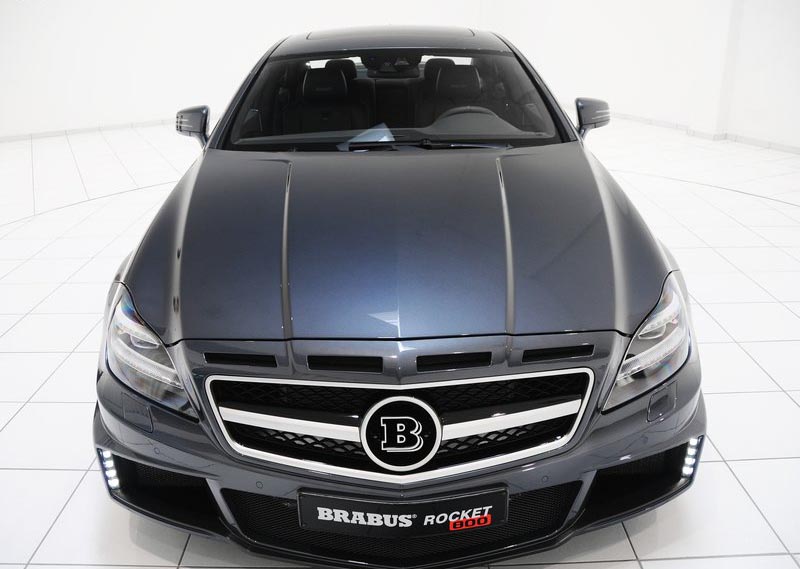
Brabus Rocket 800, 2012


  •  Brabus Rocket 800, 2012

Brabus has been building the world's fastest street-legal sedans for many years. This tradition started in 1996 with the Brabus E V12 that had a top speed of 330 km/h (205 mph), and continued in 2003 with the E V12 Biturbo that reached 350.2 km/h (217.6 mph). In 2006 the Brabus Rocket, built in small-series production based on the first edition of the Mercedes CLS, improved the world record to 365.7 km/h (222.7 mph). The Brabus E V12 "one of ten" based on the latest E-Class, pushed the record to 370 km/h (230 mph).

The world debut of the new Brabus Rocket 800 from Brabus at the 2011 IAA in Frankfurt/Main now continues this unique success story. The high-performance automobile based on the new Mercedes CLS generation is powered by a Brabus 800 V12 Biturbo engine that produces 800 hp (788 bhp) / 588 kW of power and a peak torque of 1,420 Nm (1,047 lb-ft), which in the car is limited to 1,100 Nm (811 lb-ft). The exclusively appointed Brabus Rocket 800, built to order starting at EUR 429,000, reaches a top speed in excess of 370 km/h (230 mph) and accelerates from 0 to 300 km/h (186 mph) in just 23.8 seconds.

Like its predecessors the new Brabus Rocket 800 is also powered by a 12-cylinder high-capacity engine that was converted to 800 V12 Biturbo specifications in the Brabus engine-building shop. Using state-of-the-art machining processes and with utmost precision in every last detail the engine, based on the latest Mercedes 600 engines, underwent a displacement increase from 5.5 to 6.3 liters (336 to 384 cu. in.).

The displacement increase comprises a special crankshaft with longer stroke, larger, forged pistons and an increase in cylinder bore across the board. Intake and outlet ports of both cylinder heads are optimized for mixture flow, and fitted with sports camshafts.

The intake side was also completely reworked: the hood of the Rocket 800 features a carbon-fiber ram-air intake system that gets its combustion air through slits in the Brabus front element.

Another custom development is the Brabus 800 Biturbo system. It comprises two special exhaust manifolds with integrated high-performance turbochargers, and four water-to-air intercoolers. The stainless-steel high-performance exhaust system with free-flow metal catalysts and butterfly valve was also created specifically for the CLS floorpan.

Just as elaborate was the implantation of the V12 engine and all its peripherals into the modified engine bay of the sedan. Numerous components such as the engine mounts had to be custom designed.

Another engineering masterpiece of the Brabus engineers is the newly configured on-board electronics system. It includes newly programmed engine mapping that contributes equally to achieving maximum power yield and to meeting the current EURO V emission standards. Just as important is the adaption to the driving dynamics systems such as traction control, ESP, ABS and Brake Assist.

The Brabus 800 V12 Biturbo engine is lubricated with high-tech motor oil from technology partner ARAL and produces 800 hp (788 bhp) / 588 kW at 5,500 rpm. The even more enormous peak torque of 1,420 Nm (1,047 lb-ft), available from a low 2,100 rpm, is limited electronically in the car to 1,100 Nm (811 lb-ft).

For the first time the Brabus engine specialists combine this high-end engine with a seven-speed quick-shift gearbox. Gears are shifted by means of shift paddles on the steering wheel or automatically. The Brabus limited-slip differential, available with various final drive ratios, optimizes traction of the rear-wheel-drive car.

The Brabus 800 V12 Biturbo engine and the entire powertrain are operated with high-performance lubricants from technology partner ARAL.

With the longest available final-drive ratio the Brabus Rocket 800 reaches a top speed of more than 370 km/h (230 mph), making it the world's fastest street-legal sedan. But this exclusive high-performance automobile is tops in other areas as well: 0 - 100 km/h (62 mph) in 3.7 seconds, 0 - 200 km/h (124 mph) in 9.8 seconds and 0 - 300 km/h (186 mph) in 23.8 seconds are figures that are as unique as this Brabus automobile itself.

To keep the enormous performance of the world's fastest sedan safely in check at all times, the vehicle's aerodynamic properties, suspension and brakes were modified extensively.

Like all other Brabus body components for the new CLS, the Rocket 800 front element that includes the front spoiler and the radiator frame was developed in the wind tunnel. The aerodynamic-enhancement components for the Rocket 800 are manufactured form ultra-light yet high-strength carbon fiber.

The front spoiler features large air inlets and side air vents to ensure optimal air supply of radiators, oil coolers and front brakes. Just as important is that it also minimizes lift on the front axle while improving drag. The air inlets above the radiator cutout provide the ram-air intake system of the 12-cylinder engine with ample combustion air.

The air vents in the front fenders are part of the sporty-elegant yet understated appearance of the four-door car. Brabus side skirts with integrated LED entrance lights calm the airstream along the vehicle's sides. They also form a transition to the carbon-fiber fender flares on the rear axle, which add 40 millimeters (1.6 in.) to the width of the Brabus Rocket 800 compared to a stock CLS.

To achieve an optimal aerodynamic balance, the Brabus design studio has developed a rear wing and a rear diffuser for the CLS body. Side air vents in the rear bumper round out the sporty appearance.

A high-performance vehicle such as the Brabus Rocket 800 naturally also has a precisely calibrated high-end suspension. A height-adjustable coilover suspension was developed in cooperation with technology partner BILSTEIN. In addition to an adjustable ride height the gas-pressure shocks on front and rear axle feature ten selectable settings each for bound and rebound. Sport sway bars give the car even more agile turn-in and reduce body roll during fast cornering.

Maximum stopping power and absolutely fade-resistant brakes are further active safety features of the Rocket 800. The Brabus high-performance brake system was adapted to work with the Brake Assist system of the CLS. On the front axle it consists of vented and grooved steel brake discs that measure 380 x 37 millimeters (15.0 x 1.45 in.) and 12-piston aluminum fixed calipers. Vented and grooved steel discs measuring 360 x 28 millimeters (14.2 x 1.1 in.) and six-piston fixed aluminum calipers on the rear axle complete the extremely efficient and durable brake system.

The immense top speed of the Brabus Rocket 800, for street operations limited electronically to 350 km/h (217 mph), necessitates special high-performance tires. Technology partners Continental, Pirelli and YOKOHAMA mount the 19-inch one-piece Brabus Monoblock F wheels with high-speed-capable tires. The front axle features size 9.5Jx19 wheels and tires in size 255/35 ZR 19. Tires in size 285/30 ZR 19 mounted on identically sized wheels on the rear axle provide excellent traction.

The ergonomically shaped Brabus sport steering wheel with aluminum shift paddles always guarantees perfect, close contact with the suspension. Aluminum pedals, footrest and shifter add further sporty highlights. The Brabus speedometer with 400-km/h (250-mph) dial is also part of the custom-tailored interior as are stainless-steel scuff plates with backlit Rocket 800 logo.

They welcome driver and passengers to the exclusive atmosphere of a Brabus fine leather interior. The company upholstery shop has created an all-leather gray interior crafted with utmost precision from the finest supple leather. The leather is combined with high-gloss-polished black piano wood and a headliner made from black Alcantara. The headrests are embroidered with a Brabus and a Rocket 800 logo.

Brabus Rocket 800 - Technical Data
 =   Dimensions
        Length: 4.996 mm (196.7 in.)
        Width: 1.881 mm (74.1 in.)
        Height: 1.371 mm (54.0 in.)
        Curb weight: 1.980 kg (4,365 lbs.)
        Gross vehicle weight: 2.415 kg (5,324 lbs.)
        Tank capacity/reserve: 66 l / 14.0 l (17.4 / 3.7 gal.)
 =   Engine
        V12-cylinder three-valve alloy engine with two turbochargers
        Displacement: 6.233 cc (380.4 cu. in)
        Compression ratio: 9.0:1
        Rated power output: 800 hp (788 bhp) / 588 kW at 5,500 rpm
        Peak torque: 1,420 Nm (1,047 lb-ft) from 2,100 rpm (electronically limited to 1,100 Nm / 811 lb-ft)
        Fuel type: Super plus (98 ROZ)
        Motor oil: ARAL
=    Performance
        0-100 km/h (62 mph): 3.7 sec.
        0-200 km/h (124 mph): 9.8 sec.
        0-300 km/h (186 mph): 23.8 sec.
        Top speed: 370+ km/h / 230 mph (for on-road operations electronically limited to 350 km/h / 217 mph due to tires)
=    Fuel Economy
        City: 23.8 l / 100 km (9.9 mpg)
        Highway: 11.1 l / 100 km (21.2 mpg)
        Combined: 15.7 l / 100 km (15 mpg)
        CO2 emissions: 372 g/km (595 g/mile)
Read More

Audi A1 quattro, 2013


 Audi A1 quattro, 2013

Audi is crowning its successful A1 model series with an exclusive top-of-the-line model. The dynamic Audi A1 quattro, limited to just 333 units, moves to the head of the compact class. Its two-liter, turbocharged engine produces 188 kW (256 hp) and 350 Nm (258.15 lb-ft) of torque, which is delivered to all four wheels. The Audi A1 quattro sprints from zero to 100 km/h (62.14 mph) in 5.7 seconds and has a top speed of 245 km/h (152.24 mph).

The Audi A1 quattro is powered by the 2.0 TFSI engine. The 1,984 cc, four-cylinder engine combines gasoline direct injection with turbocharging in the classic Audi manner. Among its highlights are the adjustable intake cam shaft and the two balance shafts, which ensure smooth operation. Maximum torque of 350 Nm (258.15 lb-ft) is continuously available between 2,500 and 4,500 rpm, and peak power (188 kW/256 hp) is developed at 6,000 rpm.

Every detail of the sporty, sonorous four-cylinder engine has been optimized for high performance and low fuel consumption. Common rail injection, a turbocharger with intercooler and a regulated oil pump are just a few examples. The Audi A1 quattro is expected to consume on average less than 8.5 liters of fuel per 100 km (27.67 US mpg). Yet it performs like a top-notch sports car: The standard sprint takes just 5.7 seconds, and top speed is 245 km/h (152.24 mph).

The 2.0 TFSI delivers its power to the quattro permanent all-wheel drive system via a precisely shifting six-speed transmission, bringing Vorsprung durch Technik to the small-car class. The heart of this system is an electronically controlled, hydraulically actuated multi-plate clutch whose package of plates rotates in an oil bath.

During normal driving, the clutch sends most of the engine's power to the front wheels. If traction decreases there, the clutch can transfer torque steplessly to the rear axle in just a few milliseconds by forcing the packages of plates together by a defined amount. A pressure reservoir helps the electric pump to develop the oil pressure. If a wheel on one of the axles should slip, it is braked by the electronic differential lock (EDL).

The placement of the multi-plate clutch at the rear axle provides for a harmonious distribution of the axle loads, and the chassis of the Audi A1 quattro has been adapted to the dynamics of the drivetrain. It is much more tautly tuned than that of the production model. The front suspension is a McPherson construction; a four-link axle is used at the rear. The sensitive and efficient electrohydraulic power steering has a sporty, direct 14.8:1 steering ratio.

The Audi A1 quattro rolls on 8.0 J x 18 cast alloy wheels. They are Glacier White, feature an exclusive turbine design and are fitted with 225/35-series tires. The internally vented front brake discs measure 312 millimeters (12.28 in) in diameter and are gripped by black calipers. The ESP stabilization program includes a sport mode and can be switched off entirely for a trip to the race track, for example.

One look is all it takes to see that the Audi A1 quattro is a very special vehicle. It is available only in Glacier White metallic, and its roof is painted high-gloss black. The front bumper is muscular, the frame and grate of the single-frame grille are high-gloss black. The curved bars in the headlights - the wings - are red. The grille, the roof arch and the rear hatch sport quattro badges.

The rear windows are tinted; the roof flows into a large, two-color wing. The color black accentuates the rear hatch and the diffuser. The LED rear lights are tinted; the rear bumper sports a distinctive look. The exhaust system terminates in two polished dual tailpipes on the left and the right, each measuring 100 millimeters (3.94 in) in diameter. The Audi A1 quattro is 3,987 millimeters (13.08 ft) long, 1,740 millimeters (5.71 ft) wide and 1,416 millimeters (4.65 ft) tall, making it somewhat longer than the model on which it is based. Luggage capacity is 210 liters (7.42 cu ft); folding down the rear seats increases this to 860 liters (30.37 cu ft).

Cool, sporty black dominates the interior of the Audi A1 quattro. The seats and the armrests on the doors are covered in Silk Nappa leather with contrasting red seams. The S sport seats up front have pronounced bolsters, integrated head restraints and a quattro badge on the backrest covers. The seats feature multi-way adjustment. The lower section of the center console shines in high-gloss black; the footrest and the pedal caps are made of brushed stainless steel. Red seams frame the floor mats, and the door sill trims bear A1 quattro badges.

The instrument cluster has a number of eye-catching features, including white needles, a red tachometer, the quattro logo and the color display for the driver information system. The multifunction sport steering wheel is flattened at the bottom, wrapped in leather with contrasting red stitching and sports the car's serial number. The shift lever knob is made of aluminum. Many control elements have an aluminum-look finish.

The Audi A1 quattro will be available from the second half of 2012 and will be supplied to customers with a full range of equipment. It includes many features taken directly from the luxury class, including xenon plus headlights, high-beam assistant, adaptive brake lights, LED interior lighting package, light and rain sensor, automatically dimming interior mirror, rear parking system, automatic air conditioning, alarm system, storage package, convenience key and cruise control.

The infotainment equipment likewise leaves nothing to be desired. It includes a CD changer, a digital radio tuner, the Audi music interface and MMI navigation plus. The Bose sound system drives 14 speakers with 465 watts of power; the woofers in the doors are indirectly lit with light guide LEDs. Audi connect uses the Bluetooth online car phone to connect to the Internet and deliver special web services, including Google Earth, to the car. Passengers can also connect their mobile devices to the integrated WLAN hotspot.
Read More