Wednesday, April 4, 2012

Mitsubishi i-MiEV US Version, 2012


Mitsubishi i-MiEV US Version, 2012

Building on the company's more than 35 years of involvement in advanced electric vehicle development, Mitsubishi Motors has unveiled its first all-electric production vehicle bound for the North American market - the Mitsubishi i.

Based on the very popular gasoline-powered Mitsubishi i minicar in the Japanese market, this roomy and practical four-door 2012 model serves as the basis for the new 100% battery-powered Mitsubishi i for the North American market. The zero tailpipe emission Mitsubishi i will be the first North American production vehicle to be powered by Mitsubishi innovative Electric Vehicle (MiEV) technology - cutting edge drivetrain engineering that will serve as the basis for future ultra-environmentally-friendly vehicles from the company. Gone are conventional automotive systems including a gasoline engine, transmission and a fuel tank, having been replaced by advanced components including a lithium-ion battery system, electric motor and an efficient battery charging system in the all-new Mitsubishi i. The electric vehicle has already proved itself a viable and reliable form of transportation as Mitsubishi has been selling the car in its home market since the summer of 2009; production has already commenced for the European-spec i-MiEV.

Mitsubishi anticipates an initial roll out of the Mitsubishi i to its dealership network in the western United States (specifically California, Oregon, Washington and Hawaii) in November 2011, with entry into the northeastern market to follow by March 2012 and nationwide availability by the end of 2012. The vehicle's MSRP is expected to be around $30,000, not including Federal and available state financial incentives.

The new production Mitsubishi i bound for the North American market further differentiates itself from its Japanese- and European-spec versions with a retooled, larger body to provide even more interior comfort for four adults, along with new North American-spec bumpers front and rear for enhanced protection in the event of a collision. Other noteworthy safety measures on the North American-spec vehicle include airbags that protect passengers and control deployment force, Active Stability Control (ASC) and a Tire Pressure Monitoring System (TPMS) - all included as standard equipment.

Easier on the Environment
Thanks to its extremely efficient all-electric powertrain, the Mitsubishi i produces zero on-road CO2, making it a zero emissions vehicle. What's more, when factoring in the CO2 emissions produced by the power plants that generated the electricity that provides the energy for the Mitsubishi i, this revolutionary Mitsubishi production car only produces about 30% of the CO2 emitted by the 660cc gasoline engine that powers the non-electric-version of the car in its home market. And the reduction in CO2 becomes even more statistically significant considering that the 660cc gasoline engine found in the Japanese market is only about one-third of the displacement of the typical four-cylinder gasoline engine powering cars in the North American market.

Additional energy efficiency can be wrung from the "i" model's electric powertrain thanks to Eco (Economy) and Brake driving modes that supplement the vehicle's standard Drive mode. The Eco mode limits excessive power usage from reaching the motor while the Brake mode increases the resistance of the regenerative braking system (especially when driving downhill) to feed even more energy back into the car's bank of lithium-ion batteries.

Low Cost "Fuel" Source
The operating cost per mile of the electrical-powered Mitsubishi i is significantly cheaper than that of a comparable gasoline-powered vehicle. In Japan, the operating cost is only 1/3 that of the 660cc gasoline engine-powered version of the car, and the operating cost can drop even more significantly than that of its internal-combustion sibling by taking advantage of reduced electricity rates by recharging during nighttime or off-peak hours.

Clever Design = Spacious Accommodations, Outstanding Safety
Thanks to the vehicle's excellent packaging and engineering in relation to its size, this uniquely styled automobile provides an excellent level of safety, ample room for four adults plus handy cargo space.

How can a small car possess such ample interior volume? Mitsubishi engineers have cleverly placed the high-capacity lithium-ion batteries beneath the floor, and the electric motor, inverter and battery charger have been located behind and below the rear passenger area. This setup also has the added benefit of lowering the vehicle's center of gravity. Along with the wheels being placed at the farthest corners of the vehicle, this gives the Mitsubishi i exceptional stability along with surprisingly agile handling.

The Advanced Electric Powertrain
The power system consists of a permanent magnet synchronous electric motor and a high energy density lithium-ion battery pack that consists of 88 cells (22 modules, 4 battery cells per module) for a maximum battery capacity of 16 kWh. The battery modules can be installed either transversely or vertically; this packaging flexibility allows them to be stored underneath the cabin floor. All 88 cells reside within an extremely sturdy stainless steel capsule to provide maximum protection.

The Mitsubishi i also features a groundbreaking three-way battery charging system that allows the vehicle to be charged using the onboard household charger through either 110V (15A) or 220V (15A) power sources or by a quick-charger system that utilizes a three-phase 220V power supply. The charging times from a very low battery to completely full are approximately 8 hours at 220V and 16 hours at 110V. The three-phase 220V quick-charger can take a low battery all the way up to an 80% battery charge in under a remarkably fast 30 minutes. The three-phase quick-charger makes use of a special outlet that is accessible on the driver's side of the vehicle, while the onboard household charger's outlet is located on the passenger side of the Mitsubishi i.

Strategic Research and Logistical Partners

The Mitsubishi i has undergone several years of exhaust testing and evaluation not only internally by the Japanese auto manufacturer but with several other institutions, including seven utility companies in Japan, as well as prototype evaluation programs with major United States utilities Southern California Edison, Pacific Gas and Electric Company (PG&E), Portland General Electric and the Tennessee Valley Authority.

And in an effort to help expand and improve the logistical side of the electric vehicle ownership experience, Mitsubishi has teamed with corporate titans including consumer electronics retailer Best Buy and leading power management company Eaton Corporation. Best Buy, through its 20,000-plus strong employees in its Geek Squad division, has partnered to provide site analysis and work to manage installation of a Level 2 Charging Station it will sell through its stores for Mitsubishi i owners to use in their own homes. Designed and manufactured by Eaton - a company that has more than 20 years of experience in developing electrical and hybrid power systems for commercial vehicles - this 220V charging station will cut the time it takes to charge the car's batteries in half when compared to a standard 110V electrical outlet.

Mitsubishi i specifications (North American Version)
  •     Overall length: 144.8"
  •     Overall width: 62.4"
  •     Overall height: 63.6"
    Track
        Front: 55.9"
        Rear: 54.3"
  •     Wheelbase: 100.4"
  •     Number of passengers: 4
  •     Vehicle weight: 2584 lbs.
  •     Motor output: 63 hp
  •     Motor torque: 133 lb.-ft
  •     Battery system: 330V lithium-ion
  •     Drive mode: Mid-engine, rear-wheel drive
Read More

Mitsubishi Lancer Evolution X FQ-400, 2010


 Mitsubishi Lancer Evolution X FQ-400, 2010

The Mitsubishi Lancer Evolution X FQ-400 is the fastest and most extreme version of Mitsubishi's motorsport derived machine. With 403bhp and 387lb.ft of torque on offer from its advanced, lightweight aluminium 2.0-litre turbocharged MIVEC (Mitsubishi Innovative Valve timing Electronic Control) petrol engine the FQ-400 is able to reach 62mph from standstill in an estimated 3.8 seconds before reaching an electronically limited 155mph - where permitted.

Traction and handling
Ensuring all the FQ-400's power is put to good use is Mitsubishi's sophisticated Super-All Wheel Control (S-AWC) four-wheel-drive system which appropriates power to the wheels that can best use it, giving the Mitsubishi Lancer Evolution X FQ-400 quite sensational cross-country performance.

The S-AWC system combines a number of electronic systems that both enhance the FQ-400's performance and safety, with Active Stability Control and Active Centre Differential, Active Yaw Control and Sport ABS giving the Mitsubishi Lancer Evolution X FQ-400 incredible cornering ability, traction and grip. Depending on the conditions the driver can select the most suitable set-up for the S-AWC system, three choices - Tarmac, Gravel and Snow - being offered via the wheel-mounted button and displayed in the central instrument binnacle.

Cornering stability

Increasing the FQ-400's cornering ability even further over its FQ relatives is a wider track and lowered suspension featuring Eibach springs and Bilstein Shock Absorbers. Lightweight 18-inch, nine spoke alloy wheels fitted with Toyo Proxes R1R tyres enhance the FQ-400's grip, giving it sharper cornering response on the road and more incisive steering. The enhanced agility and performance is backed by a revised braking system which uses aerospace grade aluminium alloys and floating sealed discs grabbed by high performance pads.

The Extreme Power
To achieve the incredible 403bhp from just 2.0-litres Mitsubishi has had to significantly revise the FQ-400's advanced powerplant. Motorsport specification high-flow fuel injectors are fitted to the aluminium cylinder head and a new hybrid turbocharger is also fitted. The higher specification turbocharger features low-friction bearings, a high temperature turbine and strengthened thrust bearing to increase response and reduce turbo lag. Feeding the turbocharger cooled air, improving its performance and efficiency, is an enhanced intercooler, while the exhaust's gasses flow from the engine via a 3-inch diameter high flow stainless steel piping and catalytic convertor before exiting through a centrally positioned exhaust.

Mitsubishi has remapped the Engine Control Unit (ECU) extensively with over 500 hours of development time to allow its 2.0-litre turbocharged engine to not just produce its exceptional output but to do so with excellent driveability. The FQ-400's acceleration is sensational, it pulling hard through the gears regardless of engine revs. With peak torque of 387lb.ft on offer from just 3,500rpm, the Mitsubishi Lancer Evolution X FQ-400 is just as able to trickle through town traffic as it is taking a rally special stage.

A 'nod' to the Evo VI

The Mitsubishi Lancer Evolution X FQ-400 looks every bit the rally refugee too, giving a strong 'nod' to the styling cues of the legendary Evolution VI, and builds on the already aggressive style of its Lancer Evolution X FQ relatives.

A heavily vented bonnet helps heat escape from the FQ-400's turbocharged engine and a new lightweight composite front bumper incorporating Mitsubishi's trademark 'Jet Fighter' grille features carbon-fibre elements on its leading edges. Additional lighting and High Intensity Discharge (HID) lights mark out the FQ-400's nose, its added aggressiveness further enhanced by a 30mm drop in front ride height. Composite side skirts, a re-styled rear bumper with a carbon fibre diffuser, a rear wing incorporating a gurney strip and a roof-mounted 'Vortex Generator' all help manage airflow and cooling.

Behind the 18-inch lightweight, nine spoke alloy wheels it's possible to see the Alcon brakes on the front, while the Toyo Proxes R1R tyres underline the FQ-400's potency with their aggressive 'cut slick' tread pattern. Inside, the driver is held tightly against the FQ-400's sensational accelerative, braking and cornering forces in Recaro bucket sports seats, the range-topping Mitsubishi Lancer Evolution X also gaining an FQ-400 liveried handbrake handle and carbon fibre gearknob.

No compromise
Despite its obvious focus the FQ-400's suspension offers compliance thanks to the Eibach Springs and Bilstein Shock Absorbers, the FQ-400's usefulness as a daily driver not compromised overly thanks to Mitsubishi's chassis tuning. The stiff bodywork not only provides an exceptionally rigid platform for the suspension to work, but excellent crash-worthiness, the Lancer Evolution X attaining a five-star score in Euro NCAP's independent crash tests. The FQ-400's S-AWC and its incorporated stability, traction and braking systems helping avoid an accident in the first place. Even so there's reassurance of seven airbags, seat belt pretensioners and ISO Fix child seating all included in its standard specification.

Fully loaded

Standard equipment for the range-topping Lancer Evolution X model is comprehensive, the Mitsubishi Lancer Evolution X FQ-400 coming with Bluetooth hands-free telephone connection, a CD-tuner with 30 Gig hard drive, DVD satellite navigation and privacy glass. Convenience features like remote central locking, automatic headlamps and windscreen wipers increase the FQ-400's ease of use, the huge performance it offers not coming at the expense of usefulness. Like its Lancer Evolution X relatives it features comfortable seating for five as well as a usefully sized boot, the Mitsubishi Lancer Evolution X FQ-400 bringing all the convenience of the standard saloon car it's based upon - but with explosive performance potential.

Setting the standard
Standard it's not though, instead the Mitsubishi Lancer Evolution X FQ-400 is a standard setter, with performance that's the measure of any rival and many exotic sports and supercars costing many multiples of its £49,999 list price. Available from June 2009, the FQ-400 is covered by a three year / 36,000 mile warranty.
Read More

Jeep Patriot, 2011


Jeep Patriot, 2011

The Chrysler Group LLC released images of the new 2011 Jeep Patriot, the affordable compact sport utility vehicle (SUV) that offers consumers segment-leading capability and unsurpassed 4x4 fuel economy, along with classic, rugged Jeep styling.

Jeep Patriot's classic exterior styling and capability are enhanced for 2011 with new front and rear fascias, a body-color grille, and an increased 4x4 ride height. Ride-and-handling is refined courtesy of retuned steering and suspension systems. Interior enhancements round out the new-for-2011 features, and include significantly upgraded touch points.

"Patriot boasts class-leading 4x4 capability and unsurpassed fuel economy, and a host of safety features in a fun and affordable package - a combination that only Jeep can offer," said Mike Manley, President and CEO - Jeep Brand, Chrysler Group LLC. "For 2011, Jeep Patriot is even more appealing to consumers, thanks to rugged new exterior styling, interior enhancements and refinements to the suspension and steering systems."

New-for-2011 Jeep Patriot exterior highlights include an aggressive new front fascia with standard fog lamps positioned inside the headlamps; a new rear fascia that extends lower than on previous models; a body-color grille; new available 17-inch wheels; four new colors and 4x4 ride height that has been increased by 1 inch.

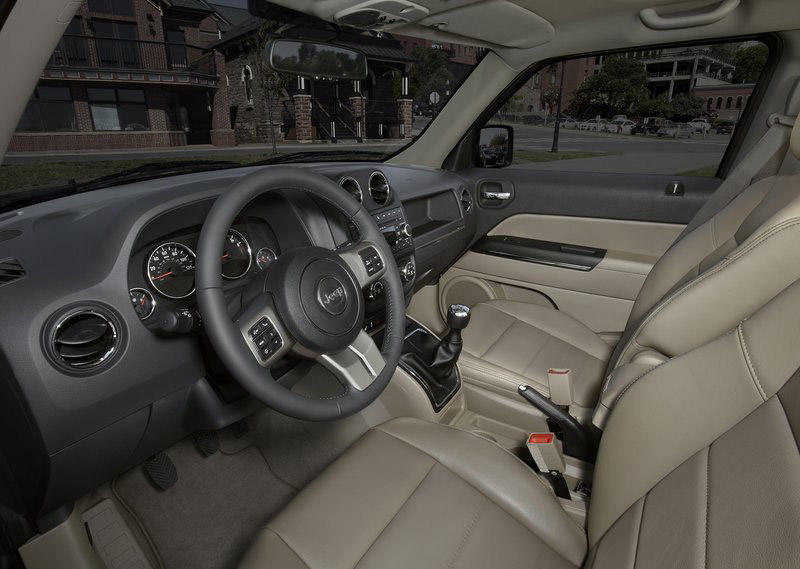
Interior upgrades for the 2011 Jeep Patriot include new soft touch front-door trim panels with a padded upper surface; new center armrest; a new Jeep steering wheel with integrated controls that allow the driver to operate the radio, cruise control, hands-free phone and other vehicle functions while keeping their hands on the wheel; new cloth interior, with premium cloth bucket seats in the front; standard speed control on all models; new backlighting of door switches, door locks, windows and power mirror controls and standard automatic temperature control on the Latitude X model.

As a stand-alone option on all models for 2011 is the Uconnect Voice Command with Bluetooth for hands-free calling and music/radio/SIRIUS satellite radio control.

The 2011 Jeep Patriot offers customers more capability than any other vehicle in the compact SUV class. Capability features include low-range mode which generates a best-in-class 19:1 crawl ratio, brake traction control, 19-inch water fording capability, Hill Descent Control, 4x4 Lock shift-on-the-fly which sends 50 percent of torque to front and rear wheels, and a maximum tow rating of 2,000 lbs. The Jeep Patriot also boasts a retuned suspension for 2011, with higher spring and damping rates, added rebound springs, and an increased diameter of the rear sway bar. Despite these numerous capability features, the 2011 Jeep Patriot boasts unsurpassed 4x4 fuel economy in its segment.

A 2010 Insurance Institute for Highway Safety (IIHS) Top Safety Pick, the Jeep Patriot for 2011 is loaded with more than 30 standard safety and security features, thoughtful functionality and best-in-class off-road capability with Freedom Drive II, offering tremendous value for consumers that desire an SUV to accommodate their active lifestyle at an affordable price.

Offered with front-wheel- or four-wheel-drive, Jeep Patriot is available in three configurations - Sport, Latitude and Latitude X.

Built at the Belvidere Assembly Plant in Belvidere, Ill., the new 2011 Jeep Patriot models arrive in Jeep showrooms in the fourth quarter of 2010.
Read More

Jeep Grand Cherokee SRT8, 2012


Jeep Grand Cherokee SRT8, 2012

The most powerful, technologically advanced, high-performance Jeep vehicle ever - the all-new 2012 Jeep Grand Cherokee SRT8 - arrives in the summer of 2011 with a combination of Jeep's legendary capability and utility, merged with the renowned advanced performance engineering from Chrysler Group LLC's Street and Racing Technology (SRT) team.

Delivering outstanding driving performance in all conditions, and complemented by key SRT attributes - including functional, performance-oriented styling, world-class ride and handling, benchmark braking and race-inspired interior appointments - the 2012 Jeep Grand Cherokee SRT8 broadens the Jeep vehicle lineup and builds upon the successful launch of the award-winning 2011 Jeep Grand Cherokee.

Designed and built using the proven SRT formula that raises the performance to astonishing levels, the new 2012 Jeep Grand Cherokee SRT8 runs from 0-60 mph in 4.8 seconds, 0-100-0 mph in the mid-16 second range, can cover the quarter mile in the mid-13 second range, has a top speed of 155 mph, and brakes from 60-0 mph in 116 feet.

Awe-inspiring powertrain
Powering the 2012 Jeep Grand Cherokee SRT8 is Chrysler Group's all-new 6.4-liter HEMI V-8 with Fuel Saver Technology that delivers an estimated 465 horsepower and 465 lb.-ft. of torque - an improvement of 45 horsepower and 45 lb.-ft. torque over the 6.1-liter HEMI V-8 it replaces.

An active intake manifold and high-lift camshaft with cam phasing delivers maximum low-end torque while optimizing high-end power across a wider and improved rpm band. Specifically, 90-percent of peak torque is available between 2,800 and 6,000 rpm, allowing for inspired standing starts and improved straight-line performance.

Standard Fuel Saver Technology and a new-for-2012 active valve exhaust system allows four-cylinder operation to engage over a wider rpm range, to deliver both improved fuel efficiency - an estimated 13-percent increase on the highway - and an extended range of approximately 450 miles on one tank of gas.

Standard steering wheel mounted paddle shifters join the standard AutoStick on the floor. Both are mated to a proven automatic transmission, allowing a choice of spirited shifting on the road and the race track. Both methods give the driver the ability to shift while the transmission controller calibration prevents situations that might over rev the engine. Fully adaptive electronic control of all shifting makes the powertrain more responsive while minimizing harshness.

Outstanding ride, handling and capability
For 2011, all Jeep Grand Cherokee models boast an improved and refined on-road ride thanks in part to the vehicle's body structure. Torsional stiffness was improved 146 percent versus the previous model, for improved ride, durability and reduced noise, vibration and harshness. The improvement is achieved with more than 5,400 welds in the body alone, marking a 53-percent increase in spot welds, a 42-percent increase in arc welds and a 38-percent increase in structural adhesive.

The best handling Jeep vehicle ever - capable of .90 g on the skid pad - features a new SRT-tuned, adaptive damping suspension managed by the new Jeep Selec-Track system that interacts with several different systems (stability control, adaptive damping, transmission shift strategy, transfer case torque proportioning, Electronic Limited Slip Differential performance, throttle control and cylinder de-activation) to automatically tune the dynamics of the vehicle. Drivers can manually choose between five dynamic modes for specific driving conditions:
  •     Auto: provides the most compliant ride and automatically adapts to any road situation using the adaptive suspension tuning
  •     Sport: provides enhanced body control for a sporty, fun-to-drive ride for the street
  •     Tow: provides a safe reduction in pitch and bounce for enhanced towing capability
  •     Track: provides the high-performance, firm, "track-tuned" suspension option to lock down body motion for the ultimate handling experience
  •     Snow: provides the most conservative dynamic mode, so the vehicle will safely stay in-line in inclement winter weather conditions
The standard Jeep Quadra-Trac active on-demand four-wheel-drive transfer case uses input from a variety of sensors in order to determine tire slip at the earliest possible moment and take corrective action. The system uses Throttle Anticipate to sense quick movement in the throttle from a stop and maximizes traction before slippage occurs. When tire slippage is detected, the Jeep 4x4 system can transfer up to 100 percent of available torque to one rear wheel.

The transfer case also enhances handling by proportioning torque between the front and rear axles to maintain the driver's intended path. The new Grand Cherokee SRT8 also features an Electronic Limited Slip Differential that eliminates rear wheel slip and improves handling.

The performance-tuned, fully-hydraulic steering system is improved with a new, heavy-duty pump and pump cooler. Revised gearing gives drivers more direct feel and on-center response.

New split 5-spoke, 20-inch forged aluminum wheels ride on P295/45ZR20 Pirelli PZero run-flat tires (standard All-season or available Three-season).
Rounding out the capability of the 2012 Jeep Grand Cherokee SRT8 is a trailer tow rating of 5,000 lbs.

Outstanding braking
Chrysler Group's SRT vehicles are well known for their world-class braking. Stopping power for the 2012 Jeep Grand Cherokee SRT8 comes courtesy of new SRT high-performance Brembo brakes with four-wheel anti-lock brake system (ABS).
Stopping distance performance of 116 feet from 60-0 mph is made possible by new red-painted, Brembo 6-piston (front) and 4-piston (rear) calipers, and vented rotors at all four corners measuring 15-inches (front) and 13.8-inches (rear).

Aggressive and functional exterior
The functional performance exterior of the 2012 Jeep Grand Cherokee SRT8 features the "planted" look of a high-performance sports car by being lowered 1 inch and adding new, SRT-exclusive, body-color wheel flares and side sill cladding.

A one-piece front fascia contains new LED multi-function daytime running lamps that result in an exclusive face for the new Jeep Grand Cherokee SRT8, while a body-colored front grille with a unique black screen background and chrome bezel inserts adds to the aggressive look.
The integrated lower front grille is painted in gloss black and a newly designed underbody belly pan features integrated brake ducting to improve cooling and fade performance. Completing the new front end is a newly sculpted hood with functional dual black heat extractors for added engine cooling.

At the rear, the SRT performance influence continues with a new liftgate spoiler that reduces drag and improves downforce. A unique one-piece rear fascia includes a separate air diffuser along with an available trailer receiver and access cover. New for the 2012 version of the Jeep Grand Cherokee SRT8 is the dual-sport exhaust system featuring 4-inch exhaust tips.

Race-inspired and functional interior

The 2012 Jeep Grand Cherokee's refined, luxurious interior takes on a performance feel in SRT8 form with race-inspired technology and SRT-exclusive appointments.
An all-new, leather-wrapped, heated steering wheel features a unique rim section with a flattened bottom surface - evoking a race-inspired cockpit - that showcases the SRT logo. Standard paddle-shift controls flank both sides of the new contoured palm rests while all audio and Electronic Vehicle Information Center (EVIC) controls are accessible from the horizontal spokes on the steering wheel. A power tilt and telescoping steering column also is standard.

SRT-exclusive Performance Pages are new for 2012 and show instant feedback on steering input measurements, horsepower, torque, 0-60 mph time, 60-0 mph braking distance, g-forces, and one-eighth mile and quarter-mile times, along with expanded engine information.
New SRT-styled Nappa leather and suede seats, with sculpted bolsters and adjustable headrests, provide all the comfort for daily drives - and "grip" to keep the driver and passengers in place during spirited driving. The embroidered SRT logos and contrast stitching accent the two front seats. Heated (front and rear) and ventilated (front) seats are standard.

Carbon fiber accents are integrated into the instrument panel and door trim panels and new bright, racing style brake and pedal pads add to the high-performance look inside the cabin.
An available CommandView dual-pane sun roof provides twice as much glass surface than a standard sun roof and extends from the windshield to the rear of the vehicle.
The available Luxury Group package adds premium leather to the door trim panels, instrument panel and center console along with a power liftgate, adaptive cruise control, Forward Collision Warning and Blind-spot Monitoring.

Safety and security
Already a recipient of the 2011 Insurance Institute for Highway Safety (IIHS) 'Top Safety Pick' for the volume Grand Cherokee models, the 2012 Jeep Grand Cherokee SRT8 offers consumers 45 safety and security features:
  •     Active head restraints: Deploy in the event of a rear collision. Restraints are designed to reduce injuries by minimizing the gap between the head restraint and the passenger's head
  •     Active turn signals: Turn signal flashes three times when stalk is depressed for one second to indicate a lane change
  •     Adaptive cruise control (ACC): The system decreases the vehicle's pre-set cruise-control speed when closing in on another vehicle in the same lane, or when another vehicle pulls into the same lane. The system will accelerate to the pre-set speed when the vehicle in front speeds up or moves into another lane. ACC will maintain a driver adjustable distance between the vehicle and the one in front of it, allowing the use of cruise control in light traffic without having to continuously adjust settings
  •     Advanced multi-stage air bags: Inflates with a force appropriate to the severity of the impact Meets FMVSS 208 advanced air bag requirements for smaller, out-of-position occupants
  •     Anti-lock brake system (ABS): Senses and prevents wheel lockup, offering improved steering control under extreme braking and/or slippery conditions
  •     Anti-lock brake system with rough-road detection: Anti-lock brake system capable of detecting if the vehicle is driving on a rough road by the oscillations in the wheel speed signals. When rough road is detected on off-road surfaces or trails, ABS enters a different pressure control where it will hold the brake pressure for longer pulses
  •     BeltAlert: Activates a chime and/or illuminates an icon in the instrument cluster to remind the driver and front passenger to buckle up if a vehicle is driven without belted front-seat occupants
  •     Blind-spot Monitoring (BSM): Uses dual ultra-wideband radar sensors to aid the driver when changing lanes, or if being passed by or passing unseen vehicles. The system notifies the driver of vehicle(s) in their blind spot via illuminated icons on the sideview mirror and with a driver-selected audible chime
  •     Brake Assist: In an emergency brake situation, the system applies maximum braking power, minimizing the stopping distance
  •     Brake Override: When a disagreement exists between the throttle and the brake, the brake signal causes the engine controller to reduce engine power, allowing the operator to stop the car
  •     Brake-traction control system (BTCS): Helps to keep driving wheels from spinning during acceleration from a stop or during slow speeds by applying individual brakes to the slipping wheel(s)
  •     Child seat anchor system: LATCH (Lower Anchors and Tethers for CHildren) is designed to ease installation of compatible aftermarket child seats
  •     Constant-force Retractors (CFR): Regulates the force exerted on the occupant by the seat belt, and then gradually releases seat-belt webbing in a controlled manner
  •     Electronic roll mitigation (ERM): An extension of electronic stability control (ESC). Uses input from ESC sensors to anticipate if the vehicle is at risk of entering a potential roll situation, then applies the brakes individually and modulates the throttle position as needed
  •     Electronic stability control (ESC): Enhances driver control and helps maintain directional stability under all conditions. Provides the benefit in critical driving situations such as turns, and is valuable when driving on mixed surface conditions including snow, ice or gravel. If there is a discernible difference between driver input through the steering wheel and the vehicle's path, ESC applies selective braking and throttle input to guide the vehicle back on to the driver's intended path
  •     Energy-absorbing steering column: The power-adjust steering column employs a calibrated bending element that deforms during column stroke for optimal energy management
  •     Enhanced Accident Response System (EARS): Makes it easier for emergency personnel to see and reach occupants in the event of an accident by turning on the interior lighting and unlocking doors after air bag deployment. Also shuts off flow of fuel to the engine
  •     Express Up/Down Windows: One-touch powered express up/down window button located on the front driver and passenger-side door
  •     Forward Collision Warning (FCW): Using forward-facing radar sensors, this system detects when the vehicle may be approaching another vehicle too rapidly and alerts the driver so the driver can determine what action must be taken in order to prevent the vehicle from a collision
  •     High-intensity discharge (HID) headlamps: Provide approximately three times the light output of conventional reflector lamps for improved nighttime illumination
  •     Hill-start Assist (HSA): Assists drivers when starting a vehicle from a stop on a hill by maintaining the level of brake pressure applied for a short period of time after a driver's foot is removed from the brake pedal. If throttle is not applied within a short period of time after the driver's foot is removed from the brake pedal, brake pressure will be released
  •     Keyless Enter-N-Go: When an individual enters the vehicle, electronic sensors detect if the vehicle key fob is present. The vehicle will then allow the individual to push a button to start the vehicle without having to insert the key into the ignition
  •     Knee bolsters: The lower instrument panel and the glove-box door are designed to properly position the occupant during impact, enabling air bags to work effectively
  •     Navigation system: Voice-activated navigation system available with real-time traffic to provide precise guidance to destination through the use of global positioning system (GPS) satellite technology
  •     ParkSense rear park assist system: Assists at low speeds in reverse to detect stationary objects. Consists of audible warnings for the driver and has a display in the Electronic Vehicle Information Center (EVIC) integrated into the instrument cluster
  •     ParkView rear back-up camera: Provides a wide-angle view of the area immediately behind the vehicle, giving the driver greater peace of mind before reversing at low speeds. Contains grid line to aid the driver when maneuvering into parking spaces or narrow areas. Also aids in lining up a trailer to the vehicle's trailer hitch, when so equipped. The image is displayed on the navigation screen when the transmission is shifted into Reverse
  •     Power tilt-and-telescoping steering column with memory: Allows steering column to tilt and move toward or away from the driver to achieve a safe and comfortable distance from the advanced multi-stage front driver air bag, if deployed
  •     Rain Brake Support: Uses the ESC pump to occasionally push brake pads lightly against brake rotors in rainy conditions in order to keep rotors dry
  •     Rain-sensing wipers: A driver convenience feature that automatically senses moisture on the windshield and activates wipers
  •     Ready Alert Braking: Anticipates situations when the driver may initiate an emergency brake stop and uses the ESC pump to set brake pads against rotors in order to decrease the time required for full brake application
  •     Rear Cross Path (RCP): In parking lot situations, this system warns drivers backing out of parking spaces of traffic moving toward their vehicle. It activates any time the vehicle is in Reverse. The driver is notified of vehicle(s) crossing behind the vehicle via illuminated icons on the sideview mirror and with a driver-selected audible chime
  •     Remote (fob) operated windows (front windows - down only): Enable an individual to cool down the vehicle passively by opening front windows remotely
  •     Remote keyless entry: Locks and unlocks doors and turns on interior lamps. If the vehicle is equipped with a security alarm, the remote also arms and disarms that system
  •     Remote start: Conveniently starts the engine and activates key comfort settings based on ambient conditions by using the key fob while maintaining vehicle security
  •     Rollover crash sensing: Senses a rollover and deploys seat belt pretensioners and/or standard full-length side-curtain air bags as needed
  •     Seat belt pretensioners: During a collision, impact sensors initiate front seat belt pretensioners to remove slack in the seat belt system, thereby reducing the forward movement of the occupant's head and torso
  •     Sentry Key engine Immobilizer: Utilizes an engine key that has an embedded transponder with a preprogrammed security code to discourage vehicle theft. When the key is inserted into the ignition, the controller sends a random number to the transponder and the engine is allowed to start. If an incorrect key is used, the engine will shut off after a few seconds
  •     Signal mirrors: Signal lamp built into the housing of exterior mirrors allows turn signals to be viewed from the front, as well as the sides and rear of the vehicle in order to alert oncoming traffic and pedestrians
  •     SmartBeam headlamps: Headlamp system adjusts to ambient light and oncoming traffic to deliver maximum lighting
  •     Standard full-length side-curtain air bags: Extend protection to all outboard front- and rear-seat passengers. Each side air bag has its own impact sensor that autonomously triggers the air bag on the side where an impact occurs. This type of air bag is housed in the headliner just above side windows
  •     Standard seat-mounted side thorax air bags: Provide enhanced protection to thedriver and front outboard passenger in certain impacts. Each side air bag has its own impact sensor that autonomously triggers the air bag on the side where an impact occurs. Standard side air bags are housed within the outboard side of each front seat
  •     Three-point seat belts: Front outboard seating positions and all rear seating positions have lap and shoulder belts
  •     Tire-pressure monitoring (TPM): Informs driver when tire pressure is too low. Pressure-sensor modules within the valve stems of all four road wheels send continuous radio-frequency signals to a receiver and the system
  •     Trailer-sway control (TSC): Reduces trailer sway and improves handling in adverse towing conditions caused by crosswinds and traffic. The system monitors the vehicle's movement relative to the driver's intended path, then applies alternating brake pressure to slow the vehicle and then increases the pressure on one front wheel in order to counteract the sway induced by the trailer
  •     Uconnect Phone: In-vehicle, voice-activated communication system that allows customers to talk on their Bluetooth compatible phone with your hands on the wheel and eyes on the road. The built-in phonebook sync feature automatically downloads as many as 1,000 phone book entries from supported phones, which can then be selected by simply saying contact name

Read More

Tuesday, April 3, 2012

Honda Civic, 2012


Honda Civic, 2012

The all-new 2012 Honda Civic represents the ninth generation of one of the company's most popular and globally recognized products. Having earned a reputation for being a fun-to-drive compact that is simultaneously fuel efficient, sporty, stylish and durable, the Honda Civic has become a beloved and relied-upon member of the worldwide transportation family. Cumulatively, the Civic has reached 8.8 million customers in the United States through 2010 since its launch as a 1973 model.

Each generation of Honda Civic has improved with a specific development theme in mind. The 2012 Civic embraces the fundamental concept of a "futuristic and distinctive compact," a direction that introduces new values that reach ahead of present-day needs and elevates the experience that Honda Civic represents. Major strides include improvements to refinement throughout, increased fuel economy on all models, the further addition of interactive technologies for personalization and convenience, along with enhancements to performance, ride and interior packaging.

Model Lineup
The automotive landscape has rapidly evolved in the last decade with increased interest in fuel economy, low emissions and overall affordability. All of these traits are among the Civic's strongest advantages. The new 2012 Civic lineup further embraces these concepts with six different variants that span from ultra efficient to high performance, with specific models designed to better meet individual needs and preferences. For 2012, a highly affordable and highly efficient Honda Civic HF has been added to the lineup. The aero-enhanced Civic HF achieves an estimated highway fuel economy rating of 41 miles per gallon, two more mpg than the regular Civic Sedan, and the highest highway fuel economy rating in America for any gasoline-only compact sedan equipped with an automatic transmission.

The 2012 Honda Civic model lineup is comprised of:
  • Civic Sedan (Civic DX, Civic LX, Civic EX and Civic EX-L)
  • Civic Coupe (Civic DX, Civic LX, Civic EX and Civic EX-L)
  • High-efficiency and value-oriented Civic HF (new)
  • High-performance Civic Si Sedan and Civic Si Coupe
  • Ultra-efficient Civic Hybrid (with new Lithium-Ion batteries)
  • Ultra-clean Civic Natural Gas, previously known as Civic GX (available at qualified dealers nationwide)
The Foundation of Civic
Beneath the aerodynamic skin of every 2012 Civic is Honda's commitment to its foundational pillars of safety, fun-to-drive performance, style, comfort, convenience, durability, quality and refinement. The end result is a vehicle that's not only a smart decision when new, but can also provide long-term joy of ownership unique to this class of vehicle.

Safety - Advanced safety systems include Honda-exclusive Advanced Compatibility Engineering (ACE) body structure for frontal collision energy management and vehicle-to-vehicle crash compatibility, and a long list of standard safety equipment including two-row side curtain airbags, dual-stage, multiple-threshold driver's and front passenger's airbags, driver's and front passenger's side airbags, Vehicle Stability Assist (VSA), an anti-lock braking system (ABS) with Brake Assist, and a new Motion Adaptive Electric Power Steering system that helps the driver steer in the ideal direction to mitigate oversteer or understeer situations. Internal crash test information indicates that the new Honda Civic should achieve top marks in both the federal government's National Highway Traffic Safety Administration (NHTSA) New Car Assessment Program and the independent Insurance Institute for Highway Safety (IIHS) designation as a "TOP SAFETY PICK."

Fun to Drive - Every Honda Civic model is designed to be fun to drive, with a MacPherson strut front suspension, a multi-link rear suspension, and front and rear stabilizer bars. Motion-Adaptive Electric Power Steering (EPS) improves steering response at low speeds while rewarding the driver with outstanding feel at higher speeds. In addition, with EPS there is no parasitic power loss to the engine as is common with a traditional hydraulically boosted steering system - which benefits both power output and fuel economy. Standard 15-inch diameter wheels with all-season tires, 16-inch wheels on Civic EX and Civic EX-L models, and 17-inch wheels on Civic Si models (with performance-oriented summer tires available) provide a satisfying blend of ride comfort and all-weather grip. The Civic Si Sedan and Civic Si Coupe further expand the driving fun with a new, larger displacement (201 horsepower) engine and specially tuned suspension.

Distinctive, Aerodynamic Styling - As a new interpretation of the Honda Civic's iconic "one-motion" mono-form shape, the 2012 Civic is designed to convey an even more substantial, high-energy appearance. The exterior styling of both Civic Sedan and Coupe models showcases the clean-yet-powerful body lines with sleekly angled windshields, wide stances and pronounced character lines along the profile. The look of the Civic Coupe conveys an aggressive attitude with a more angular front fascia, mesh grille and a tapered rear roofline that flows smoothly into the trunk. Hidden aerodynamic features such as flat-bottom unit-body construction, precisely placed aero strakes, and other features work together to help the Honda Civic achieve excellent fuel-economy.

Comfort, Convenience and Personalization - Crisp, smart and driver focused, the new Civic's 5-passenger interior is a careful blend of form and function, with an advanced instrument layout that is unique in its class. A "smart interface" approach divides the interior into different areas, with key instrument displays located above the steering wheel. Secondary information is located lower in the area, while a third area to the driver's right groups controls that are not essential to driving. New for 2012, the intelligent Multi-Information Display (i-MID) on all models (except Civic DX) provides a 5-inch color monitor for the display of vehicle information and audio information including album artwork (if available). Along with customizable vehicle settings, the i-MID includes the ability to upload personal wallpaper backgrounds. The Civic can be further personalized for driving with Eco Assist on all models (except Civic Si), the first time this feature has been included on any non-hybrid Honda model in America. The performance-oriented Civic Si exclusively features a new Sequential Rev-limit Indicator and a Power Monitor screen that can be displayed on the new i-MID.

Durability, Quality and Reliability - For many customers the Durability, Quality and Reliability (DQR) of the Honda Civic is what keeps them returning year after year. These fine qualities - and the resale or trade-in value they engender for the Civic - become a powerful purchase incentive. Virtually every major study of vehicle residual value has shown that the Honda Civic typically has one of the highest residual values in the industry. As an end result, a high residual or resale value makes the Civic's true cost of ownership less than many lower-priced competitors.

Powertrain

Honda has long been known for its world-class engine technology and a continuous process of innovation and improvement. At the core of Honda's powertrain engineering is the ongoing pursuit of greater performance, enhanced fuel economy and low emissions. The 2012 Civic model range embodies Honda's ongoing effort to offer a wide range of powertrain choices including gasoline, hybrid and Compressed Natural Gas (CNG) that offer unique solutions for different buyers.

An advanced 140-horsepower, 1.8-liter i-VTEC engine is standard in the Civic Sedan, Civic Coupe and Civic HF, with a choice of a 5-speed manual or 5-speed automatic transmission (automatic only for Civic EX-L Coupe, Civic EX and EX-L Sedans, and Civic HF). A variant of the same 1.8-liter engine develops 110 horsepower in the compressed natural gas (CNG) powered Honda Civic Natural Gas, which comes standard with a 5-speed automatic transmission. The performance-oriented Si model has a 201-horsepower, 2.4-liter i-VTEC engine, matched with a close-ratio 6-speed manual transmission. And finally, the Civic Hybrid is powered by an ultra-efficient 1.5-liter i-VTEC® engine with Integrated Motor Assist® producing 110-horsepower. This is coupled to a Continuously Variable Transmission (CVT).

Civic Sedan, Civic Coupe, Civic HF and Civic Natural Gas Powertrain
The Honda Civic Sedan, Civic Coupe, Civic HF and Civic Natural Gas benefit from an updated and refined version of the 1.8-liter I-4 engine that powered the previous generation Civic. The new engine has extensive changes that reduce friction, improve emissions performance and increase fuel economy.

The engine is a Single Overhead Cam (SOHC) 1.8-liter inline 4-cylinder design with 16 valves, i-VTEC®, and a dual-stage intake manifold. In the Civic Sedan, Civic Coupe and Civic HF, the engine produces 140 horsepower at 6300 rpm, and 128 lb-ft. of torque at 4300 rpm. In the Civic Sedan and Coupe, the 1.8-liter engine has an estimated EPA city/highway fuel economy rating of 28/39 miles per gallon when equipped with automatic transmission.

Honda Civic Si Powertrain
The 2012 Civic Si is powered by a new 2.4-liter inline 4-cylinder engine that is the largest and most powerful of any Civic introduced in the United States. The dual overhead cam (DOHC) engine is an all-aluminum design that uses four valves per cylinder (16 valves total), a high-performance version of the i-VTEC® system and a specially tuned high-volume intake manifold. The Civic Si produces 201 horsepower - up four horsepower from the 2.0-liter engine it replaces. The i-VTEC® "intelligent" valve-control system, new friction-reducing technologies and extensive weight control measures helps the Civic Si deliver exhilarating acceleration, improved fuel economy and low exhaust emissions.

The new larger displacement engine in the Civic Si delivers peak power at a more accessible 7000 rpm compared to the previous Si engine's 7800 rpm power peak. The engine's increased displacement results in a substantial 22-percent increase in peak torque. The new 170 lb-ft rating occurs at just 4400 rpm, 1700 rpm lower than the previous engine's 139 lb-ft at 6100 rpm. Even with its increase in displacement, horsepower and torque, the 2012 Civic Si has an estimated EPA city rating of 22 mpg (up 1 mpg compared to the 2011 Civic Si) and increases highway fuel economy with a rating of 31 mpg (up 2 mpg compared to the 2011 Civic Si). In addition, the Civic Si engine meets strict Ultra-Low Emission Vehicle (ULEV-2) emissions standards.

The Honda Civic Si is available exclusively with a 6-speed manual transmission with a short-throw shifter. Designed to be compact and lightweight, the 6-speed has also been engineered to provide quick and precise shift action. The Civic Si also includes a clutch with a torsion mechanism that enhances refinement in terms of engagement and feel.

Honda Civic Hybrid Powertrain
The newest-generation Integrated Motor Assist (IMA) system fitted to the Civic Hybrid uses a gasoline engine as the primary source of power while an electric motor provides additional power and electricity regeneration capability. The new IMA system consists of a larger 1.5-liter i-VTEC® 4-cylinder engine connected to a larger, more powerful electric motor and a Continuously Variable Transmission (CVT). A new Lithium-Ion (Li-Ion) battery pack is used to capture and store electricity for the upgraded 23-horsepower electric motor. The new Lithium-Ion battery is more powerful, lighter and more compact than the nickel-metal hydride (NiMH) battery it replaces.

Together, the gasoline engine and electric motor team to produce 110 horsepower at 5500 rpm and 127 lb-ft of torque at 1000-3500 rpm. Compared to the previous generation Civic Hybrid, the new Civic Hybrid has the same peak horsepower, but achieves it at 500 fewer rpm. The new Hybrid has gained 4 lb-ft of torque, and it is spread over a wider rpm range (between 1000 rpm to 3500 rpm) for improved performance during normal city driving.

During acceleration, the engine or the engine and electric motor propel the vehicle. During sustained cruising, the gasoline engine and/or the electric motor can individually propel the vehicle. During braking, the gasoline engine deactivates and the electric motor acts as generator to replenish the Li-Ion battery pack. When the vehicle is at a stop, the engine can enter an idle-stop mode to conserve fuel and reduce emissions - and the engine remains off until the brake pedal is released.

Compared to the previous Honda Civic Hybrid, the fifth-generation Honda IMA powertrain provides improved acceleration at highway speeds, while simultaneously delivering a combined city/highway EPA-estimated fuel economy rating of 44 mpg - an increase of 3 mpg from the previous model.

Body
The new 2012 Honda Civic Sedan and Civic Coupe are the most aerodynamically and aggressively styled models in the model's history - and also the most functional and versatile in how most Civic customers like to use their cars. As in past years, both 5-passenger sedan and 5-passenger coupe body styles are available. The sedan design is sophisticated and efficient, while the coupe is more dramatic and exciting. Both are highly aerodynamic, including a sleek windshield angle with narrow A-pillars (and thinner C-pillars in the Coupe) for excellent outward visibility, numerous under-vehicle aerodynamic aids, and even low rolling-resistance tires on all models except Civic Si.

Apart from the headlights, hood and front fenders, no visible exterior body panels, lights, glass, grille or bumpers are shared between the Civic Sedan and Civic Coupe. Differences between models include aggressive front grille, front and rear fascias and other elements for the Civic Si Coupe and Civic Si Sedan, and extensive aerodynamic aids for the high fuel economy Civic HF. However beneath the skin, the underlying chassis construction is the same between the Civic Sedan and Civic Coupe, except that at 105.1 inches, the wheelbase of the Civic Sedan is two inches longer than that of the Civic Coupe.

Civic Sedan Design
Though roomier inside than previous models, the 2012 Civic Sedan adds a sophisticated flair while retaining the Coupe's dramatic styling character. Its four doors provide improved utility, with excellent ingress and egress for all passengers. In back, the trunk lid gracefully meets the rear window and seamlessly ties in with the overall styling of the car. Standard are 15-inch diameter steel wheels with full wheel covers, 15-inch aluminum wheels for the Civic HF, 16-inch aluminum wheels for the Civic EX and Civic EX-L models, and 17-inch aluminum wheels for the Civic Si.
Read More