Tuesday, February 22, 2011

Peugeot RD Concept, 2009

Peugeot RD Concept, 2009


The main innovative operating feature of the Peugeot RD Concept car is its ingenious system of articulation that provides irreproachable road holding allied with the ability the easily thread its way through urban traffic.

Equipped with an environmentally friendly electric motor, the driving position in this single-seat concept offers a new feeling of freedom, thanks to its panoramic vision, voice-message driving assistance and a heads-up display system that gives all the information required for travelling in complete safety.

The concept car combines the sensations of a 3-wheeled scooter with the driving pleasure of a saloon car, while retaining all the essential functions of both modes of transport... and while adding a silent environment.
Read More

Peugeot RC Concept, 2008

Peugeot RC Concept, 2008


Peugeot RC Concept, 2008

Read More

Peugeot Flux Concept, 2007

Peugeot Flux Concept, 2007


The concept car Flux, designed by Mihai Panaitescu, won the 4th Peugeot design competition. The car was designed to achieve universal pleasure by adapting different lifestyle situations. The theme of this fourth competition, summed up by acronym P.L.E.A.S.E. Innovate!, has inspired creativity of web based designers throughout world, resulting in more than 4,000 projects.

Complimenting present automotive aspirations, Flux has shown the theme’s most relevant illustrations, since its concept corresponds to a type of car that achieves utter driving Pleasure through its Light weight and Efficiency, while at the same time remaining Accessible through the Simplicity and Ecology of its design.

The Flux was chosen by a jury chaired by Frédéric Saint-Geours, General Manager of Automobiles Peugeot and made up of Peugeot representatives, its Style Centre, Xbox, but also of web based people who voted online.

Unveiled at this year’s Geneva show, and thanks to its sophisticated design, Flux will be making a second appearance at the Frankfurt Motor Show. Flux will appear ‘real’ in the form of a full-scale model presented at Peugeot’s exhibition space and ‘virtual’ in a new version of the PGR 4 game on Xbox 360. These two elements constitute the two most fantastic prizes of the 4th Peugeot design competition.

The 4th design competition attracted greater participation, with more than 200 additional projects compared with the 3rd competition (4,029 compared with 3,800), confirming its international appeal, with 113 countries represented as opposed to 107 in the last competition.
Read More

Monday, February 21, 2011

Chevrolet Caprice Police Patrol Vehicle, 2011

Chevrolet Caprice Police Patrol Vehicle, 2011


Chevrolet made the announcement at the annual International Association of Chiefs of Police convention, in Denver, Colorado. The Chevrolet Caprice PPV will be available for ordering next year and will hit the streets in early 2011.

Unlike other police cars on the market, the Chevrolet Caprice PPV is not based on existing "civilian" passenger-car model sold in North America. It has been developed in key areas specifically for police duty, containing modern equipment and features:
    * Powerful 6.0L V-8 with fuel-saving Active Fuel Management technology and E85 capability delivers expected best-in-class 0-60 acceleration (sub six seconds) and top speed; a V-6 engine will also be offered, beginning in the 2012 model year
    * Optional front-seat-only side curtain air bags allows a full-width rear-seat barrier for greater officer safety
    * Two trunk-mounted batteries, with one of them dedicated to powering various police equipment
    * Designed for five-passenger seating, meaning the upper-center section of the dashboard can be used for equipment mounting without the concern of air bag deployment interference
    * Compatibility with in-dash touch-screen computer technology
    * Special front seats designed for the long-term comfort of officers whose car is their effective office, including space that accommodates the bulk of a typical equipment belt

Chevrolet Caprice Police Patrol Vehicle
The front seats are sculpted to "pocket" the equipment belt, which greatly increases the comfort for a great range of police officer sizes. The foam density of the seatback and cushion insert surfaces are designed to conform to the shape of an equipment belt's various items, too, allowing the officer's back to rest properly on the seatback surface.

Class-leading space
The Chevrolet Caprice PPV is based on GM's global rear-drive family of vehicles that also underpins the Chevy Camaro. It uses the longest wheelbase of the architecture - 118.5 inches (3,010 mm) - along with a four-wheel independent suspension that delivers responsive high-performance driving characteristics that are crucial in some police scenarios.

Chevrolet Caprice Police Patrol Vehicle's long wheelbase also contributes to exceptional spaciousness. Compared to the primary competition, its advantages:
    * A larger interior volume - 112 cubic feet / 3,172 liters - than the Ford Crown Victoria, including nearly 4 inches (101 mm) more rear legroom
    * The barrier between the front seat and rear seat is positioned farther rearward, allowing for full front-seat travel and greater recline for officer comfort
    * At 18 cubic feet (535 liters) free space (beyond battery located in trunk), the Caprice's trunk volume is large enough to accommodate a full-size spare tire under a flat load surface in the trunk storage area.

The Chevrolet Caprice's 6.0-liter V-8 is rated at an estimated 355 horsepower (265 kW) with an estimated 384 lb-ft of torque. It is backed by a six-speed automatic transmission that is performance-calibrated for police duty. 
 
Additional, police car-specific powertrain and vehicle system features:
    * High-output alternator
    * Engine oil, transmission and power steering coolers
    * Standard 18-inch steel wheels with bolt-on center caps
    * Large, four-wheel disc brakes with heavy-duty brake pads
    * Heavy-duty suspension components
    * Police-calibrated stability control system
    * Driver information center in the instrument cluster with selectable speed tracking feature.

Chevrolet Caprice on patrol: A brief history
Chevrolet's history with law enforcement is almost as old as the brand itself. Police departments have used Chevy sedans as police cars for decades, ordering them with basic equipment and powerful V-8 engines - including some special engines that weren't available in regular-production models, such as the 1959 Biscayne that was offered with up to 315 horsepower.

The full-size Chevrolets joined the force in 1976. All Chevrolet Caprice police cars - including the new, 2011 model - have carried the 9C1 order code. 
 
Chevys on patrol:
    * 1959 - Chevy Biscayne police model capable of 135 mph with specially tuned, police-only version of the 348-cubic-inch V-8 engine
    * 1965 - The new "big-block" 396 engine is offered in Biscayne and Bel Air police cars, making them among the most powerful on patrol; a 427 V-8 was added in 1966
    * 1976 - The 9C1 order code is given for the first time to a full-size Chevy police car package. It carries the Impala name.
    * 1977 - The full-size Chevy is downsized. The 9C1 police package is retained, as is the Impala name.
    * 1986 - The Caprice name replaces Impala, as the car is updated for the mid- and late-1980s - including the option of a powerful, 5.7-liter small-block V-8.
    * 1991 - A new-generation Caprice is launched, with the 9C1 police car still on the beat.
    * 1994 - The 260-horsepower (194 Nm) LT1 V-8 engine is offered in the Caprice 9C1, making it one of the fastest full-size police cars ever offered.
    * 1996 - Caprice police car production ends, as GM's full-size, body-on-frame car architecture is discontinued.
    * 2011 - The Chevrolet Caprice Police Patrol Vehicle returns to active duty.
Read More

Chevrolet Spark, 2011

Chevrolet Spark, 2011


Chevrolet Spark, 2011

Read More

Chevrolet Equinox, 2010

Chevrolet Equinox, 2010


The all-new 2010 Chevrolet Equinox is a compact crossover that blends distinctive design with outstanding efficiency.  2.4L direct injection engine helps the Chevrolet Equinox deliver expected best-in-segment estimated highway fuel economy of 30 mpg (EPA certification pending) - a 25-percent improvement over the previous model. Chevrolet expects nearly two-thirds of customers will choose the efficient, 2.4L engine.

Its exterior design inspiration from the Chevrolet Malibu sedan and Traverse crossover; and like those vehicles, the new Equinox complements its styling with attention to detail and unexpected features, according to Ed Peper, GM North America vice president, Chevrolet.

Vehicle highlights:
    * New 2.4L Ecotec direct injected I-4 engine estimated at 182 horsepower (135 kW), which delivers an estimated 30 mpg highway, 21 mpg city (EPA certification pending)
    * New 3.0L DOHC direct injected V-6 engine estimated at 255 horsepower (190 kW), which delivers an estimated 25 mpg highway, 18 mpg city (EPA certification pending)
    * Driving range of more than 500 miles (800 km) with both engines, for less-frequent fill-ups
    * Six standard air bags: dual frontal air bags; head curtain side air bags and pelvic/thorax seat-mounted side air bags
    * Standard four-wheel disc brakes with StabiliTrak electronic stability control and traction control
    * Standard OnStar and XM Satellite Radio
    * "Smart" remote starting system that also activates the HVAC system and optional heated seats depending on the outside temperature

Design details
Designed features Chevy's signature global face - the two-tier grille and prominent gold Bowtie insignia. Strong fender shapes, a distinctive premium roofline, wraparound headlamps and dual round taillamps are additional elements that define Equinox as a true Chevrolet, Peper said.

Design features:
    * A multi-dimensional hood and wraparound rear side glass and a wheels-at-the-corners stance
    * Improved aerodynamic performance through a number of carefully designed exterior features, including moving the base of the windshield forward approximately three inches (75 mm) for a sleeker profile

Chevy Equinox's rocker panels are integrated into the doors to make it easier to get in and out of the vehicle. They narrow the area over which a passenger must step, offering protection for pant legs that could brush against dirty rockers. Also, the select use of chrome trim and flush-fitting "exposed-edge" windshield and rear glass reinforce Equinox's build quality and reduce wind noise.

Dimensionally, the Chevrolet Equinox rides on the same 112.5-inch wheelbase (2,857 mm), but is about one inch (25 mm) shorter in length and an inch wider. It also has a wider front track that enhances the ride and handling.

The interior amenities, storage and flexibility
Inside, the Chevrolet Equinox features attention to detail - including a number of storage bins, such as an oversized glove box; a closed storage bin in the instrument panel above the center stack; and closed storage under the center armrest large enough for a laptop computer.

A "floating" center stack houses a multitude of ergonomic comfort and convenience controls. Contemporary, ice-blue ambient lighting - featured within and surrounding the center stack, encircling the center-console cupholders and within the door pull cups - accentuates the cabin. The front and rear seats, which include cloth and uplevel, perforated leather-trimmed offerings, were developed to help deliver best-in-class comfort.

The new Equinox retains its MultiFlex rear seat capability, which allows the seat to be moved fore or aft nearly eight inches (203 mm), for the best rear legroom in its class. With the 60/40-split-back rear seat moved all the way forward, the cargo area offers 31.4 cubic feet (889 liters) of storage.
The Chevy Equinox's cabin is notable for its quietness. Noise-absorbing elements are built into the chassis, engine compartment and interior.

Convenience, infotainment and connectivity
The variety of technologies are integrated in the Chevrolet Equinox, such as an available seven-inch touch-screen navigation system. Additional features:
    * Bluetooth hands-free phone connectivity
    * USB audio connectivity
    * DVD-based rear-seat entertainment system with two independent screens to enable DVD viewing on one and gaming on the other
    * Internal memory/hard drive on uplevel radios for storing audio selections
    * Power, programmable rear liftgate
    * Rear-vision camera system, with display in the rearview mirror or in the navigation screen
    * Range of premium-feature audio systems with up to eight speakers and 250 watts of output

Chassis and suspension
The Equinox is built on a body-integral structure with single-piece body side stampings and targeted applications of high-strength steel. Those elements form the foundation of a solid, quiet driving experience, according to Peper. The strong structure enabled engineers to tune the four-wheel-independent suspension system for greater control and driver feedback.

The Standard and features:
    * Available all wheel drive
    * Family of 17-, 18- and 19-inch alloy wheels
    * Fuel-saving electric power steering system

The rack-mounted electric power steering system provides greater fuel efficiency of on 2.4L-equipped models that saves nearly 11 miles per tank of gas, or about 572 miles per year (assuming one fill-up per week). With the Equinox's estimated 30 mpg on the highway, the electric power steering system saves the equivalent of approximately one tank of gas each year.
Read More

Sunday, February 20, 2011

Volvo S60, 2011

Volvo S60, 2011


The all-new Volvo S60 makes its international debut at the Geneva Motor Show on Tuesday 2 March 2010. It launches into one of the automotive world's most competitive segments backed by an elegant new coupé-like design, dynamic driving characteristics and ground-breaking Pedestrian Detection safety technology.

In its overall shape, the all-new Volvo S60 is a coupé; sportier and more distinct than any previous Volvo. In its design, it promises excellent driving characteristics, even before you get behind the wheel. To deliver the highest levels of driving enjoyment, the chassis team have refined every single detail that influences a car's driving properties and fine-tuned the driving experience to offer the most dynamic ride ever seen before on a Volvo.

The all-new S60 range will be available from launch with a choice of two diesels and one petrol engine, including an uprated high-performance 3.0-litre T6 petrol version with 304bhp, a 2.4-litre 205bhp D5 and a 2.0-litre 163bhp D3 powerplant. A DRIVe version powered by a 1.6-litre diesel engine with CO2 emissions of approximately 115g/km and fuel economy of up to 65.7mpg (combined cycle, preliminary figure) will join the range later in 2011.

DESIGN
In its overall shape, the all-new Volvo S60 is a four-door coupé - sportier and more distinct than any previous Volvo.
The C-pillar of the all-new Volvo S60 stretches all the way to the tail lamps - and the slim coupé -like roof line is accompanied by a new contour on the shoulders on either side of the lower body. This creates a gentle double wave in the line from the headlamps at the front to the tail lamps at the rear.

The Volvo S60's athletic stance is accentuated by a sculpted bonnet and short overhangs front and rear, plus what Volvo's design team calls the "racetrack" design. The car's lines do not end abruptly but instead continue to flow organically, echoing the smooth shapes of the racetrack.

Volvo's designers have also used LED (Light Emitting Diode) technology to create distinctive, signature lights at the front and rear that make the car clearly identifiable as an Volvo S60, even in the dark.
The all-new Volvo S60 is being introduced with a range of exterior colours including two new shades: Vibrant Copper and Electrum Gold.

NEW DYNAMIC CHASSIS
The new Volvo S60 is the most sporting Volvo ever built and during the development process, the chassis team refined every single detail to fine tune the driving experience. The result of their labours is a newly-developed Dynamic chassis, standard on every new Volvo S60.

The steering gear ratio is 10 per cent faster than in previous models to give enhanced steering feel and sharper response. The steering column's thicker tubing and stiffer bushes have increased torsional rigidity by 100 per cent. This also contributes to the increased feeling of direct contact with the wheels and the road.

The front spring struts have thicker pistons compared with the sports chassis in the Volvo S80. The resultant 47 per cent increase of stiffness means that the body structure is better able to absorb lateral loads. The springs themselves are shorter and stiffer than before and the Eigen frequency has increased by 10 per cent. At the front, spring strut mounting stiffness has increased by 50 per cent. The front and rear subframe bushes are up to twice as stiff compared with previous models. The link arm bushings have also been optimised for sporty driving and full control.
The damper mountings at the rear are made of PUR (polyurethane) instead of rubber to provide better balance between comfort and dynamic control.

Advanced Stability Control
The Dynamic Stability and Traction Control (DSTC) in the all-new Volvo S60 has a number of sophisticated features to improve driving pleasure and safety. The Volvo S60 is the first saloon on the market with Volvo's Advanced Stability Control. With a new roll sensor, it's possible to identify any skidding tendency at a very early stage. This means that the anti-skid system can step in earlier and with greater precision. Advanced Stability Control is a great asset in dynamic driving that involves considerable lateral forces.

New Corner Traction Control for smoother curves
The dynamic new chassis is backed up by a range of electronic systems that further sharpen the sporty driving experience. Corner Traction Control is a new feature that uses torque vectoring so the car takes corners more smoothly. This technology is a further refinement of the DSTC system. When taking a curve, the car's inner driven wheel is braked at the same time as more power is transmitted to the outer driven wheel. This allows the driver to take the corner more tightly while reducing any tendency to understeer.

Advanced, integrated braking functions
A highly advanced braking system is an important part of the dynamic driving properties of the all-new Volvo S60. A number of features interact to provide the shortest possible stopping distance in all scenarios. Technology includes:
Hydraulic Brake Assist helps the driver brake in the shortest possible distance. In an emergency situation where the driver does not press the brake pedal fast or hard enough, Hydraulic Brake Assist can help utilise the ABS system optimally and thus shorten the overall braking distance.

Optimised Hydraulic Brakes is a system that amplifies braking ability during firm braking by using hydraulics to compensate for low vacuum pressure in the brake servo.
Fading Brake Support uses the hydraulic system to gradually build up brake pressure during long, hard braking. This helps reduce the risk of brake fade and maintains pedal feel.
The all-new S60 is equipped with an Electronic Parking Brake as standard.
Read More

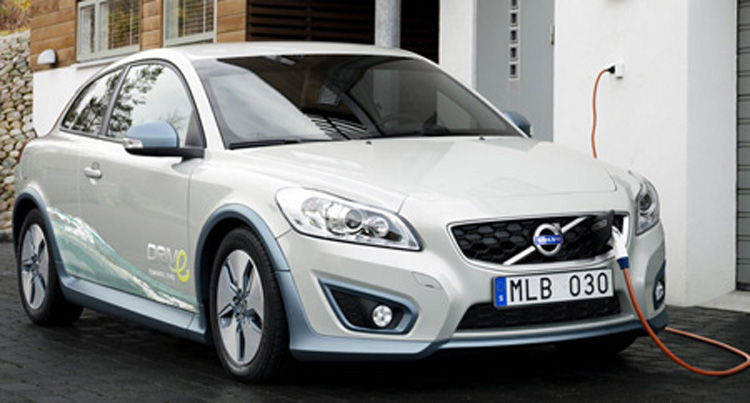
Volvo C30 BEV, 2011

Volvo C30 BEV, 2011


Volvo presented a driveable electric car prototype in September 2009. The Volvo C30 BEV (Battery Electric Vehicle) now being shown at the 2010 North American International Auto Show in Detroit takes the company one step further in the development process. It features both a complete interior and full instrumentation, as well as enhanced battery packaging.

The next step in 2010 is a factory-built series of test cars. Selected users will drive the test fleet during a two-year trial period in order to provide Volvo Cars with valuable experience. Not just technical but also behavioural.
A pure electric car has different characteristics compared to a car with an internal combustion engine. Now Volvo's experts will have the opportunity to study how users handle these differences.

New instruments and graphics
The electric C30 looks like a regular Volvo C30 and it offers the very same safety, comfort and roominess as the standard car. The most obvious difference inside the car is the new instruments facing the driver. The gauges and graphics are somewhat different to those in a conventional Volvo. The cool and user-friendly combined instrument shows in principle only road speed and energy consumption. However, it also integrates a number of new symbols such as a gauge for battery charge status and other relevant information for this type of vehicle.

The driving experience is also different to that in a conventional car. The electric Volvo C30 BEV has no gears and the motor's power is delivered seamlessly, with full power available immediately. "Sailing along virtually without a sound is a very special experience. The power is there instantaneously. We need to spend a lot of time verifying a transmission system that is both comfortable and safe for the driver to handle and at the same time utilizes the battery's capacity optimally at different speeds," says Lennart Stegland.

Like a regular Volvo C30 - all the fun but with no emissions
An electric motor uses about one-fourth as much energy as an engine running on fossil fuels. This superior energy efficiency suggests that interest in electric cars will increase as fuel prices rise and demands for low CO2 emissions become increasingly stringent.

The Volvo C30 shown in Detroit is powered by Lithium-Ion batteries that can be recharged via either a regular household power socket or special roadside charging stations. Charging the battery fully takes about eight hours. If the car is recharged with renewable electricity, CO2 emissions could be almost zero in the well-to-wheel perspective.

Top speed with a fully charged battery pack is about 130 km/h (81 mph). Acceleration from 0 to 60 mph takes less than 11 seconds. The car's range is up to 150 km (94 miles). This covers the daily transport needs of more than 90 percent of all motorists in Europe.

As safe as all other Volvos
The electric motor is fitted under the bonnet while the batteries (24 kWh) are installed in the propshaft tunnel and in the space normally occupied by the fuel tank, outside the passenger compartment and away from the deformations zones.

Technical specification
    * Car model: Volvo C30 - full four seater
    * Main engine: Electric engine 40/82KW
    * Power output: Electric engine 82kW, 111 bhp
    * Acceleration 0-100 km/h: 10.5 seconds
    * Charging duration: Charging via standard power socket, 230 V, 16 ampere: < 8 hours
    * Range on electric power: 150 km (NEDC cycle)
    * Battery energy content: 24 kWh nominal energy, of which 22.7 kWh used to power the car
    * Battery weight: 280 kg
    * Carbon dioxide emissions (tailpipe): none
Read More

Saturday, February 19, 2011

Subaru Impreza WRX STI Carbon Concept, 2010

Subaru Impreza WRX STI Carbon Concept, 2010


Based on the Subaru Impreza WRX STI A-Line model with 5 speed automatic transmission that offers distinctive driving performance to a wider range of customers, the Subaru Impreza WRX Carbon Concept features the use of carbon material in the roof to achieve both a significant weight reduction and a lower center of gravity.

Subaru Impreza WRX STI Carbon Concept, 2010
 
Read More

Subaru Impreza WRX STI Special Edition, 2010

Subaru Impreza WRX STI Special Edition, 2010


Subaru Impreza WRX STI Special Edition, 2010

Read More