Wednesday, December 29, 2010

Honda New Small Concept, 2010

Honda New Small Concept, 2010


Honda Siel Cars India Ltd. (HSCI), a leading manufacturer of premium cars in India, unveiled the world premiere of the Honda New Small Concept, a concept model for a new small-sized vehicle, at the Auto Expo 2010 in New Delhi. HSCI also announced plans to begin sales of a new model in 2011 based on this concept model.

The Honda New Small Concept, a wide platform with a stable center of gravity was adopted to create a highly efficient compact size with seating for five people. With the "Efficient Energetic Exterior" design, the dynamic design of the Honda New Small Concept with front forward fenders highlight the presence of the vehicle.

Honda is planning to introduce a new model based on the Honda New Small Concept in 2011, in India and also in Thailand.

Honda will strive to provide a new small-sized vehicle that is beyond the expectations of customers in rapidly growing markets and offer it at an affordable price by leveraging Honda's global parts sourcing network.
Read More

Honda CR-V US-Version, 2010

Honda CR-V US-Version, 2010


The exterior styling enhancements include a freshened front fascia with a new grille and bumper design, a re-sculpted hood, and a new rear bumper shape. A 10-spoke alloy wheel design, standard on Honda CR-V EX and EX-L, replaces the previous 7-spoke alloy wheel design. Interior improvements focus on new features and functionality. Bluetooth® HandsFreeLink® is now included on models equipped with the available Honda Satellite-Linked Navigation System™. Auto on/off headlights have been added to the Honda CR-V EX-L and the front seats have wider center armrests on all models.

Upgrades to the 2.4-liter 4-cylinder engine improve power output to 180 horsepower (hp), a 14 hp increase. City/highway EPA-estimated fuel economy ratings increase to 21/28 miles per gallon (mpg) on 2WD models and 21/27 mpg on models equipped with Real Time 4WD - an increase of 1 mpg in both city and highway driving on all models.
While compact on the outside with a 103.1-inch wheelbase and a convenient-to-park length of less than 15 feet, the interior provides 103.8 cu-ft. of passenger volume (CR-V LX) for up to five passengers. Add in a cargo volume of 35.7 cu-ft. behind the rear seats and the Honda CR-V creates a total interior volume that, from a space efficiency perspective, exceeds the U.S. EPA's size definition for a large sedan of 120 cu-ft.

The wide range of interior updates for 2010 include modifications to the radio functionality and control layout, the introduction of new seat fabric textures and an upgraded interior door handle design with a rubberized grip handle. Revised trim panel sections for the steering wheel, gear selector, upper glove box and center console (navigation-equipped models only) serve to brighten the overall interior color theme. Models equipped with an ivory interior now feature a more passenger-friendly darker brown carpet instead of light brown.

For comfort, the driver's and front passenger's center folding armrests are each wider by 1 inch compared to the previous model. The front row storage zones continue to offer the same functionality with areas designed to accommodate items as large as a handbag between the seats to items as small as a mobile phones and music players on the retractable center tray table. A center console replaces the retractable center tray table on the Honda CR-V EX-L with navigation.

A sliding 60/40 split second row seat with a 40/20/40 folding seatback offers cargo versatility by sliding forward to increase cargo space, folding forward to accommodate long objects, or folding and tumbling forward to create a large, flat cargo area. Maximum possible cargo volume measures 72.9 cu-ft. with approximate floor dimensions of 51 inches long by 39 inches wide (at wheel wells). Storage potential behind the rear seat is enhanced by a dual-deck cargo shelf (CR-V EX and EX-L) that can strategically accommodate items like a folded baby stroller on the lower level and groceries bags on the upper level. The second row seat includes a Lower Anchors and Tethers for CHildren (LATCH) child seat mounting system for all rear seat positions, allowing two outboard child seats to be installed or one center child seat.

The standard safety equipment includes: the Advanced Compatibility Engineering (ACE) body structure; Vehicle Stability Assist (VSA), commonly referred to as electronic stability control; and a pedestrian safety design in the front of the vehicle. Additional standard equipment includes side-curtain airbags with a rollover sensor; front side airbags with a passenger-side Occupant Position Detection System (OPDS); active front seat head restraints; an anti-lock braking system (ABS) with Electronic Brake Distribution (EBD) and Brake Assist; and a Tire Pressure Monitoring System (TPMS).

The lower portion of the grille receives a honeycomb design that replaces the previous three-bar horizontal cross design. A chrome-colored trim piece has been added at the junction where the lower grille section intersects the top of the bumper (on EX and EX-L only). The circular port for Honda Genuine Accessory fog lights is encompassed within the re-sculpted front bumper's painted surface area, which extends lower on the vehicle, instead of within the lower black body cladding. Correspondingly, the re-shaped rear bumper's painted surface area now encompasses the red rear reflectors, also previously located within the black cladding.

The suspension is comprised of a front MacPherson strut layout and a rear multi-link suspension. The high-rigidity body and independent suspension offer a comfortable and engaging driving experience for a crossover SUV. State-of-the art noise absorption materials help to reduce engine and road noise for a quieter cabin.

The all-aluminum,16-valve, Dual Overhead Camshaft (DOHC) i-VTEC engine integrates an "intelligent" version of Variable Valve Timing and Lift Electronic Control along with Variable Timing Control (VTC), which are sophisticated Honda valvetrain technologies designed to enhance fuel economy and power output while reducing exhaust emissions. The VTEC portion of the system hydraulically adjusts the intake valves' rocker arms for lift and duration to help optimize engine efficiency for low- and high-RPM ranges. The Variable Timing Control (VTC) aspect of i-VTEC allows for continuously variable phasing of the intake camshaft, which helps improve engine torque, promote a smooth engine idle, and create an internal exhaust gas recirculation effect for reduced smog-forming emissions (NOx).

The Honda CR-V comes standard with an electronically controlled 5-speed automatic transmission that uses an active lockup torque converter. Wide overall ratios help maximize acceleration in gears one through four and optimize fuel economy in its overdrive fifth gear.

Grade Logic Control helps to reduce gear "hunting" on hilly roads. The available Real Time™ 4WD system - ideal for enhanced traction on snow, rain, dirt roads and sandy conditions - sends power to the rear wheels when needed. Real Time 4WD's always-ready and fully automatic dual pump system hydraulically proportions rear wheel torque via multi-plate clutches. The Maintenance Minder system will indicate that the dual-pump fluid should be changed at about 60,000 miles.

The Honda CR-V EX-L adds leather-trimmed seats and armrests, heated front seats, body-colored side mirrors and door handles, XM® Radio, a USB Audio Interface (new), and auto on/off headlights (new). Available on the Honda CR-V EX-L is the Honda Satellite-Linked Navigation System with Voice Recognition and rearview camera, which also adds premium audio system with 7-speakers including subwoofer and Bluetooth HandsFreeLink, center console storage unit (replaces retractable center tray), and a 6-disc CD changer in the center console (replaces in-dash changer).

The Technical Specifications
    = Engine: 2.4-liter i-VTEC 4-cylinder
    = Horsepower: 180-hp @ 6,800 rpm
    = Torque: 161 lb-ft. @ 4,400 rpm
    = EPA-estimated Fuel Economy (City/Hwy/Comb)
    = 2WD: 21/28/24 mpg
    = 4WD: 21/27/23 mpg
    = Seating Capacity: 5
    = Passenger Volume: 103.8 cu-ft.
    = Cargo Volume: 34.7 cu-ft.
    = Standard Airbags: Driver's and Front-Passenger's Front Dual-stage, Multiple-Threshold Front Airbags; Front-side airbags with passenger-side Occupant Position Detection System (OPDS); and Side-curtain Airbags with Rollover Sensor.
    = Standard Electronic Stability Control: Vehicle Stability Assist (VSA)
    = Standard Anti-lock Braking System: 4-channel with Brake Assist
Read More

Honda Accord Crosstour, 2010

Honda Accord Crosstour, 2010


The new 2010 Honda Accord Crosstour evolves the Crossover Utility Vehicle (CUV) concept by integrating a sleek and aerodynamic shape that blends sporty, low-profile contours with versatile CUV functionality.

The concept is to broaden the appeal of the Honda Accord line-up by leveraging traditional Accord strengths of fun-to-drive performance and handling while also adapting to dramatic shifts in the light truck. The Honda Accord Crosstour accomplishes that by offering a modern interpretation of a CUV while integrating the refinement and efficiency of a premium sedan."

Derived from the Accord Sedan, the Honda Accord Crosstour maximizes car-like ride and refinement, yet maintains capabilities consistent with a CUV's increased ride height and all-weather potential. The Honda Accord Crosstour's styling builds on the Accord's familiar character lines and adds a bolder front grille complemented by a durable lower-body appearance, wedge-shaped C-pillars and an aggressive rear stance. The flowing roofline narrows smoothly into the rear of the vehicle to create an aggressive-looking design, which conceals a unique cargo area that can adapt to large objects that exceed the capacity of a sedan.
Read More

Honda Skydeck Concept, 2009

Honda Skydeck Concept, 2009


The 2009 Tokyo Motor Show will mark the debut of the Honda Skydeck Concept, an innovative 6-seater hybrid MPV. This is still a design study, but is a great example of how Honda's IMA technology can be placed in a range of different cars for different needs. 
To give the Honda Skydeck Concept the practicality of a conventional MPV, many of the hybrid system components - including the high power battery - are housed in the car's centre tunnel (rather than behind the rear seats or under the floor, as with previous production hybrids). This allows for greater cabin space, and the room for three rows of two seats. It also gives a lower centre of gravity.

Read More

Tuesday, December 28, 2010

VW Up Lite Concept, 2009

VW Up Lite Concept, 2009
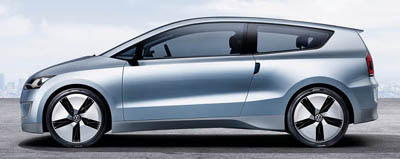


Europe's strongest automotive brand - is setting standards worldwide when it comes to efficiency with its clean high-tech TDI and TSI engines. Now this is being followed up by latest coupe at the 2009 Los Angeles Auto Show (December 4 to 13): the world premiere of the Volkswagen Up! Lite Concept. A progressive, fuel efficient and in all details cleverly designed four-seater with a hybrid drive. Combined fuel consumption: 2.44 l/100 km or 70 mpg/highway! No other car is more sustainable. With a drive concept consisting of a TDI (turbo-diesel), electric motor and 7-speed Direct Shift Gearbox (DSG) as well as top aerodynamics (Cd value: 0.237), Volkswagen is driving CO2 emissions down to a sensational 65 g/km. This makes the three-door concept the world's most fuel efficient car - and from the perspective of its overall CO2 footprint the world's most environmentally friendly four-seat car as well. Both technically and visually, the Volkswagen Up! Lite is a preview of the future. The image of the car body with its clean lines, as though sculpted from a block of aluminium, underscores just how fascinating a car tuned to aerodynamic perfection can look.

The ideal car for the daily commute to work

The technically challenging 2-Liter fuel consumption car might be launched globally. Many of the components of the 695 kilogram light Volkswagen are based on those of the future New Small Family, an entirely new model series that is already scheduled for market launch in initial countries at the end of 2011. The Volkswagen Up! Lite concept continues the Volkswagen strategy of offering high-tech and high-end quality in all of its vehicle classes, making progress affordable for every car driver. The Volkswagen Up! Lite was designed to be a versatile vehicle that makes trips into the city, commutes to work and naturally long trips as well significantly less expensive and more eco-friendly.
Volkswagen Up Lite Concept

Hybrid drive enables electric driving

The centerpiece of the Volkswagen Up! Lite powertrain is the newly designed 0.8 TDI two-cylinder turbo-diesel engine with a power of 38 kW / 51 PS. Furthermore, the electric motor (10 kW) - designed as a pulse start module (starter, alternator and E-drive) - also reduces the load of the TDI, provides added propulsion (boosting) and works to recover kinetic energy (regenerative braking). During boost phases - e.g. in a quick passing maneuver - the TDI and E-motor combine for a total power of 48 kW / 65 PS. Incidentally, a version of the TDI used in the Volkswagen Up! Lite was also used aboard the VW L1 concept car that Volkswagen presented in September at the 2009 IAA Motor Show in Frankfurt.

In two of its operating phases, the hybrid drive of the VW Up! Lite was designed to operate without any TDI propulsion at all. First phase: In so-called coast-down, activated by the driver taking his or her foot off the gas pedal (car coasts, TDI engine is shut off). Second phase: Over shorter distances, e.g. in residential areas, the E-motor can power the Volkswagen Up! Lite all by itself. In this case, a lithium-ion battery supplies the energy. Since it is capable of pure electric driving, the configuration is classified as a full hybrid. Shifting work is handled by a 7-speed Direct Shift Gearbox (DSG) like the one used in the new Polo. Moreover, the Volkswagen is equipped with a Stop-Start system.

Comfort and safety without compromises

Naturally, on the Volkswagen Up! Lite there is nothing lacking in comfort or safety. ESP is on board, airbags are on board, ample space is on board, highly advanced information and control features are on board, and it is good to know that occupants are enclosed and protected by a highly innovative safety frame of aluminium, steel and carbon fiber. The Volkswagen concept has a top speed of 160 km/h (100 mph) and accelerates to 100 km/h in a respectable 12.5 seconds (0-60 mph in 12 seconds).

"Made in Germany"

The Volkswagen Up! Lite is a prime example of the art of innovative engineering with the "Made in Germany" seal. And indeed not only because of its efficient powertrain and lightweight body construction. Other examples include: The radiator grille that closes and opens automatically depending on the cooling needs of the engine ("active thermal management"); and instead of a classic rearview mirror, three cameras perform this job better and more aerodynamically; when the car is parked in the summer, hot air is vented to outside the vehicle ("passive park ventilation"); an "optimized Easy-Entry feature" enables extremely comfortable entry and exit from the rear seating area; longitudinal adjustments to the driver and front passenger seats automatically adjusts seat height as well; when folding the rear bench seat, the seatback is easily unlatched by folding the rear head restraints forward ("Easy Switch"); many vehicle features (including ventilation, Internet, telephone, MP3, video, telephone, trip computer, radio) are controlled centrally via an intuitive touchscreen with hand movement sensors.

Design of the world of tomorrow

Even the most innovative car must look good to really be fun. And the Volkswagen Up! Lite with its "Liquid Blue Metallic" exterior is fun. That is because the 3.84 meter long, 1.40 meter tall and 1.60 meter wide Volkswagen Up! Lite makes a futuristic, bold and - in its form - very independent appearance. It is a car that looks as though it were cast from a single mould. Compared to the Volkswagen E-Up! concept car presented at the 2009 International Motor Show (IAA) in Frankfurt, it is lower in profile and - to satisfy even more demanding aerodynamic requirements - it is longer, nearly reaching the length of the VW Polo (3.98 meters).

The styling itself portrays a compact vehicle that genuinely reflects its sustainable drive system and overall progressive concept. At the rear, the VW Up! Lite has the appearance of a distinctive hatchback sports car. As a result, the broad shoulder section is definitely reminiscent of the Scirocco. Furthermore, the look of the lower area is dominated by the large glass surface of the hatch, the LED rear lights and the rear fog lights (c-shaped) integrated in the bumper in typical Volkswagen Up! style. The counterparts of these lights are found in the front bumper as front fog lights. The car's side profile has clean styling with markedly smooth surfaces. There are no edges except for the upper tornado line, the wheel wells and a connection line integrated there. The side cameras that replace the outside mirrors look like winglets on the wings of a cargo plane. A novel stylistic and technical feature: the 18-inch wheels are produced from a combination of aluminium and carbon fiber. That is because sports appeal and fuel economy do not need to be mutually exclusive.
Read More

Volkswagen L1 Concept, 2009

Volkswagen L1 Concept, 2009


One of a unique Car in the world today is Volkswagen L1. It weighs just 380 kilograms a carbon fibre reinforced plastic (CFRP) body. The two-seater is powered by a new common rail turbo-diesel (two-cylinder TDI) and an electric motor. With its average fuel consumption of 1.49 litres diesel per 100 kilometres, this fully road-ready and extremely aerodynamic L1 (Cd 0.195!) is advancing to become the most fuel-efficient hybrid automobile in the world. CO2 emissions of the 160 km/h fast concept car are just 39 g/km.

Drivetrain

The TDI, E-motor and 7-speed DSG are located at the rear, and they combine to create the most fuel efficient road-legal car hybrid drive in the world. Proof of this are its 1.38 litre per 100 kilometres fuel consumption and 36 g/km CO2 emissions. Serving as the primary drive source is a completely redeveloped two-cylinder turbo-diesel with common rail direct injection (TDI). 
It is operated in two different modes depending on the load conditions. In the standard "ECO" mode, the 800 cm3 TDI develops a power of 20 kW / 27 PS (at 4,000 rpm); in "Sport" mode - used to reach top speed, for example - the car's power rises to 29 kW / 39 PS (at 4,000 rpm). The TDI's maximum torque is 100 Newton-meter (at 1,900 rpm). Naturally, the Volkswagen L1 also has a Stop-Start system that automatically shuts down the engine when vehicle has stopped and restarts when the accelerator or E-pedal is pressed.
Read More

Monday, December 27, 2010

Kia Ceed, 2010

Kia Ceed, 2010


Kia Motors has released the first pictures of new Kia cee'd, revealing a much improved and updated look including the new 'family face' of the brand.

This mid-life change unusually includes sheet metal changes to the bonnet plus alterations to the bumper, grille and light clusters. There have been some enhancements to the interior too in terms of specification and design including a more intuitive centre console and upgraded audio system including Bluetooth connectivity.

New Kia cee'd will be unveiled at the 2009 Frankfurt Motor Show alongside two all-new Kia models.

Read More

Infiniti FX37, 2009

Infiniti FX37, 2009


A genuine fusion of sports car and SUV, the Infiniti FX37's dramatic styling - shared with the Infiniti FX50 - sets it apart from the crowd. Built on Infiniti's FM (front-midships) platform, the Infiniti FX37 blends sports car proportions with the character of a 4x4. That means a long bonnet and wheelbase, short overhangs and a coupé-like roofline, with the stance and strength of an SUV.

Engine

The Infiniti FX37 is powered by the 3.7-litre V6 petrol engine delivering 320PS at 7,000 rpm and a healthy 360Nm of torque (comparable figures for the V8 FX50 are 390PS and 500Nm).

A member of the multi-award winning VQ engine family, the all-aluminium 24-valve twin cam unit features a bed-plate construction. A technique that has been used in motor racing for many years, the resulting two-part construction of the cylinder block is more rigid than a single piece casting.

It is a configuration that signifies a high-performance sporting engine designed for the highest strength and reliability. Other benefits include reduced vibration levels and higher engine speeds to be reached consistently without damage.

The engine, which is fully Euro 5 compliant, incorporates VVEL (Variable Valve Event and Lift) technology to optimise efficiency and, in turn, the balance between power, response, fuel efficiency and emissions. VVEL continually alters valve lift and therefore the quantity of air in the combustion chamber. The result is a more powerful combustion phase increasing torque and power.

Precise mapping of the ECU, meanwhile, helps the engine provide a progressive 'swell' of power and torque, providing a 'building wave' of acceleration rather than a peaky power delivery.

Infiniti FX37 comes with a new seven-speed automatic transmission with Adaptive Shift Control (ASC) as standard providing a wider spread of transmission ratios for improved fuel consumption and drivability. The seventh speed is effectively an overdrive ratio, returning improved fuel economy on a steady throttle without compromising in-gear flexibility for overtaking.

Shift points are tuned to keep the engine in the largest part of the torque curve, ensuring there is always a healthy reserve when the driver wants to overtake. The linked ASC system switches between three different programs depending on input from the major control systems throughout the car. Manual shifts can be made via paddle shifts mounted behind the steering wheel.

Chassis

Suspension design is fully independent and uses lightweight aluminium components to reduce weight as much as possible. With a double wishbone set up at the front, a multi-link arrangement mounted on a subframe behind and an extremely rigid bodyshell, Infiniti FX37 combines agility with exceptional ride comfort.

In keeping with its crossover role, Infiniti FX37 features Infiniti's ATTESA E-TS (Advanced Total Traction Engineering System for All Electronic Torque Split) four-wheel drive technology. The system uses an active torque distribution management system with an active centre clutch for smooth starts, greater grip and better manoeuvrability on slippery surfaces without compromising the vehicle's rear-wheel drive performance characteristics on dry roads. Torque distribution is anything from 50:50 up to 0:100, front to rear. Unlike permanent 4x4 systems, which can deaden the steering feel and dull the driving dynamics, the electromagnetic torque transfer at the heart of ATTESA E-TS intelligent 4WD's system permits an element of oversteer for a more sporting drive.

When Infiniti FX37 accelerates from a standing start, ATTESA E-TS system provides power to all four wheels. Once up to speed, if the system's sensors detect that all-wheel drive is not needed, up to 100 percent of the power is sent to the rear wheels. This rear-bias offers better handling balance and improved fuel efficiency.

In common with the entire Infiniti range, Infiniti FX37 has been fine tuned for European road conditions. As well as revised settings for the suspension and steering and enhanced NVH protection, Infiniti FX37 has been given bigger brakes better to cope with Europe's higher average speeds. This, in turn, has allowed 20-inch alloy wheels to be fitted as standard.

Styling

An all-new design, the latest generation FX range adopts Infiniti's signature double-arch grille and 'double wave' frontal styling. The profile is dominated by a strong shoulder-line set off by functional side vents behind the front wheels while the swooping roofline is topped by roof rails, which are fitted as standard. At the rear, distinctive LED taillights wrap around the side of the vehicle.

Helping to contribute to a low overall weight, all four doors are made from aluminium.

The interior provides a driver-oriented cockpit combined with a luxuriously sophisticated passenger compartment. Natural materials including wood and quilted leather can be found throughout while the dashboard features the Infiniti signature double-wave design. Three interior colour schemes are offered: black plus duo-tone beige and grey or brown and black. Power adjustable front seats are ventilated for the ultimate in comfort at all times.

Equipment

Other items of standard equipment include Intelligent Key with keyless go, and Bi-Xenon headlamps with Adaptive Front lighting System (AFS) which automatically controls the aim and patterns of the headlights, based on steering wheel angle and vehicle speed (the headlights can swivel headlights up to 17 degrees).

The Intelligent Cruise Control with Full Speed Range incorporating technology that maintains a set distance between the Infiniti FX37 and the vehicle in front in a speed range of 0 to 180 km/h, thus reducing the driver's workload in traffic.

An extensive equipment list also includes an electric sunroof, rear privacy glass, front fog lamps, light and rain sensors and a total of six airbags - front side and curtain.

The Infiniti FX37 comes standard with a rear view parking camera and display, full telephone communication via Bluetooth, an in-dash six-disc CD changer plus an Aux-In socket for mp3 players complete the package.

In common with other Infiniti models, FX37 has the advanced 'Scratch Shield' paint. A special highly elastic resin has been combined with a conventional clearcoat to increase the paint's flexibility to produce 'self healing' characteristics.

There are two major option packs: Sport and Multimedia. The Sport pack includes active Continuous Damping Control system with electronically controlled shock absorbers that continuously alter the damping settings to provide optimal ride and handling.
Read More

BMW ActiveE Concept, 2010

BMW ActiveE Concept, 2010


The BMW ActiveE Concept, the latest electric vehicle project under BMW Group's initiative to produce vehicles that explore solutions to minimize environmental impacts while preserving the kinetic driving experience for which BMW has long been known. The BMW ActiveE Concept follows the all-electric MINI E as the second large-scale electric vehicle test program to be conducted in the hands of interested customers.

The BMW Group presents yet another milestone along the way to achieving CO2-free mobility. The BMW ActiveE Concept provides a taste of a purely electrically powered BMW. Focused on the requirements of practical use, the study is based on the BMW 1-Series Coupe and embodies the outstanding agility and characteristic driving pleasure of the BMW 1-Series for the first time as part of an emissions-free drive concept.

With the world premiere of the BMW ActiveE Concept at the 2010 North American International Auto Show (NAIAS) in Detroit, the BMW Group is highlighting the continuation of its research and development activities in the field of electro-mobility. The field tests with the MINI E as part of project i in the US and Europe have already provided important insights into the demands required of future production electric vehicles. As a second step, project i has begun development of a second trial fleet of electric vehicles based on the BMW ActiveE Concept. These vehicles are likewise intended for everyday use by private and select fleet customers as part of a large-scale field test. The insights gathered in the process will be fed into the development of an electrically powered serial production vehicle which the BMW Group will put on the market under a sub-brand of BMW in the first half of the next decade.

The BMW ActiveE Concept has allowed BMW to explore new vehicle packaging solutions and components which will be crucial to the success of the Megacity Vehicle. The intelligent integration of drive components within the existing vehicle package of the BMW 1-Series Coupe offers the opportunity to provide four full-size seats and a luggage compartment with a capacity of 200 litres / 7 cu ft. The motor, specially developed for the model and located in the rear axle, delivers 125 kW/170 hp and provides maximum torque of 250 Nm / 184 lb-ft. It accelerates the vehicle in less than 9 seconds from zero to 100 km/h (0-60 mph in approx. 8.5 seconds).

Innovative technology for sheer driving pleasure without CO2 emissions.

The BMW ActiveE Concept embodies a whole new dimension of purely electrically powered mobility. The dynamic potential and high torque of the drive system, along with the rear-wheel drive which is a hallmark of the brand, guarantees the characteristic sheer driving pleasure which is typical of BMW - but without any CO2 emissions. An impressive range of functions and a high level of suitability for everyday use are additional features of this concept, which defines electro-mobility in true BMW style.

Electric drive: emissions-free, powerful and compact.

The BMW ActiveE Concept offers the prospect of characteristic BMW driving pleasure without exhaust emissions. The requirements for electro-mobility with characteristic BMW properties are being created based on ongoing development in the powertrain. The latest outcome is a new synchronous electric motor tailored to the BMW ActiveE Concept. It offers a high level of efficiency, power delivery, and compact construction.

The maximum output of the new electric drive is 125 kW/170 hp. The maximum torque of 250 Nm / 184 lb-ft is available from a standstill as is typical for electric motors. The torque remains available over an unusually broad load range. Unlike asynchronous electric motors, the new power unit provides a relatively high level of torque even at higher engine speeds and road speeds; at increased load the torque is not reduced abruptly but decreases gradually. The torque curve at higher engine speeds is therefore much more similar to the pattern familiar from combustion engines.

Recuperation of energy increases range.

In the purely electric powered BMW, the driver may control deceleration as well as acceleration through the movement of the accelerator pedal. As soon as the driver's foot is removed from the accelerator, the electric motor performs the function of a generator, converting the vehicle's kinetic energy into electric power and storing it in the battery pack. Intensive use of this so-called energy recuperation process by the motor increases the range by up to 20%.

At the same time, a brake torque is created which results in effective deceleration of the vehicle. This response enables a very comfortable driving style, especially at medium and constantly varying speeds. In urban traffic, some 75 percent of all deceleration manoeuvres are initiated without the need for the brake pedal. During Brake Energy Regeneration function, the vehicle's brake lights are illuminated.

The brake effect acts on the rear wheels only. When the driver requires a higher level of deceleration, stepping on the brake pedal engages the conventional hydraulic braking system. If an emergency braking maneuver is required during braking, the Dynamic Stability Control (DSC) system applies selective braking and motor management measures to ensure that safe braking is always guaranteed.

The brake system is fitted with an electric vacuum pump which is activated on demand. Along with the Electric Power Steering (EPS) familiar from the production models of the BMW 1-Series, these features contribute to an increase in the overall efficiency of the vehicle.
Read More

Sunday, December 26, 2010

Jeep Wrangler Unlimited EV, 2009

Jeep Wrangler Unlimited EV, 2009


The Jeep Wrangler Unlimited EV is a Range-extended Electric Vehicle that provides a glimpse into the future of a "Go Anywhere, Do Anything" vehicle with renowned Jeep Wrangler capability.

The Jeep Wrangler Unlimited EV prototype is a two-wheel drive Wrangler. However, Chrysler's ENVI organization is exploring four-wheel-drive, in-wheel electric motors to demonstrate the full reach of the Company's advanced electric-drive technologies. When this technology is developed by ENVI, the instant high torque of the electric-drive motor and the ability to precisely control each wheel independently will result in off-road capability ideally suited for the Jeep brand, without compromising on-road capability.

The Wrangler Unlimited EV also uses an ENVI Range-extended Electric Vehicle powertrain, consisting of an electric motor, an advanced lithium-ion battery system, and a small gasoline engine with an integrated electric generator to produce additional energy to power the electric-drive system when needed. The electric motor produces 200 kW (268 horsepower) and 400 N•m (295 lb.-ft.) of torque. The Jeep Wrangler Unlimited EV has a range of 400 miles, including 40 miles of zero fuel-consumption, zero-emissions, all-electric operation.

The Jeep Wrangler Unlimited EV features a new ENVI Green Pearl exterior color, integrating full body-side "EV" graphics.
Read More

Jeep Patriot EV, 2009

Jeep Patriot EV, 2009


Jeep Patriot EV, 2009
Read More

Jeep Wrangler Unlimited UK Version, 2008

Jeep Wrangler Unlimited UK Version, 2008


The new Jeep Wrangler range surprised drivers and off-road enthusiasts when it launched in 2007. Jeep managed to maintain the classic 'rugged' look and feel without letting the new car's extreme off-road ability compromise its on-road dynamics or its role as a comfortable everyday family car.

Building on the successful, original Jeep formula with a new frame, new exterior and totally refreshed interior design, new engines, ESP and brake traction control standard across the range, the latest Jeep Wrangler delivers more capability and on-road refinement without losing what makes it a Jeep.

The Wrangler and Wrangler Unlimited both offer removable full-framed doors and fold-down windscreen together with a removable hard top that provides more options for open-air driving. The Freedom Top™ is a three-piece modular hardtop and features separate left- and right-front passenger panels that can be removed and stored in the vehicle, together with a rear section that can be removed separately.

While the majority of Wrangler and Wrangler Unlimiteds sold in the UK will be powered by a new 2.8-litre diesel engine, a handful of Jeep Wrangler 'Rubicon' models will be sold with a new 3.8-litre petrol engine and a host of additional off-road features that will make this the best off-road Wrangler ever and the ultimate showroom standard off-road vehicle available in the UK.

For 2008 new features including a tyre pressure warning system and the optional MyGig infotainment sat-nav system have been added across the Wrangler range.

More On-road Refinement

While improving its legendary 4x4 Jeep capability, the Jeep Wrangler and Wrangler Unlimited feature a much more refined on-road experience as a result of an all-new frame that is 100 per cent stiffer in bending and 50 per cent stiffer in torsion together with a refined five-link coil suspension front and rear. In addition, new steering and suspension geometry provides precise ride and handling characteristics, while new sound-deadening techniques reduce cabin noise by more than 20 per cent.

Jeep Wrangler's shock absorbers are tuned to provide improved balance between jounce and rebound motions, achieving an extremely responsive suspension.

The Jeep Wrangler's recirculating-ball steering configuration features a robust cross-car steering linkage system, providing the stiffest possible steering linkage in a solid-axle vehicle for a precise on-centre feel. Lower spring rates on the suspension provide more of a soft, comfortable on-road ride.

Standard across the Wrangler range is Electronic Stability Programme (ESP), which aids the driver in maintaining vehicle directional stability in severe driving manoeuvres on any type of surface. ESP works in harmony with the on-road calibrated Brake Lock Differentials that aim to improve vehicle traction if one wheel is on ice or gravel and the other is on a dry surface.

Improved interior

The Jeep Wrangler and Wrangler Unlimited's interior were designed with a focus on functionality, increased passenger comfort and improved ergonomics. The spacious, durable interior features a new instrument panel and centre stack, and new high-back front bucket seats.

The front seats are sculpted and conform to the body, and a driver's seat height adjuster is standard for optimised seat position and comfort. Sahara and Rubicon models feature cloth seats with YES Essentials fabric - an easy-care, soil-repellent and anti-microbial textile that protects seats from stains, odours and discolouration.
Read More